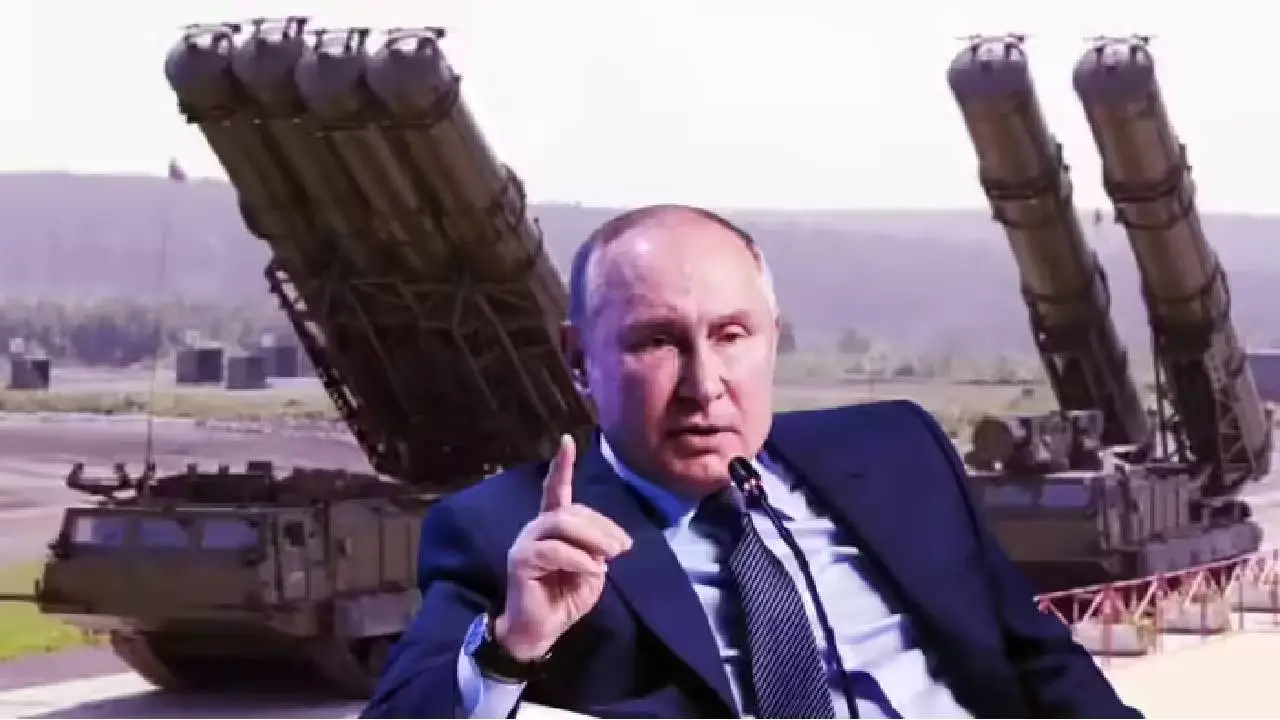
Russia Air Defense (Credit: OpenAI )
Russia has officially announced that its newest missile defense platform has entered active combat duty for the first time. The declaration was made by Russian Defense Minister Andrei Belousov during a formal briefing. According to Moscow, the system is now fully operational with a dedicated military regiment. This is not a test phase or limited trial deployment. Russian media described it as a major leap in national defense readiness. The timing of the announcement is important amid ongoing regional tensions. Analysts say the move is designed to send a clear deterrence message.
The deployed unit is equipped with Russia’s most advanced air and missile defense technology. Officials say the system can engage targets at extremely high altitudes. It is designed to intercept ballistic missiles during the final stage of their flight. Russian sources also claim it can strike low-orbit satellites if required. This capability sets it apart from earlier air defense platforms. The system expands protection beyond traditional airspace. Its role now includes near-space security missions.
The deployment significantly strengthens Russia’s layered missile defense network. Moscow has integrated the system with its existing strategic shield protecting the capital region. Defense experts believe this improves response time against long-range threats. It also complicates planning for hostile missile launches. The system adds depth to Russia’s early-warning and interception capabilities. Officials say it enhances both deterrence and survivability. This step reflects long-term strategic planning rather than short-term battlefield needs.
Although the war with Ukraine continues, analysts say the system’s scope goes far beyond that conflict. Its technical reach targets threats that originate thousands of kilometers away. Military observers believe the message is aimed at global rivals, not just regional opponents. The ability to counter intercontinental threats changes strategic calculations. It also signals readiness for escalation prevention at higher levels. This deployment positions Russia for future strategic standoffs. The focus is clearly global.
The announcement has drawn attention in Washington and allied capitals. Western analysts see potential implications for satellite security and missile deterrence. Space-based assets are critical for surveillance and communication. Any system that threatens them alters military balance. The move is viewed as a challenge to existing defense assumptions. Officials in the United States are closely monitoring developments. The system adds a new layer to strategic competition.
Development of the project began more than two decades ago. Work reportedly started in 2002 and continued through multiple testing phases. The system was formally inducted into service in 2021. However, operational readiness remained uncertain until now. In late 2024, Russia announced the formation of a dedicated unit. The current deployment confirms years of preparation. It marks the transition from theory to real-world defense.
Russia has previously offered this technology to friendly nations, including India. No official response has been confirmed from potential buyers. Wider deployment could influence global arms control discussions. Other powers may accelerate missile defense research. Strategic competition could shift toward space-based security. This move highlights how modern defense extends beyond land and air. The world is entering a new phase of missile deterrence.


Copyright © 2026 Top Indian News