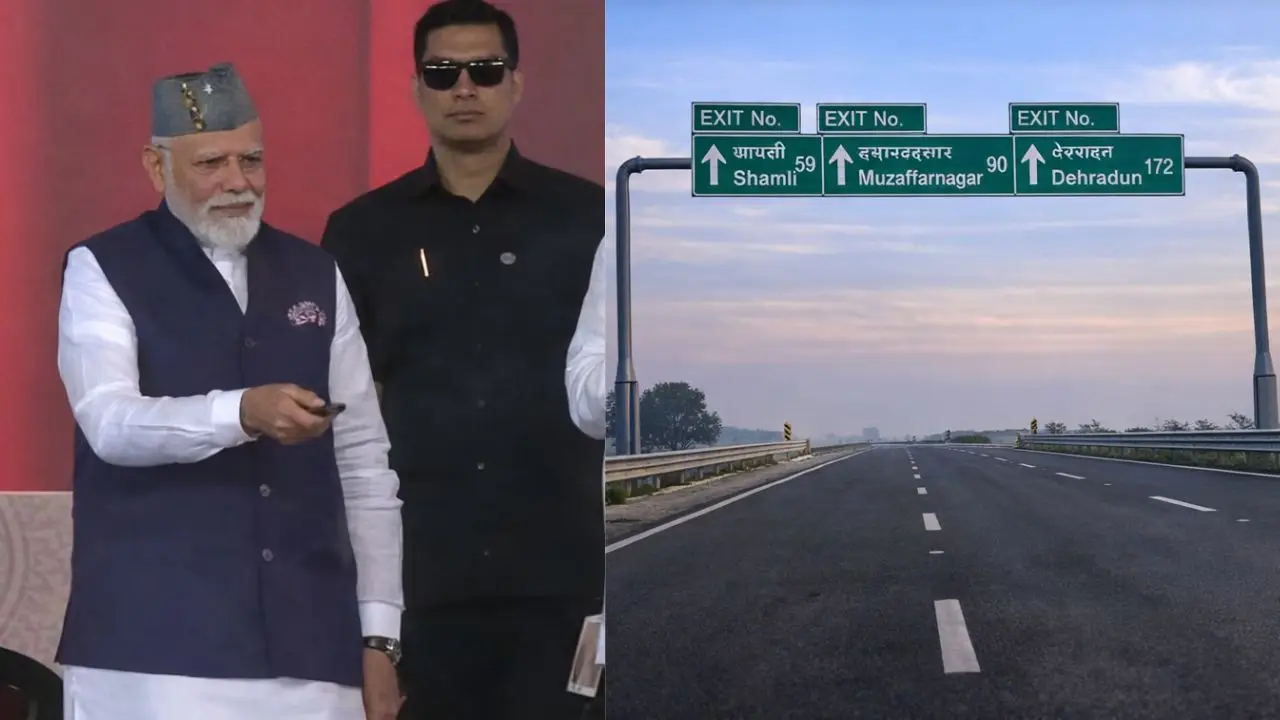
PM Narendra Modi Inaugurates Delhi–Dehradun Expressway, Travel Time Cut to 2.5 Hours (X)
New Delhi/Dehradun: The 213 km long Economic Corridor, which will provide high-speed connectivity between the capital Delhi and Dehradun, was inaugurated by Prime Minister Narendra Modi on Tuesday. With the commissioning of this access-controlled expressway, the travel time between the two cities will reduce from six hours to about two and a half hours. Before the inauguration, the Prime Minister visited the Daat Kali temple and wished for the success of the project.
This six-lane high-speed route has been prepared connecting Delhi, Uttar Pradesh and Uttarakhand. Due to being access-controlled, there will be fewer interruptions in between and vehicles will be able to move at faster speed without any hindrance. The project is also expected to reduce the traffic pressure on old routes.
The Delhi-Dehradun Economic Corridor, being inaugurated today, is a world-class infrastructure project that will deepen connectivity, boost the economy and tourism. https://t.co/5TayGK4QLZ
— Narendra Modi (@narendramodi) April 14, 2026
Advanced traffic management system has been installed on the corridor, which will monitor traffic in real time. Apart from this, many interchanges, railway overbridges, major bridges and necessary facilities for passengers have been developed. More than 100 underpasses and connectivity points connect it to other major roads.
Special attention has been paid to wildlife conservation in this project. About 12 kilometers long has been built so that the movement of animals is not hampered. Special underpasses and tunnels have also been built in sensitive areas for elephants.
#WATCH | Dehradun, Uttarakhand: Prime Minister Narendra Modi inaugurates the Delhi–Dehradun Economic Corridor.
— ANI (@ANI) April 14, 2026
The corridor will reduce travel time between Delhi and Dehradun from over 6 hours to around 2.5 hours. It has been designed with several features aimed at significantly… pic.twitter.com/JZj6J4UUbT
The corridor was constructed in different phases. Some sections were already in use, while now with all the sections connected, the entire route provides continuous high-speed connectivity.
The toll rates on this project, built at a cost of about Rs 11,800 crore, may be higher than the old route. However, in view of time and fuel savings, passengers are expected to get overall benefit.
Experts believe that this corridor will not only speed up travel but will also promote trade, tourism and investment. Better connectivity is likely to increase economic activities in the surrounding areas. This project is considered an important step towards strengthening the modern road network in the country, which can benefit both passengers and industry in the future.


Copyright © 2026 Top Indian News