


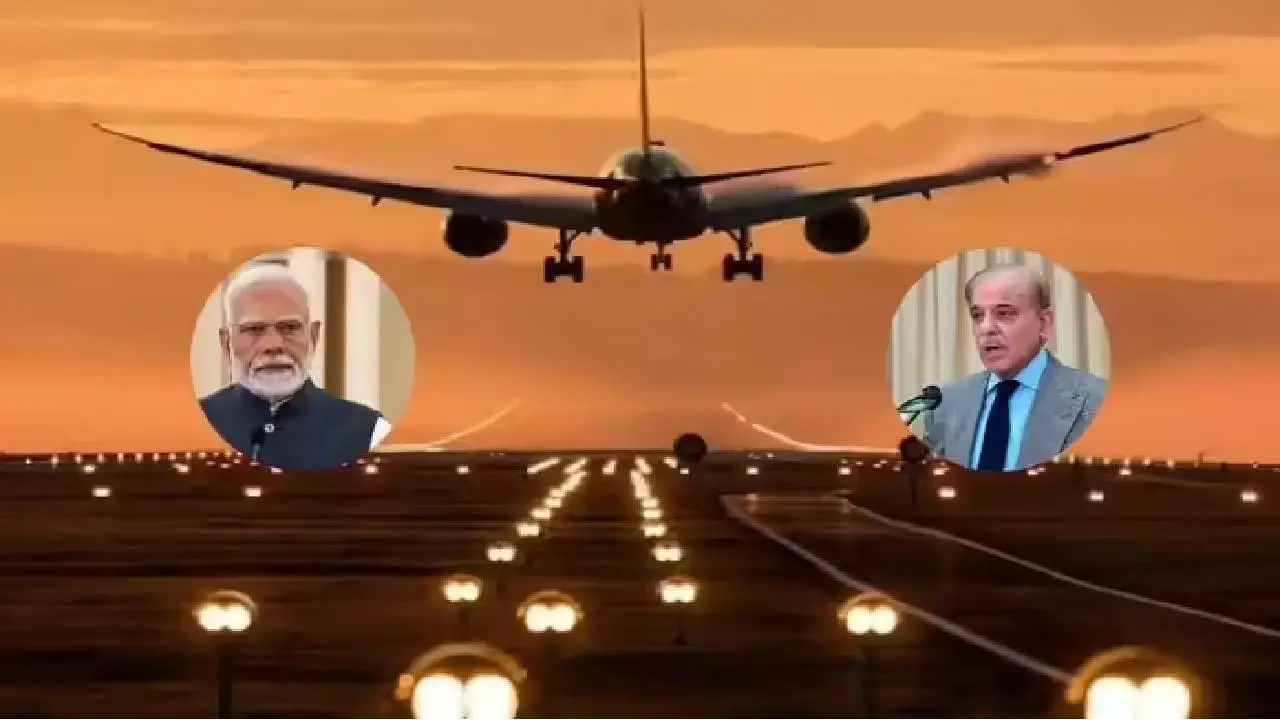
India Pakistan Airspace (Credit: OpenAI )
International News: Pakistan has decided to prolong the restriction on Indian aircraft using its airspace until January 24, 2026, according to officials in Pakistan Airports Authority. The decision applies to all Indian-registered commercial planes, charter services, and military aircraft without exception. Authorities say the move is part of an already existing security-driven restriction.
This extension adds another month to a ban that has now crossed more than two hundred days. Officials insist the decision is procedural, not sudden. However, the continued extension reflects unresolved political tension. There is no timeline offered for normal operations.
A fresh notice for pilots, commonly known as a NOTAM, was issued to inform global aviation operators about the extension. The notice confirms the ban will remain effective from December 16, 2025, until January 24, 2026, under Pakistan Standard Time. It clearly states that Indian-owned, operated, or leased aircraft are barred. Military flights are also included in this restriction. The notice replaces an earlier expiry date. Aviation sources say such repeated notices show policy continuity. Airlines must plan routes accordingly.
The current airspace standoff traces back to the deadly terror attack in Pahalgam in April. After the incident, relations between India and Pakistan sharply deteriorated. Both countries closed their airspace to each other’s aircraft soon after. What was expected to be a short-term measure slowly became long-term. Diplomatic talks failed to ease aviation restrictions. Security concerns were repeatedly cited by both sides. Since then, no rollback has happened.
Ironically, aviation experts say Pakistan is among the biggest losers of this decision. Indian airlines earlier paid significant overflight charges while crossing Pakistani airspace. That revenue has now completely stopped. These fees were a steady source of foreign exchange. With Indian planes rerouted, Pakistan’s airspace sees less traffic. Fewer crossings mean reduced income for aviation services. Officials privately admit the losses are substantial. Still, policy remains unchanged.
The ban has forced Indian airlines to take longer routes over the Arabian Sea or Central Asia. This increases flight duration, fuel consumption, and crew costs. Pakistani airlines are also affected because Indian airspace remains closed to them. Flights to Southeast Asia now require longer detours. Operational expenses have risen sharply. Ticket prices face upward pressure. Passengers ultimately bear the burden of political decisions.
Yes, the restriction explicitly includes military aircraft as well. According to the notice issued from Islamabad, no Indian military flight can transit Pakistani airspace. This adds complexity to strategic air movements and training routes. Defense planners must redesign flight paths. The restriction reflects deeper mistrust between the two neighbors. Military coordination channels remain minimal. Aviation experts see this as a symbolic hardening of positions.
There is no clear answer yet. Officials have not indicated any specific conditions for lifting the ban. Much depends on diplomatic engagement and regional security developments. Previous extensions suggest caution rather than urgency. Airlines are preparing for more months of disruption. Industry insiders believe normalization will be slow. Until then, rerouting remains the new normal. The skies between India and Pakistan stay politically closed.


Copyright © 2026 Top Indian News


