


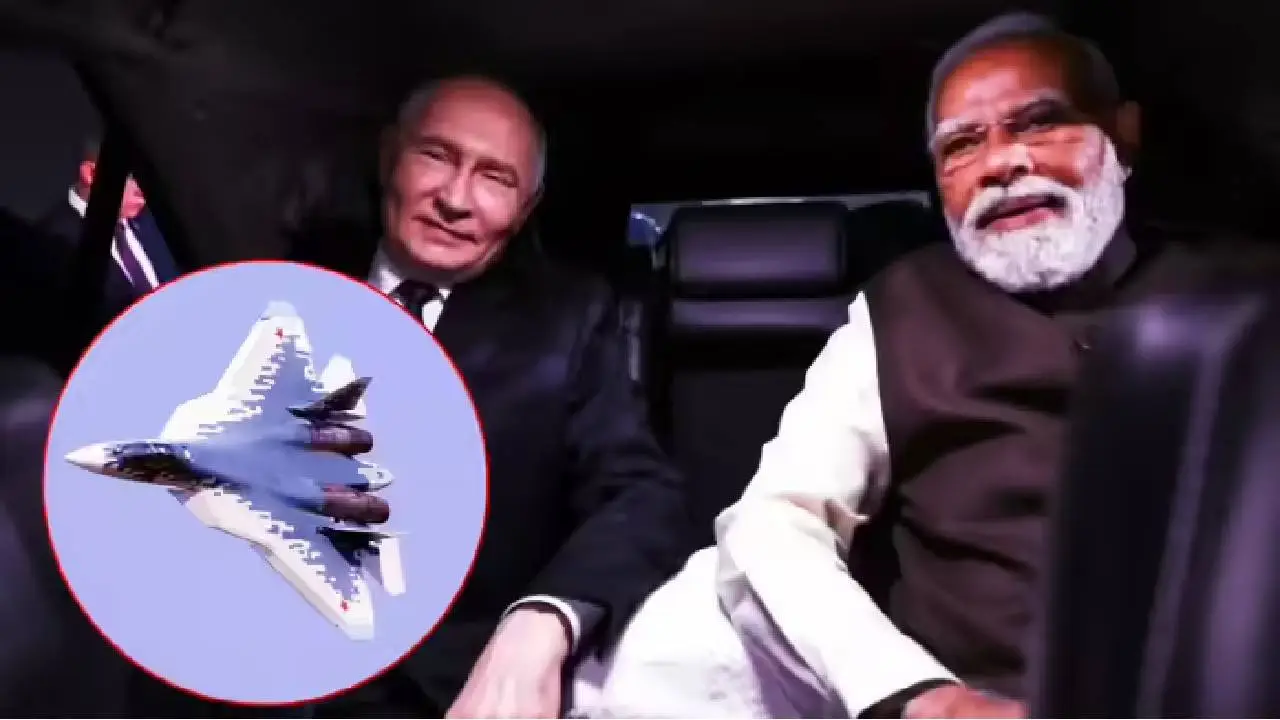
Su-57 Fighter Je (Credit: OpenAI)
Russia has clearly stated that it is ready to go beyond normal defence sales. The offer includes complete technology transfer of the Su-57E fighter jet. Even the highly protected source code is on the table. This means India would not remain dependent on foreign permissions. Indian engineers could modify systems independently. Such access is extremely rare in global defence deals. Moscow is presenting this as a partnership, not a sale. The message is aimed directly at India’s long-term strategic autonomy.
The Indian Air Force is facing a serious shortage of fighter squadrons. Older jets like MiG-21 have already been retired. Indigenous fifth-generation projects will still take time. Russia is positioning the Su-57E as a ready answer. It claims the jet already meets India’s operational needs. The offer highlights speed over waiting decades. Moscow believes timing is its strongest advantage. The urgency of fleet replacement strengthens Russia’s pitch.
The Su-57 flying today is not the same aircraft from its early years. Russia says the jet has evolved significantly over time. Weapons systems have been expanded and refined. Avionics have moved toward an open architecture design. A new engine, known as Product 177, is under flight testing. This engine promises higher thrust and better supercruise ability. Improved stealth performance is also being claimed by the manufacturer.
United Aircraft Corporation has repeated that source code sharing is possible. This would allow India to integrate its own weapons and software. Local upgrades could be done without foreign clearance. Such freedom is critical for wartime flexibility. Russia says this aligns with India’s strategic culture. It also fits the Make In India defence vision. Few countries have ever received such an offer. This is being presented as a historic opening.
India stepped back from the program in 2018 due to concerns. Technical risks and rising complexity were key reasons. Russia now claims those issues have been resolved. The jet is said to be combat-tested and mature. Production for the Russian Air Force is ongoing. Export agreements have also been signed, according to Moscow. Russia argues the risk phase is now over. It wants India to reassess the changed reality.
Russia claims the Su-57 platform is designed for 40 to 50 years of service. The aircraft has high payload capacity and internal weapon bays. This allows future weapon integration without redesign. Open avionics support continuous upgrades. Moscow sees it as a living platform, not a fixed product. India could shape its evolution over decades. This long horizon is meant to attract planners. It is being sold as a generational solution.
Russia is openly saying it stands alone in this offer. Other nations restrict code access and deep modifications. Moscow is highlighting its past joint production experience with India. Trust and history are central to its argument. The offer is framed as equal partnership, not buyer-seller. India is being told it can co-own the future of the jet. The decision now rests with Indian policymakers. The choice could redefine air power strategy.





Copyright © 2026 Top Indian News


