


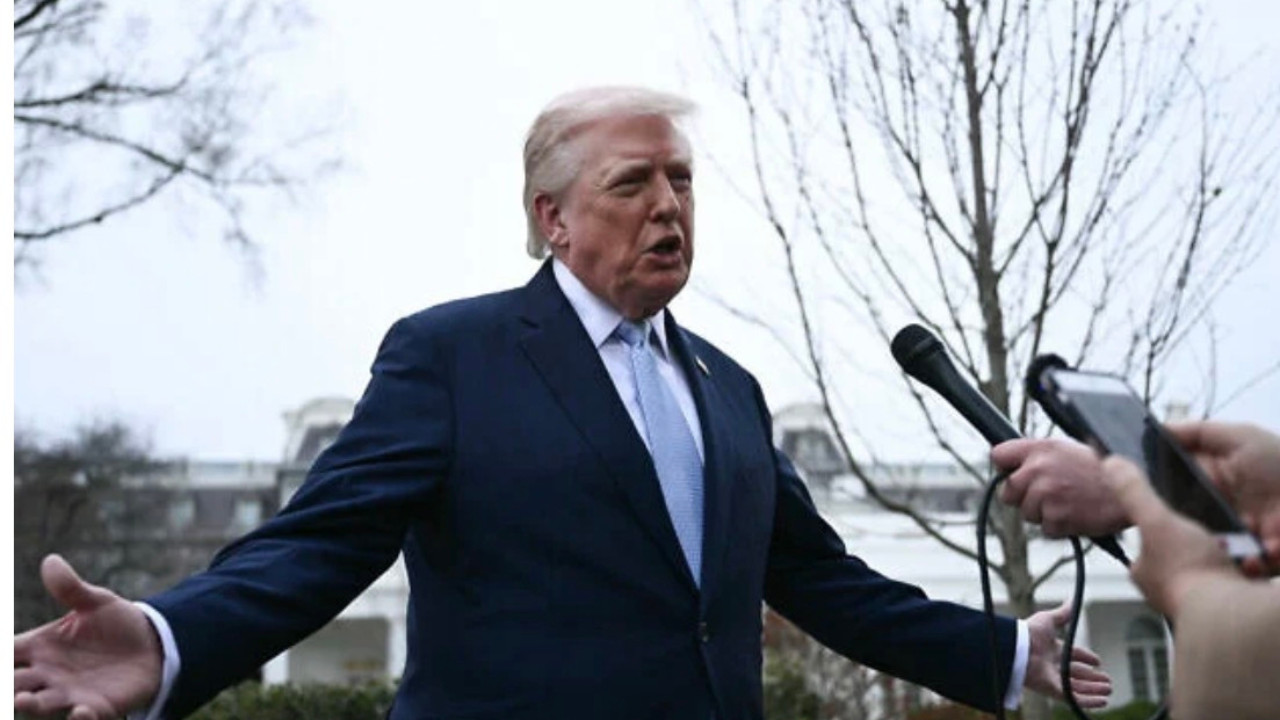
Donald Trump has hinted at a resolution of the Middle East Conflict. (Image X @MOSSADil)
New Delhi: US President Donald Trump hinted that the Middle East War may wind down in the near future, asserting that the United States and Iran have begun what he described as "very good and productive conversations" aimed at a full resolution of the conflict.
Amidst the ongoing tensions in West Asia, the confrontation between the United States and Iran has reached a new turning point. Meanwhile, US President Donald Trump has reversed his own 48-hour ultimatum. Trump has now put a pause on the deadline given to Iran to reopen the Strait of Hormuz, extending it for another five days. In other words, the US has, for the time being, postponed its plans to attack Iran's power plants by five days. Announcing the postponement of the attacks, the US President stated that since the two nations have been engaged in dialogue over the past two days, the planned strikes on power plants are being deferred.
Recently, Trump had warned Iran that if it failed to reopen the Strait of Hormuz within 48 hours, the US would strike its energy infrastructure—specifically its power plants. However, even before the 48-hour period had elapsed, Trump put a halt to that ultimatum. Trump has stated that he is currently postponing attacks on Iranian energy targets for a period of five days.
BREAKING PRESIDENT TRUMP: 🇺🇸🇮🇷 We had very good and productive conversations regarding a complete and total resolution of hostilities in the Middle East.
— Donald J Trump Posts TruthSocial (@TruthTrumpPost) March 23, 2026
Military strikes postponed for 5 days. pic.twitter.com/wiZh9F1H5p
The US President's decision to postpone attacks on Iranian targets comes at a time when Iran has issued a blunt warning: if its coastal regions or islands are attacked, it will block all maritime routes across the entire Persian Gulf by laying naval mines. According to a report by the semi-official *Fars* news agency, Iran's Defense Council stated that the only way for non-belligerent nations to navigate through the Strait of Hormuz would be to coordinate directly with Iran. The Council asserted, "In the event of any hostile attack on Iran's coasts or islands, all routes and lines of communication within the Persian Gulf and coastal areas will be saturated with various types of naval mines."
This strait constitutes one of the world's most critical oil supply routes, through which a significant portion of the global oil supply passes. In the latest development, the Trump administration has decided to grant Iran additional time by temporarily halting military action. It is believed that this step has been taken with the aim of providing an opportunity for diplomatic dialogue, stabilizing the global oil market, and averting a potential major war; this is because Iran has made it clear that, should it come under attack, it could not only completely shut down the Strait of Hormuz but also target energy installations within the region.
If such a scenario were to unfold, it could further exacerbate the global energy crisis. Oil prices—which have already surged past $100 per barrel—could reach new heights, and stock markets worldwide could witness further declines. Given this context, Trump's decision appears to offer a measure of temporary relief. However, the situation remains extremely precarious. The next five days will determine whether this crisis is resolved through diplomacy or escalates into a major military confrontation.


Copyright © 2026 Top Indian News


