


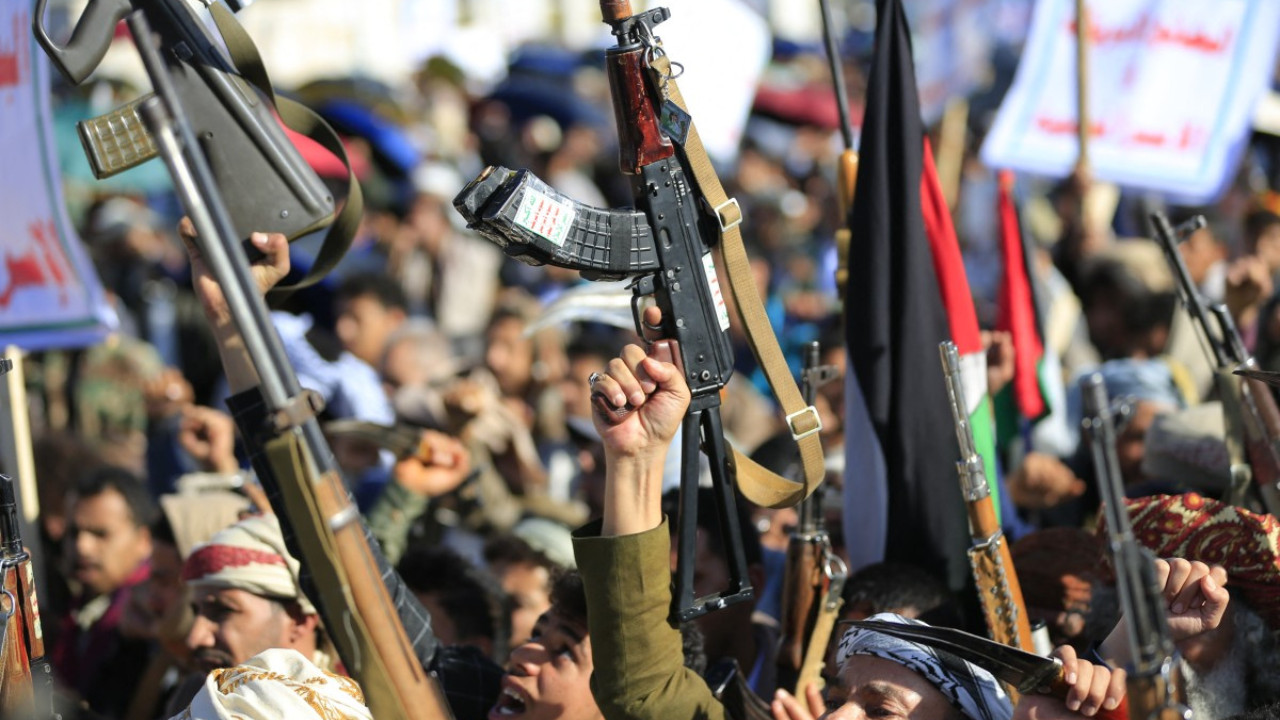
Yemen's Houthi rebels have now officially entered the conflict involving Iran. (Image X @ANI)
Tehran: Yemen's Houthi rebels have now officially entered the conflict involving Iran. Until now, the Houthi rebels had remained neutral, offering support to Iran solely through public statements. However, they have now fired at least two ballistic missiles targeting Israel. This has heightened fears that the ongoing conflict in the Middle East could escalate even further.
The Houthi rebels maintain control over one of the world's busiest maritime routes. They have previously disrupted global shipping traffic through the Red Sea by targeting it with their attacks. Now, by once again intervening in the Middle East conflict, they have amplified global concerns.
According to reports, intelligence findings reveal that the Houthi rebels have established a self-sustaining "war economy" that poses a significant threat to international maritime shipping and regional stability. Citing intelligence reports, the article states that the group is generating substantial revenue by exploiting Yemen's economy—specifically its reliance on imported food and fuel. This revenue is providing financial backing for the Houthi rebels' military operations. Consequently, the Houthi rebels are able to regroup and execute attacks despite facing strikes from Israel and the United States.
- The Houthi rebels are also known as Ansar Allah. They are an armed Shia group based in Yemen.
- The Houthi rebels receive support from Iran, a backing that has enabled them to seize control of large swathes of Yemen, including the capital city, Sana'a.
- The Houthi rebels consider themselves part of the "Axis of Resistance"—an alliance that opposes attacks on the Gaza Strip and supports Iran.
- Established in the 1990s, the Houthi rebels represent the Zaidi sect of Shia Islam.
- Since 2023, the Houthis have launched drone and missile attacks on international commercial vessels transiting through the Red Sea in solidarity with the Palestinians in Gaza. How the Houthi Rebels Are Making Money
The Houthi rebels' network encompasses three key ports: Hodeidah, Saleef, and Ras Isa. Through these three ports, the Houthi rebels levy heavy customs duties and tariffs. In some instances, these tariffs on essential goods reach as high as 100 percent. Additionally, extra taxes are collected on the import of essential food items and fuel. It is estimated that between 2022 and 2024, the Houthi rebels generated approximately $4 billion from fuel import duties alone.
A report indicates that the Houthi rebels have generated approximately $5.5 billion through illicit levies and profits. These profits continue to rise, as Yemen's economy is entirely dependent on imports. These earnings are utilized to accelerate missile production, drone manufacturing, and naval operations. The Houthi rebels also generate profits by selling imported or smuggled fuel on the black market at inflated prices. This is a revenue stream that shows no signs of drying up anytime soon.
The report also highlights that Yemen's Houthi rebels rely on China for components, raw materials, and electronics used in the production of weaponry. They are able to easily procure "dual-use" components and raw materials from China. In recent years, China has accounted for 35 percent of the seized shipments destined for the Houthi rebels. Furthermore, the Houthi rebels are facilitating the transport of Iran's sanctioned oil to Chinese refineries. This generates substantial revenue—a benefit the Houthi rebels are readily exploiting.


Copyright © 2026 Top Indian News


