


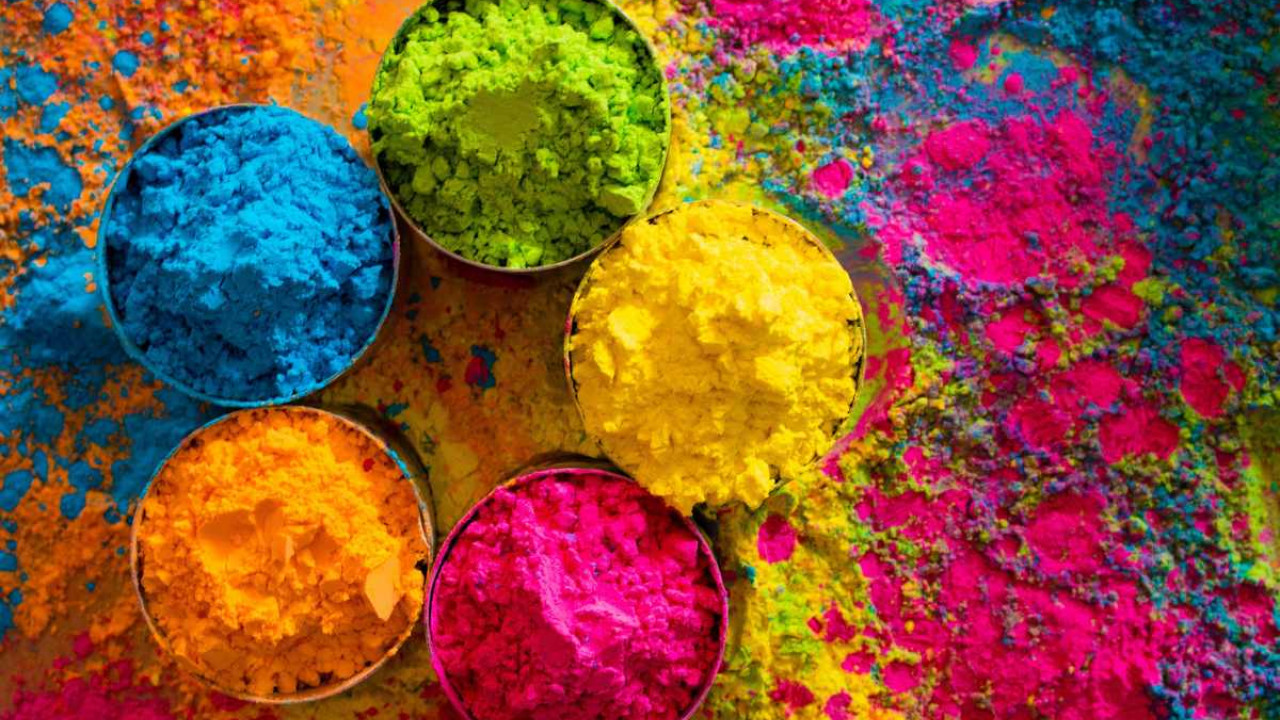
Holi in an Uncertain World: Faith, Freedom and the Festival of Spring (Image Courtesy:Housing)
New Delhi: Holi—which is also known as Phagwa or Phaag in many places—comes every year with a splash of colors, laughter, singing and a certain freedom. This is a welcome to spring, a celebration of new beginnings. It brings us closer to each other and breaks social walls for a while.
But Holi has never remained separate from history. Over the centuries, empires have risen and fallen, wars have raged, political tensions have risen, and people have celebrated amid uncertainty. In 2026, as the US-Iran military action has escalated and a wave of anxiety is running across the world.
We all know the story of Prahlad, who did not bow down to the dictatorship of his father Hiranyakashipu. Burning of Holika and Krishna breaking social rules with colors. These stories show the triumph of devotion, the freedom of love, and the power of goodness.
But the story is never ineffective. In a time when the world is divided into simple "good vs. evil" formulas, these stories can provide courage—or they can hide complexities. When political conflicts also take place in this language, are we able to deepen our moral thinking through these sacred stories, or do we just turn them into weapons?
Holi has always been celebrated not only in peaceful days but also in times of war and difficult times. There is hardly a year when violence is not happening somewhere or other. There are reports of America's attacks on Iran in 2026, family members are worried, and acquaintances are in danger. In such a situation, the fire of Holi, the feeling of victory and collective enthusiasm do not remain just symbols. But Holi teaches something else too—colors that erase visible walls, laughter that breaks fear, and embracing each other when the world is full of doubt.
Holi looks different everywhere. In North India it is full of fanfare on the open roads, perhaps a little quieter in the south. Phagwa became the identity of the Indo-Caribbean community in the Caribbean, adding local colors to Bhojpuri traditions. In America and Britain, it is celebrated in temples, university campuses or public festivals—sometimes religious, sometimes merely cultural.
In expatriate places, Holi brings more old memories, it also becomes more inclusive. But when America is taking military action in the Middle East, this celebration cannot remain separate from politics. Communities live right in the middle of foreign policy.
For many Dalit and tribal brothers and sisters, Holi is not just happiness. History has stories of caste-based insults, forced inclusion, and exclusion. Some people reject the main festival, some celebrate a separate Holi with their own dignity. Take a fresh look at some narratives—were the so-called "bad" characters actually marginalized people? These questions do not diminish the beauty of Holi, rather they make it deeper.
The slogan "Don't feel bad, it's Holi" (Bura na Mano holii hai) has been misused many times in Holi. Women and marginalized people remain alert to avoid unwanted touching or molestation. Now communities are thinking afresh—consent and responsibility are essential for happiness. Without care, mania does not last long.
Holi is a celebration of spring, but nowadays wastage of water, chemical colors, and plastic—all these harm nature. In times of climate crisis, responsible celebrations are a must—natural colors, dry Holi, less water, and community rules.
Holi is often called the festival of reversal—the rules and regulations are relaxed for a day. But is this just temporary relief, or can it bring real change? In 2026—when society is divided, wars are ongoing, climate is worsening, and caste-gender conflicts continue—this question becomes even more acute. Will colors remain just colors or bring real change? Will the new beginning be only seasonal?
Holly asks us to keep these questions together—without solving them. Having many voices in tradition is not a weakness, it is a strength. It keeps us alive.


Copyright © 2026 Top Indian News


