


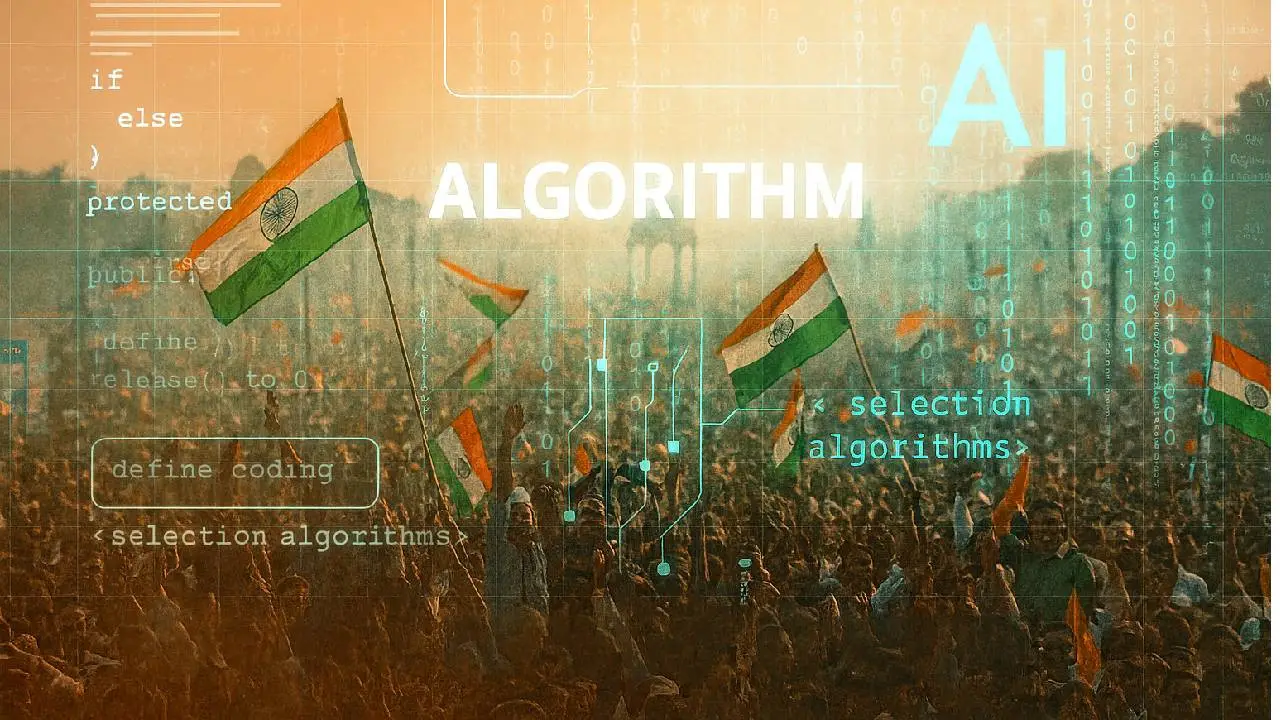
Algorithmic Censorship (Credit: OpenAI )
For years, the internet was celebrated as the world’s most democratic invention — a global town square where every citizen could speak, organise and influence. That optimism has collapsed. Today, the battle for free speech is no longer about who may speak; it is about who gets to be heard. And that decision lies not with courts or parliaments, but with private algorithms operating inside opaque rooms of global platforms.
The first truth of the digital age is stark: free speech is not the same as free reach. A post may survive online but be silently throttled, demoted or buried. A video may not be taken down but may become invisible. Visibility, not censorship, is now the real instrument of power. Every citizen today speaks into a system that constantly decides — through code — whether their words deserve oxygen.
This immense influence rests with platforms that still claim neutrality. They are not neutral. Their moderation systems, once designed to fight spam, now function as ideological filters. Three forces define this new landscape: moderation, manipulation and the collapse of neutrality.
Moderation has evolved from a technical function into a political one. Platforms deploy reactive moderation (after complaints), proactive moderation (AI scanning every post before it appears), and algorithmic moderation (ranking, burying or boosting content). One minor policy change can wipe out a creator’s livelihood or distort a public conversation. Most users have no idea how engineered their worldview has become.
Manipulation is the second force — and perhaps the more dangerous one. Outrage is profitable. Conflict retains attention. Anger drives engagement. The feed is not a reflection of public sentiment; it is a persuasion machine optimised for platform economics. Governments, political parties and interest groups exploit this architecture to push narratives, suppress criticism or influence elections. Meanwhile, AI-personalised feeds create customised political realities for every citizen.
This leads to the third force: the death of platform neutrality. BigTech companies can no longer pretend they are mere conduits of information. They are now the world’s most powerful editors — but editors without accountability, transparency or a public mandate.
India is at the centre of this global battle. The Intermediary Rules (2021/2023) require platforms to comply swiftly with takedown orders and enable message traceability. The Digital Personal Data Protection Act creates a new privacy regime but grants wide exemptions to the state. Deepfakes are exploding, especially during elections, and India still lacks a dedicated law to combat them.
Meanwhile, courts are becoming digital referees, hearing petitions on takedowns, account suspensions and online speech almost weekly. India’s decisions will shape global norms, especially as other democracies watch how the world’s largest digital public sphere balances rights, regulation and platform power.
Internationally, the picture is fractured. The United States protects speech aggressively; the European Union enforces strict content moderation; China maintains complete state control; and India is moving towards a hybrid regulatory model. The world is no longer governed by one free speech norm — it is now a patchwork.
The new battle for free speech is being fought inside recommendation engines, not rallies. Democracies must confront a hard truth: the public square now belongs to private companies, whose incentives are commercial, not constitutional.
If democratic expression is to survive meaningfully in the digital age, the world needs a new social contract — one built on algorithmic transparency, platform accountability and empowered citizens. Until that happens, algorithms will decide the truth, and democracies will bear the consequences
Himanshu Shekhar, Group Editor, Dainik Bhaskar (UP, Uttarakhand)


Copyright © 2026 Top Indian News


