


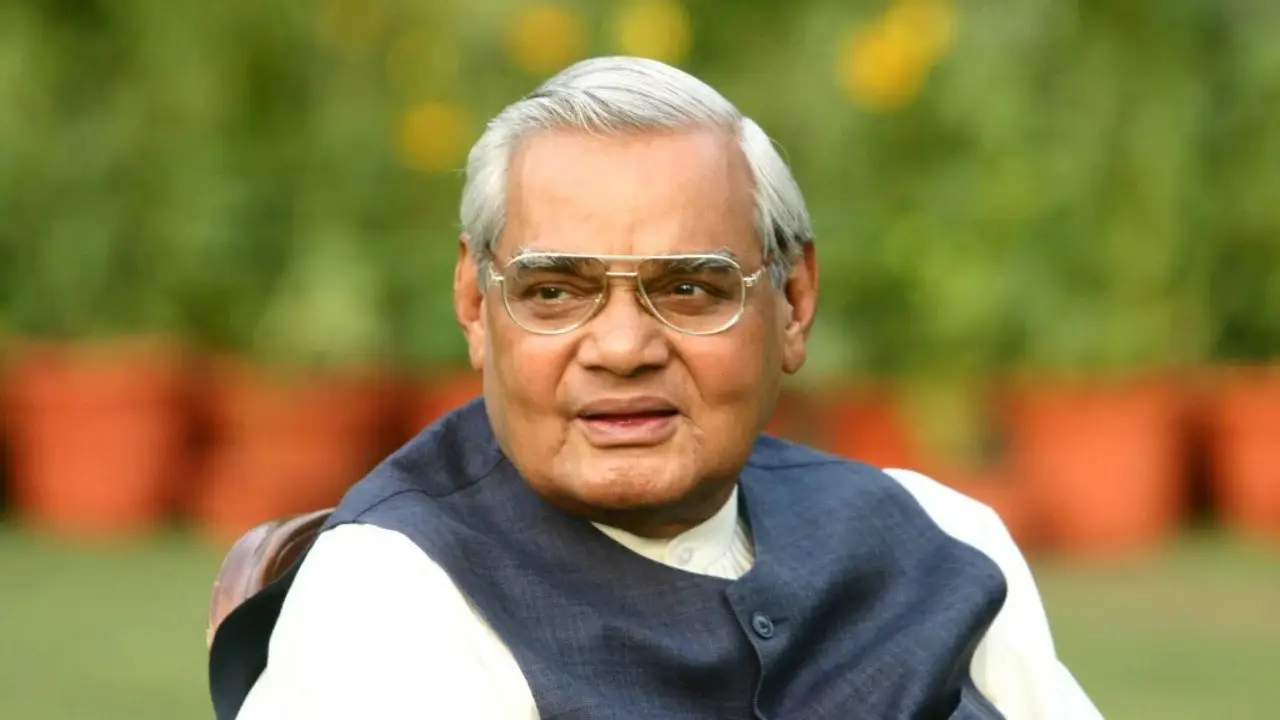
Atal Bihari Vajpayee's Legacy Lives On: How 10 Major Reforms Shaped Today's India (X)
New Delhi: On the 101st birth anniversary of former Prime Minister Atal Bihari Vajpayee, leaders and experts recall the reforms his government pushed that still influence India's growth today. Vajpayee's term as prime minister from 1999 to 2004 was marked by decisions on economics, infrastructure, education and governance that many see as turning points in India’s recent history.
Many of these reforms touched everyday life, from roads and schools to pensions and telecommunications.
Golden Quadrilateral and National Highways: Vajpayee pushed for massive improvements to India's transport backbone. He launched the Golden Quadrilateral and related national highways projects that linked major cities across the country, reducing travel times and helping commerce grow. He also backed the Pradhan Mantri Gram Sadak Yojana to give rural areas reliable road access, connecting villages to markets and services.
Sarva Shiksha Abhiyan (Education for All): In 2000–01, the government started the Sarva Shiksha Abhiyan programme to make elementary education free and compulsory for children aged 6 to 14. Over time, it brought millions more students into classrooms and cut dropout rates, setting a foundation for later education reforms nationwide.
Telecom Revolution: A new telecom policy under Vajpayee opened the doors to private companies and competition. This helped make phone services more affordable and widespread. It ended the strict government monopoly in the sector and paved the way for the mobile boom India saw in the 2000s.
Electricity Act and Energy Reform: His government passed the Electricity Act of 2003, a major overhaul that sought to improve generation and distribution and allow private participation. The idea was to make electricity supply more efficient and attract investment into the power sector.
National Pension System: The Vajpayee government introduced a contributory pension scheme that moved many government staff away from an old defined-benefit system. This new National Pension System was designed to share retirement savings responsibilities and modernise how pensions are funded.
Fiscal Responsibility Law and Tax Reforms: To bring more discipline to government spending, his administration introduced the Fiscal Responsibility and Budget Management Act. This law aimed to reduce the deficit and manage public finances more prudently. Vajpayee’s era also saw early steps toward broad tax reform and better tax administration.
Privatisation and Market Opening: Vajpayee’s team began a privatisation push that sold stakes in several government-owned companies. It also opened up sectors like banking and insurance to greater foreign direct investment, aiming to attract capital and boost competition.
Energy and Fuel Pricing Changes: His government began removing some fuel subsidies and made pricing more market-linked. It also advanced a longer-term energy security vision that encouraged exploration and investment in oil and gas projects at home and abroad.
The Vajpayee government initiated key reforms, including private sector entry into airport management via Public-Private Partnerships (PPPs) for Delhi, Mumbai, Bengaluru, and Hyderabad, but these modernisation projects largely blossomed after his term (around 2006), with PPP models formalised later; he also began decontrolling fuel prices, a move later continued, impacting Aviation Turbine Fuel (ATF).
The Vajpayee government established the Insurance Regulatory and Development Authority of India (IRDAI) in 2000, which ended the monopoly of the Life Insurance Corporation (LIC).


Copyright © 2026 Top Indian News


