


AI
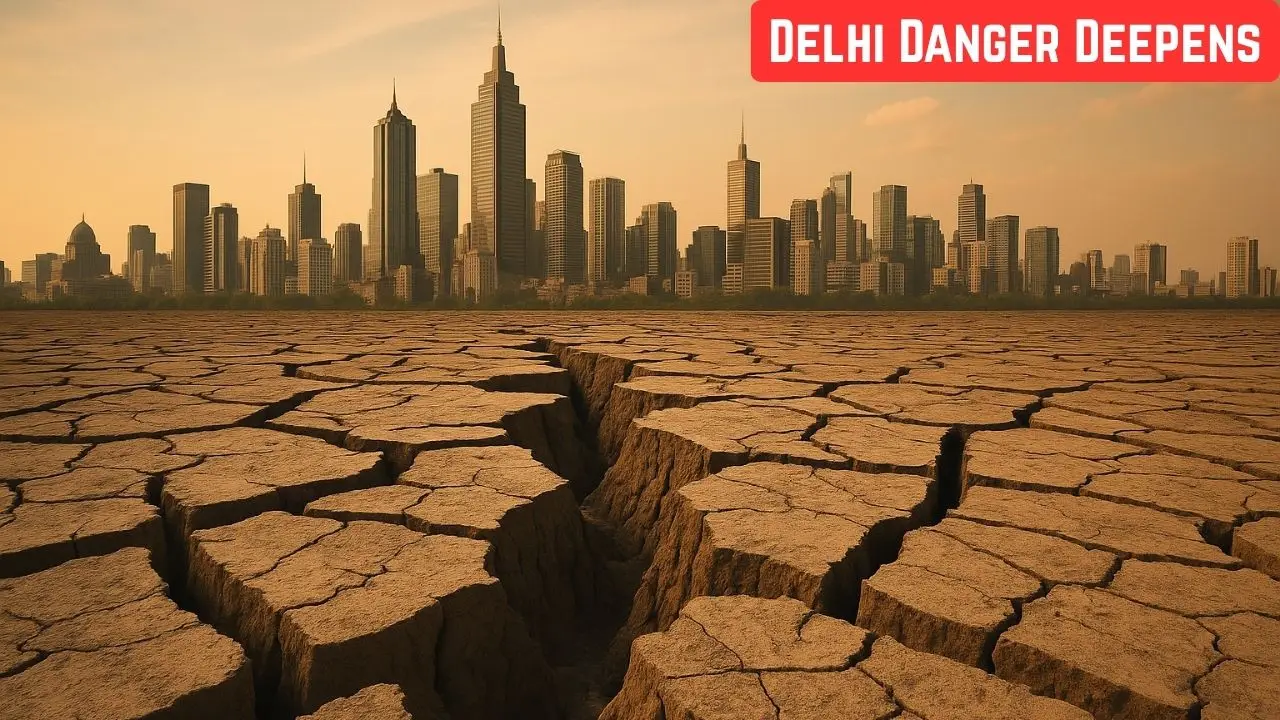
New Delhi: India's capital Delhi is now facing a new environmental crisis– land subsidence. According to a recent international study, land is sinking rapidly in many parts of Delhi-NCR. This threat has become so serious in Delhi that the foundations of thousands of buildings have started shaking. If the situation does not change, this danger may increase further in the coming decades.
A study published in the journal 'Nature' states that the rate of land subsidence in Delhi has now reached 51 mm per year. In this research titled 'Building Damage Risk in Sinking Indian Megacities', it has been said that 2,264 buildings in the capital have come under the category of serious structural danger. At the same time, about 17 lakh people are living in such places where land subsidence is posing a direct threat.
Delhi ranks third in terms of subsidence among the five big metros of the country. About 196.27 square kilometers are affected here. Ahead of this are Mumbai (262.36 sq km) and Kolkata (222.91 sq km). In areas like Bijwasan, Faridabad and Ghaziabad of Delhi-NCR, the land is sinking at the rate of 28.5 mm, 38.2 mm and 20.7 mm per year respectively. Even the Dwarka area of Delhi is showing signs of weakness at many places.
Researchers have enumerated three main reasons for this change happening under the earth:
The study warns that if the current situation is not controlled, 3,169 more buildings in Delhi will be at risk in the next 30 years. Whereas after 50 years this number may increase to 11,457. Cities like Mumbai, Chennai and Bengaluru are also not untouched by this crisis.
According to experts, cracks in buildings are not the only indicator, and buildings without cracks can also be affected. In such a situation, it has been recommended to prepare an integrated database related to land subsidence and damage to buildings so that governments can take policy decisions at the right time.
This combination of climate change, rapid urbanization, and resource exploitation has now become an alarm bell for India's cities. It is time that the authorities, planners and common citizens all take serious action together, otherwise it will become difficult to handle the situation if there is a delay.


Copyright © 2026 Top Indian News


