


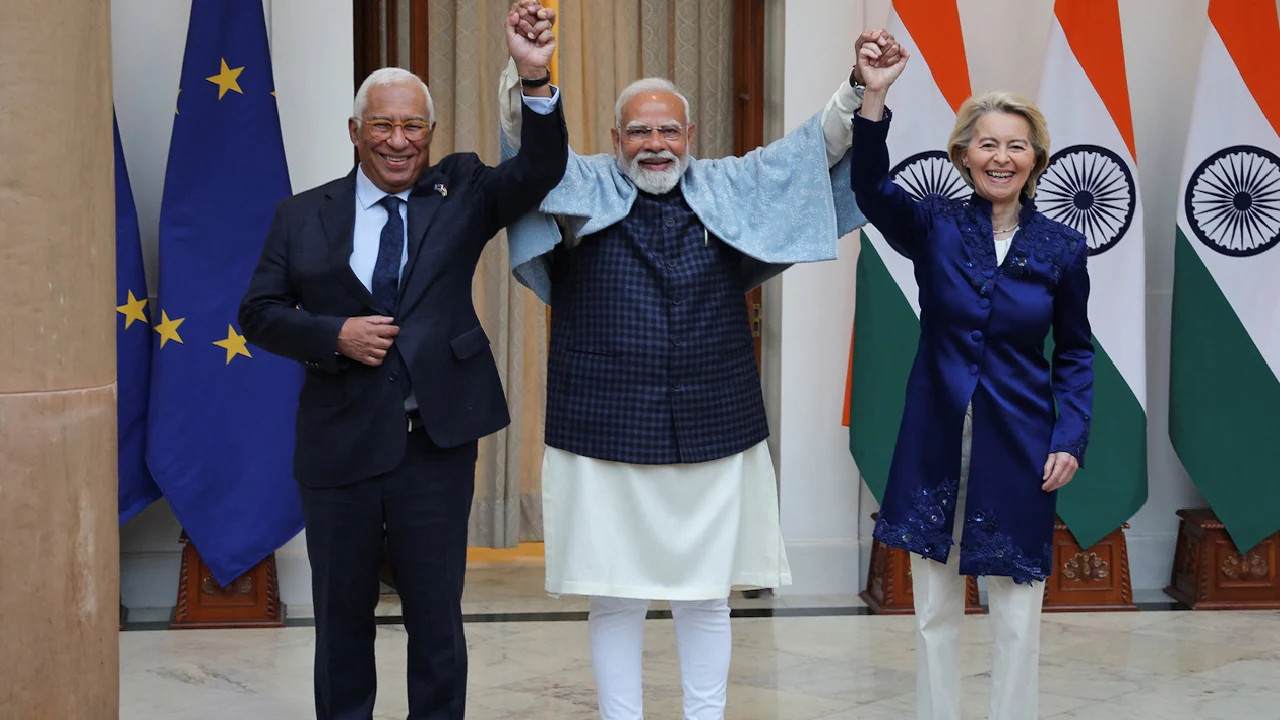
India–EU Trade Agreement to Power MSMEs, Major Gains Expected in Six Sectors (Image Courtesy: Instagram)
New Delhi: The upcoming free trade agreement between India and the 27-nation European Union (EU) can prove to be a big game-changer for many sectors. The special thing is that among the sectors that will benefit the most, the share of MSMEs, i.e., small and medium industries, is more than 50 percent. Its impact will be directly visible on the economy of more than six states of the country.
Currently, there is an import duty of about 12 percent on Indian textile products in Europe. This fee will be completely abolished as soon as the agreement is implemented. The EU imports textiles worth about $263 billion every year, but India's share in this is only around $7.2 billion. Removal of duty will open the way for Indian companies to keep prices low and increase competition in the European market.
Businessmen associated with Ludhiana (Garments), Jalandhar (Sports Goods) and engineering items of Punjab are expected to get direct benefits from this. Many textile clusters of Uttar Pradesh can also be strengthened by this.
Currently, there is a 13 percent duty on Indian chemical products in the EU and 3 to 5 percent duty on pharma. This will also become void after the agreement. Europe imports chemicals and medicines worth about $500 billion every year, while India's share is currently only around $10 billion.
Industrial areas like Bharuch and Vadodara of Gujarat are likely to benefit the most from this, where the chemical industry is already strong.
The EU imports plastic and rubber products worth about $317 billion annually, but India contributes only $2.4 billion. At present, there is about 6 percent duty on Indian products, which will now end. This can give an edge to Indian companies in terms of both price and supply.
Leather footwear currently attracts around 17 percent import duty in the EU. After the agreement this will also become zero. Europe imports footwear worth about $100 billion every year, while India's share is only $2.4 billion.
The leather industry is quite large in cities like Kanpur, Agra and Saharanpur of Uttar Pradesh. This agreement can bring new demand and more orders for the exporters here.
At present the EU charges about 26 percent duty on Indian marine products, due to which India's exports have been limited. The situation may change after the removal of duties, because EU imports marine products worth $53 billion every year, while India is able to export only $1 billion.
Coastal states like West Bengal and Andhra Pradesh can benefit greatly from this. Besides, agricultural exports of Western UP, vegetables and fruits of Eastern UP and sports goods of Meerut can also find better market in Europe. The demand for Bengal tea is also expected to increase.
There is currently a 4 percent duty on gems and jewelry in the EU. India exports about $2.7 billion in this sector, while Europe's total imports are more than $79 billion. The abolition of duty will create an opportunity for India to reduce this gap. Surat in Gujarat, Handicraft Cluster in Rajasthan and electronics exporters in Tamil Nadu are also likely to benefit from this.
There is currently a 150 percent duty on EU wine in India, which is planned to be reduced to 30 percent in 7 to 10 years. This duty on liquor will be reduced from 150 percent to 40 percent and on beer from 110 percent to 50 percent. The current 100 to 125 percent duty on EU cars will be brought down to 10 percent in a phased manner over seven years, but the exemption will be limited to just 2.5 lakh cars.
The EU has implemented the Carbon Border Adjustment Mechanism (CBAM) from this year, under which additional taxes will be levied on goods with high carbon emissions.
India tried to get it removed in talks, but at present it was not successful. This may especially affect India's steel and aluminum exports, because the production of green steel and green aluminum in the country is still very limited.
Union Home Minister Amit Shah has described the agreement as a “strategic success” for India's global trade policy. He said that this will strengthen the goal of self-reliant India and is a big step towards a reliable and balanced partnership. Also, it will give new heights to India's economic potential in line with the vision of “Developed India 2047”.


Copyright © 2026 Top Indian News


