


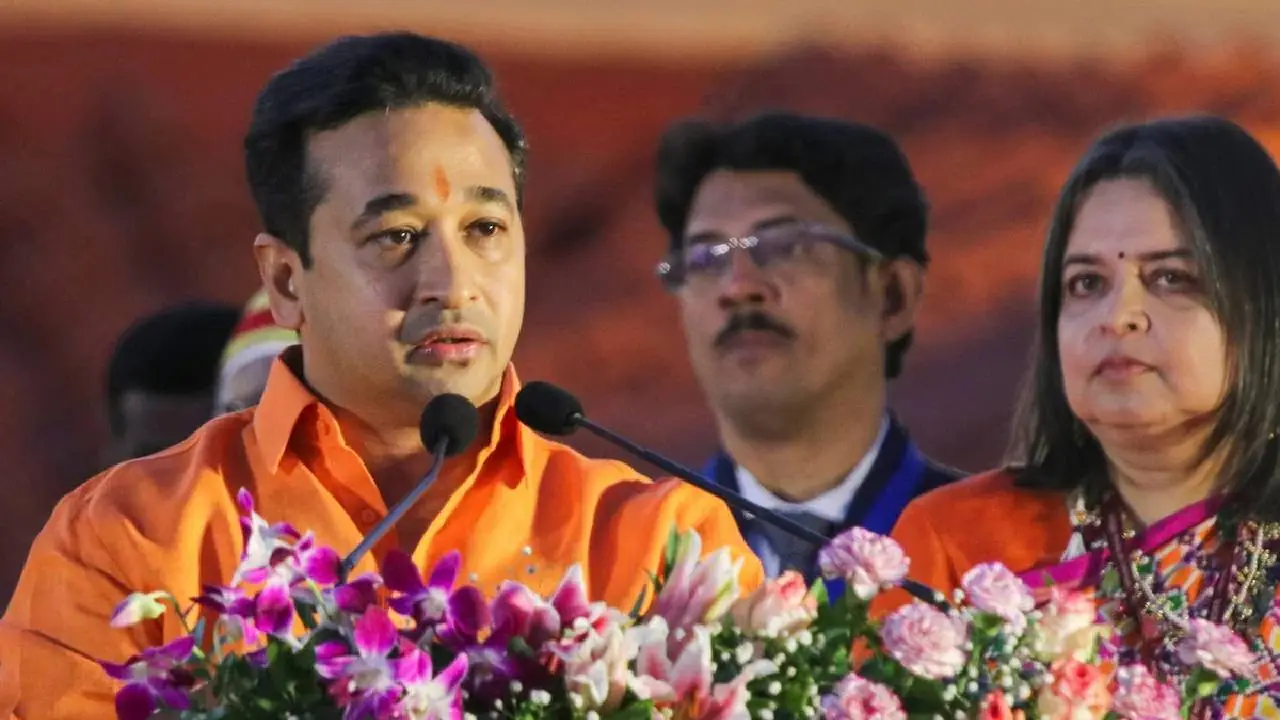
Mumbai Mayor Controversy (Credit: OpenAI)
The controversy began after comments by Maharashtra minister Nitesh Rane during a television interview. He said Mumbai’s mayor should be someone who says “I Love Mahadev.” He added that no “Khan or Pathan” should hold the post. The statement was delivered in a firm tone. It quickly spread across political circles. Many saw it as a deliberate provocation. The remarks shifted debate from civic issues to identity.
Rane’s remarks were a response to comments linked to leaders of AIMIM. The trigger was a question raised earlier on why someone with a Muslim surname could not become Mumbai mayor. Rane rejected that idea strongly. He said such political dreams belonged outside India. His language was sharp and uncompromising. The exchange escalated tensions between parties. It added fuel to an already charged atmosphere.
Rane argued that Mumbai’s political character was rooted in Hindutva. He said the city’s identity could not be separated from Hindu symbols. He used phrases like “Bhagwa-clad mayor” to underline his stance. According to him, religious pride was central to leadership. He also used foreign city references to attack opponents. These comments drew attention instantly. Supporters praised clarity. Critics called it divisive.
During another interaction, Rane linked his statement to global developments. He warned that ignoring identity politics could change Mumbai’s leadership character. He used a comparison involving religious slogans to make his point. This framing added urgency to his message. It suggested fear-driven politics. Observers noted the shift from local governance to ideological messaging. The focus moved away from civic performance. The debate became emotional.
The controversy comes ahead of crucial Brihanmumbai Municipal Corporation elections. The BMC is India’s richest civic body. Control over it carries major political influence. Seat-sharing talks between BJP and allies are ongoing. Rane avoided specifics on alliances. He said decisions would be taken collectively. Political parties are positioning themselves carefully. Statements like these shape voter narratives early.
Opposition parties accused the BJP of polarising voters. They said civic elections should focus on roads, water, and services. BJP leaders defended the remarks as ideological clarity. The clash highlighted widening political divides. Religion-based rhetoric has become more visible. Analysts say such debates can mobilize core voters. They can also alienate moderates. The impact will be tested at the ballot box.
Mumbai’s mayoral post is symbolic as well as powerful. It represents control over urban governance for five years. With elections scheduled soon, every statement carries weight. The city has over one crore registered voters. Political messaging is becoming sharper. Identity politics is taking center stage. Whether voters accept this narrative remains to be seen. The coming weeks will be decisive.


Copyright © 2026 Top Indian News


