


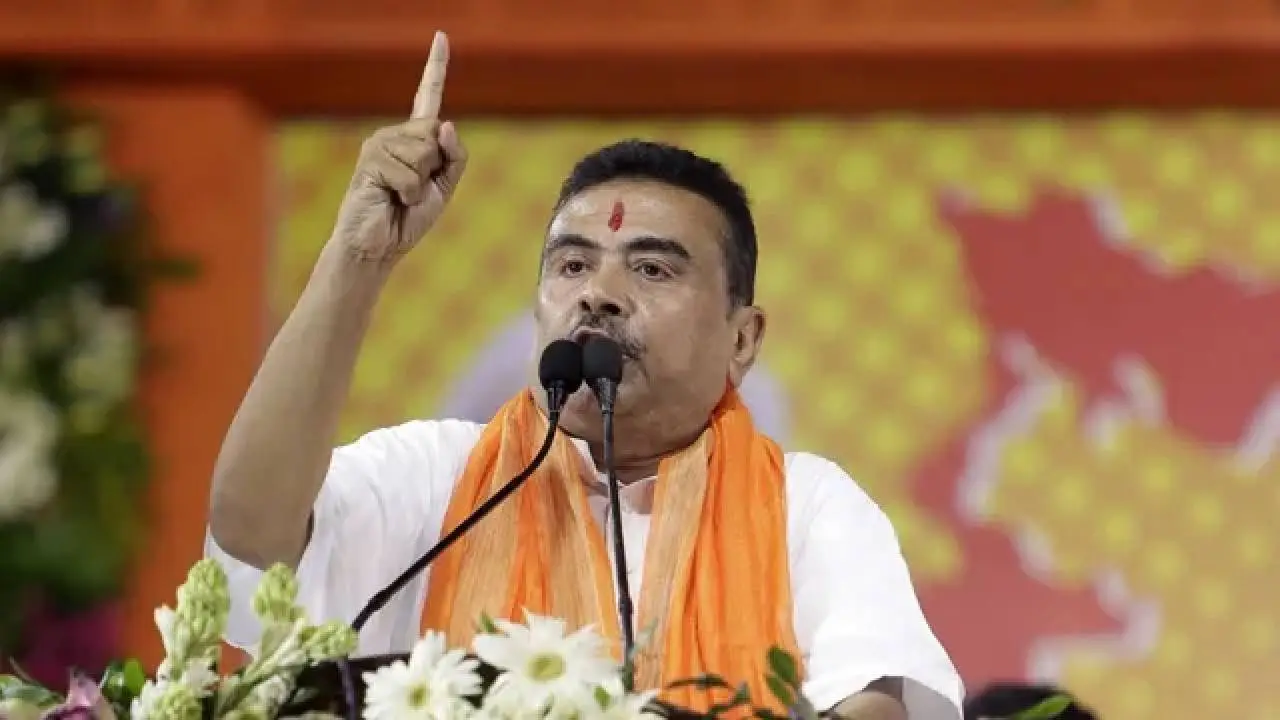
Bengal Government Launches Massive Welfare And Social Reform Push (Credit: OpenAI)
Kolkata: West Bengal Chief Minister Suvendu Adhikari has announced a series of major welfare and administrative reforms following a high-level government meeting in Kalyani, Nadia district. The announcements are being viewed as a strong attempt to reshape Bengal’s political and social landscape under the BJP-led government.
The Chief Minister clarified that the state government intends to accelerate the implementation of promises made in its election manifesto while delivering the “real benefits” of a double-engine government model. Political observers say the presence of opposition MPs and MLAs during the meeting also reflected a changing political atmosphere in the state.
One of the biggest announcements was the upgrade of the state’s subsidized food program. The government has decided to serve special fish-rice meals twice a week for just Rs 5 through nearly 400 state-run canteens.
For the remaining five days, people will continue receiving affordable meals consisting of rice, dal, vegetables and eggs at the same subsidized price. The scheme is aimed primarily at helping poor families and daily wage workers across Bengal.
The government has also doubled financial assistance under the earlier “Lakshmi Bhandar” scheme. The revised program, now renamed “Annapurna Bhandar Yojana,” will provide eligible women with Rs 3,000 per month instead of Rs 1,500.
Officials confirmed that application forms for the new scheme will be issued from Wednesday through both online and offline modes. The administration plans door-to-door outreach campaigns led by BDOs and local legislators to help beneficiaries complete the registration process.
However, Chief Minister Adhikari made it clear that only Indian citizens would receive benefits under these welfare programs, while illegal Bangladeshi infiltrators would be excluded.
In a major social reform announcement, the Bengal government declared that liquor shops would no longer be allowed within one kilometre of schools, colleges and temples.
The Chief Minister said the decision was aimed at protecting students and preserving the sanctity of religious places. The move is expected to trigger large-scale administrative action across urban and rural districts.
The government also announced the closure of the previous administration’s “Didi Ke Bolo” and “CM Ke Bolo” complaint systems. A new public grievance platform titled “Aapka Sarkar Se Kahen” will now replace them.
A fresh toll-free helpline number will also be introduced to handle citizen complaints and administrative issues more efficiently.
In the healthcare sector, the state government confirmed that the Ayushman Bharat scheme will officially be implemented in West Bengal from July 1. The scheme will provide free health insurance coverage of up to Rs 5 lakh to eligible citizens.
Additionally, the government plans to create a separate AYUSH department independent from the Health Ministry to promote traditional Indian medicine systems more effectively.
The Bengal Cabinet has also approved free bus travel for women passengers. Smart cards are expected to be introduced soon in order to prevent misuse and ensure proper implementation of the scheme.
Political analysts believe these announcements indicate the beginning of a new “BJP governance model” in West Bengal, combining welfare politics, cultural identity, women empowerment and administrative restructuring.
Many observers see this as a direct challenge to the long-standing “Mamata model” that previously dominated Bengal politics.


Copyright © 2026 Top Indian News


