


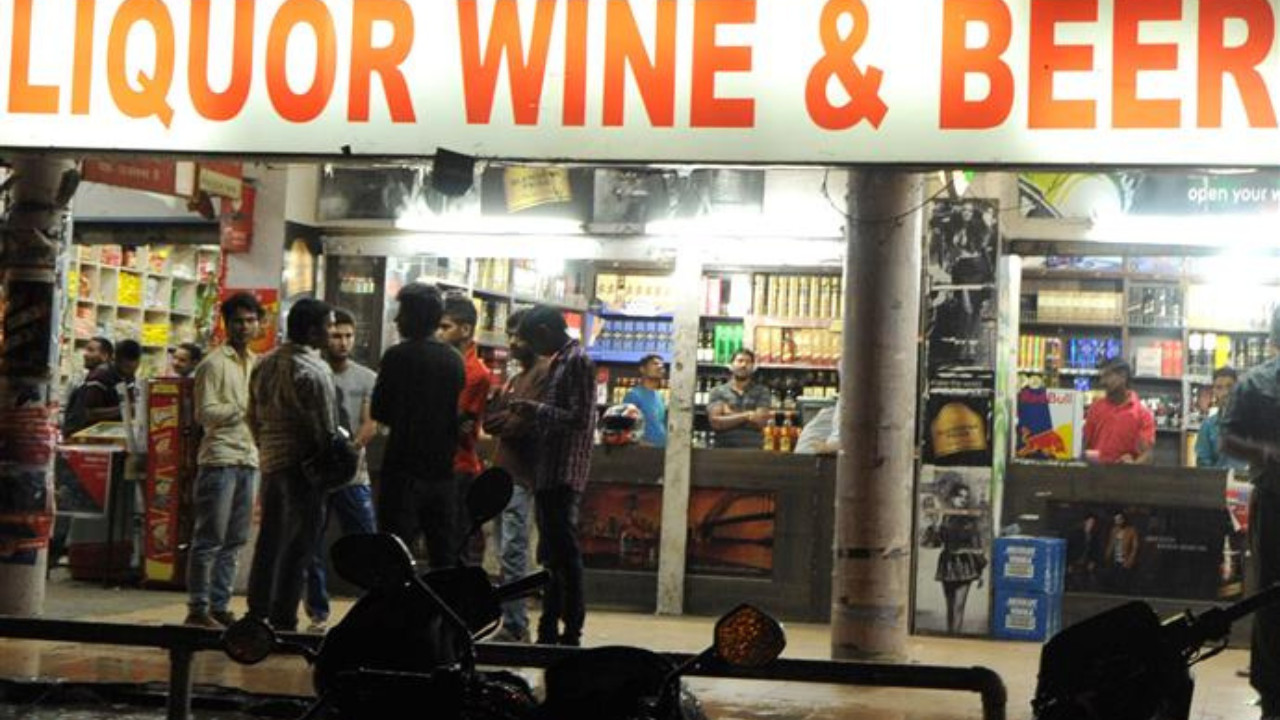
The Chandigarh administration has released the excise policy for the financial year 2026-27. (Image X @ChandigarhBytes)
Chandigarh: The Chandigarh administration has released the excise policy for the financial year 2026-27. Liquor rates have been increased by a modest two percent. This will make a bottle priced at Rs. 500 a mere Rs. 10. A bottle priced at Rs. 2000 will become more expensive by Rs. 40 and will now be available for Rs. 2040.
A modest increase of up to two percent in the ex-distillery price (EDP) of Indian liquor, Indian Made Foreign Liquor (IMFL), Indian beer, and Indian wine has been proposed, taking into account inflation and rising raw material costs.
However, this increase will not apply to wine imported from other countries, imported beer, and imported foreign liquor. Any further increase in EDP or EBP will be considered only after the first quarter of the excise year 2026-27, subject to uninterrupted supply of the brand. This new policy will come into effect from April 1, 2026, and will remain in effect until March 31, 2027.
Under the new policy, a total of 97 liquor vends will operate in the city. The total reserve price for these licensing units has been set at ₹454.35 crore. The number of liquor vends remained the same last year. However, the reserve price has been increased by ₹10 crore. The security deposit for contract license holders has been increased to 17 percent of the bid amount. Licensees will now pay the license fee in one lump sum by the 15th of the following month, as opposed to the previous two installments. Last year, there was considerable controversy following the allocation of contracts. Many of the 96 contracts were surrendered. Consequently, the security deposit has been increased by 17 percent.
To facilitate business, the requirement to establish custom-approved bonded warehouses within the UT of Chandigarh has been removed. Now, such warehouses can be established anywhere in India, and the requirement of one year of prior experience has been removed. Furthermore, all bonded warehouses operating in the UT of Chandigarh will be required to register on the excise portal and upload monthly import and export details to the portal by the 7th of the following month.
The new policy does not make any changes to the retail quotas for country liquor, IMFL, and IFL, so revenue will remain the same as last year. Keeping consumer convenience in mind, the L-10B license has been reinstated, allowing liquor sales through organized departmental stores. This feature was previously available but was discontinued. This is expected to benefit women, senior citizens, and other consumers. Failure to pay license fees within the stipulated time will result in the cancellation of their L-2 or L-14A license, along with all other licenses held by them, and recovery action will be initiated as per law.
Bar licensees will be required to purchase liquor from their nearest two retail outlets (L-2 or L-14A). If both outlets are owned by the same entity, purchases can be made from a third nearby outlet. All vehicles used for the import, export, and local supply of liquor will be required to be equipped with GPS tracking systems. This is to prevent smuggling. For retail outlets operating in government or administrative premises, the licensee will be required to pay rent directly to the relevant department and complete all formalities.
To increase transparency and oversight, CCTV cameras have been made mandatory in warehouses in addition to retail outlets, and the department will also be provided with live feeds. Alcohol advertising regulations have been further tightened, with penalties for violations. CCTV camera systems in bottling plants have also been strengthened. Bottling plants will now operate six days a week (Monday to Saturday) instead of five, and overtime will be permitted on gazetted holidays. Security personnel will be deployed at bottling plants and CCTV control rooms, whose salaries will be borne by the department.
Cow Cess will continue as before. Under this, a cow cess of 50 paise will be levied on every 750 ml bottle of country liquor, 50 paise on every 650 ml of beer, and ₹1 on every 750 or 700 ml of whiskey. Furthermore, the minimum retail selling price of beer will also be revised and will be fixed in different categories based on the ex-brewery price.


Copyright © 2026 Top Indian News


