


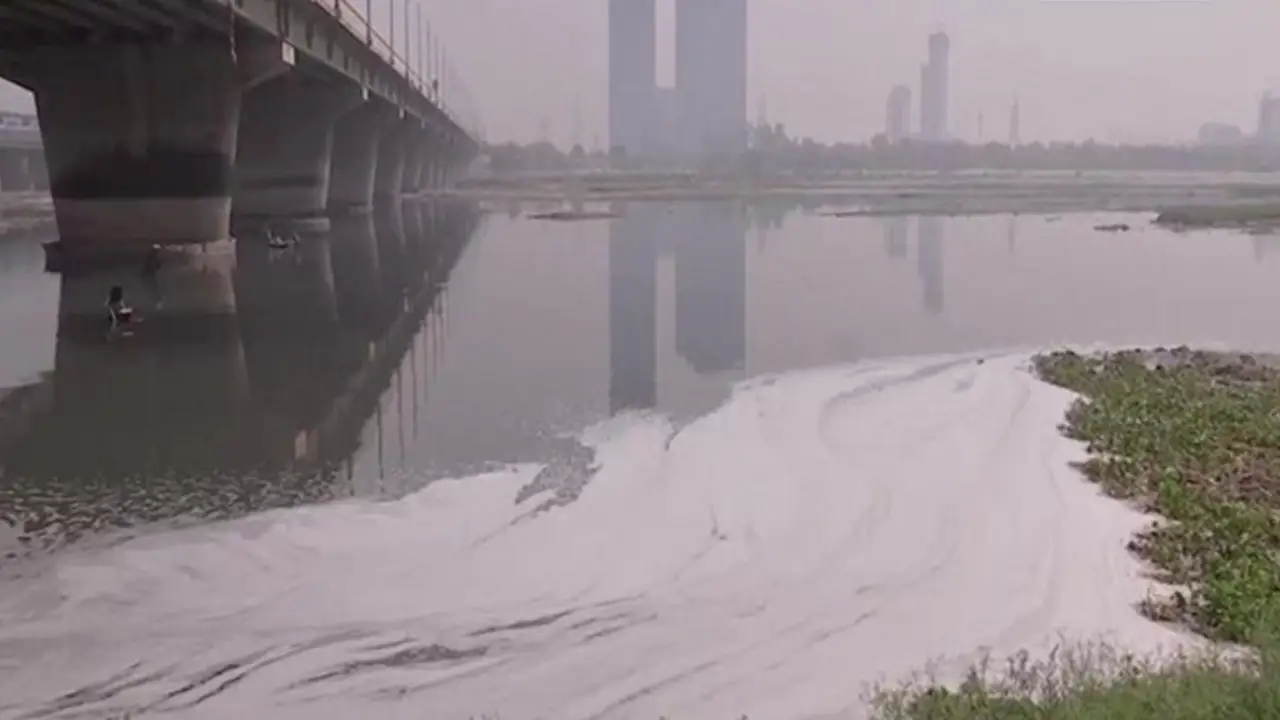
High Ammonia Levels in Yamuna Hits Delhi's Water Supply (X: ANI)
New Delhi: High levels of ammonia in the Yamuna River have again disrupted water supply in many parts of the city, indicating presence of pollutants in the raw water, officials said on Wednesday.
According to officials, the sudden rise has forced treatment plants to slow operations.
An official said that "the pollution spike has impacted operations of the Wazirabad and Chandrawal water treatment plants (WTPs) where the operations are curtailed by 25 per cent to 50 per cent levels. Both Wazirabad and Chandrawal WTPs directly draw water from Yamuna through Wazirabad pond and supply treated potable water to parts of north, central and south Delhi."
The Delhi Jal Board (DJB) on Wednesday said the raw water drawn from the Yamuna at the Wazirabad pond contained ammonia far above the level its treatment plants can handle.
"Therefore, water supply will be available at low pressure till the situation improves. Public is advised to make judicious use of water and water tankers shall be available on demand from DJB helpline, 1916," said the statement issued by DJB.
A senior official of DJP said that machines at the Wazirabad and Chandrawal treatment works are built to cope with ammonia up to about 1.0 ppm. But recent tests showed levels climbing above 3 ppm, three times the treatable limit.
“DJB can treat up to 0.9 ppm of ammonia level in raw water, but beyond such a high level, neutralisation of ammonia with chlorine gas regularly leads to toxic chloramine compounds therefore the plants are operated at curtailed capacity,” said officials.
The DJB, meanwhile is diverting raw water from Munak canal towards Wazirabad to enable dilution of the Yamuna water, leading to shortage in water supply in plants fed by the canal.
!!Water Alert!!
— Delhi Jal Board (@DelhiJalBoard) January 21, 2026
Due to regular receipt of high pollutants in River Yamuna at Wazirabad pond, the water production has been affected approx. 25-50% at Water Treatment Plant of Wazirabad & Chandrawal WTP.
Therefore, water supply will be available at low pressure till the situation… pic.twitter.com/7muugFljMD
Parts of north, central and south Delhi served by these plants are seeing weak water flow or intermittent supply. Residential areas such as Defence Colony, Majnu Ka Tila, ISBT, NDMC zones, Punjabi Bagh, Shalimar Bagh and Greater Kailash are among those likely to feel the impact.
Many local residents have reported little or no water in sections of their neighbourhoods.
The DJB has also urged people to use water carefully until conditions improve. Water tankers can be requested through the board’s helpline for those facing severe shortages.


Copyright © 2026 Top Indian News


