


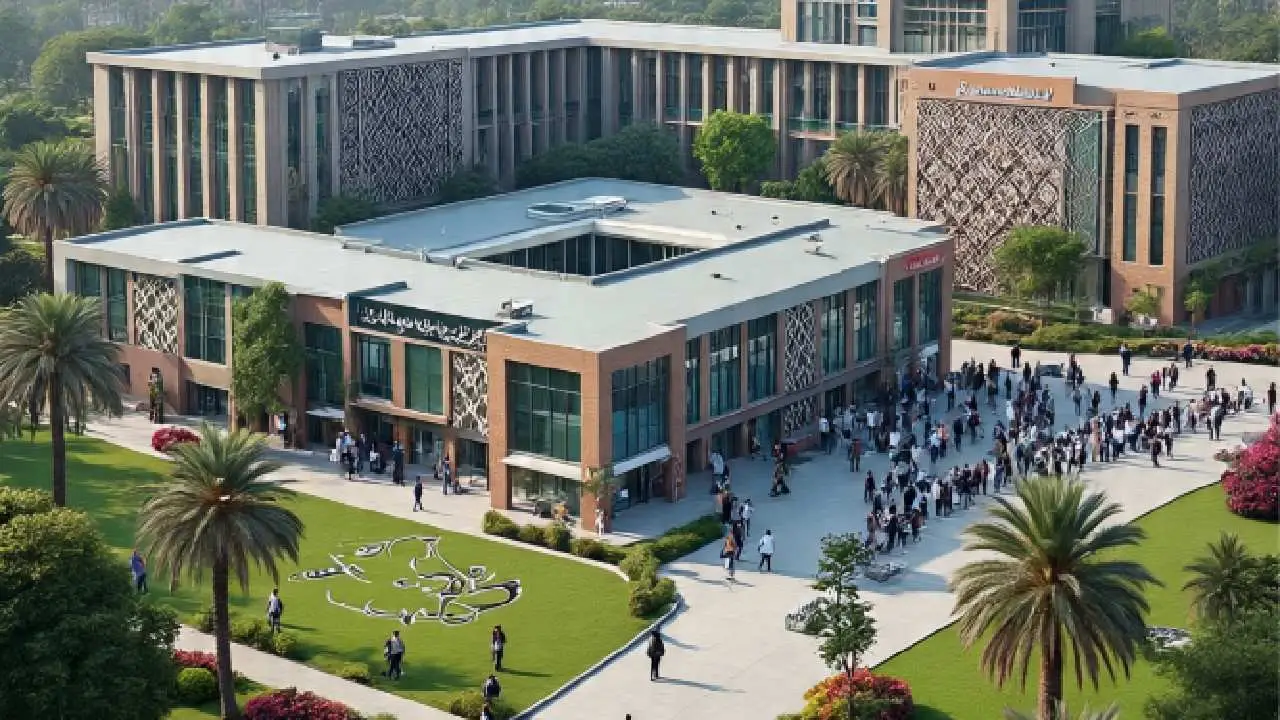
Integrating Madrassas with Universities: A Step Towards Empowerment (AI)
Uttar Pradesh: The recent conversations surrounding madrassa education in Uttar Pradesh mark a critical juncture in the socio-economic trajectory of the Indian Muslim community. Following the directive issued by the Supreme Court that invalidated the authority of the Uttar Pradesh Board of Madrasa Education to award higher education degrees like Kamil and Fazil.
A wave of uncertainty understandably swept through thousands of enrolled students. However, the state government has initiated a subsequent proposal to amend the State Universities Act of 1973 to affiliate madrassas with mainstream state universities. This transition, if executed with fairness and sensitivity, represents far more than a mere restructuring. It could become a vital bridge connecting traditional Islamic education with the highly competitive realities of the modern job market.
Madrassas have served the educational needs of the Muslim community for centuries. Particularly for the most marginalized, it provided elementary education and preserved a rich heritage of theology, jurisprudence, and classical languages. However, as the global and national economy evolved, the structural limitations of the madrasa system have become increasingly apparent. For example, a student spending years mastering theology to earn a Fazil degree often found himself at a systemic disadvantage outside the gates of the seminary.
Because these degrees lacked recognition under the University Grants Commission framework. The doors to mainstream postgraduate studies, formal corporate employment, and most government services remained firmly shut. Consequently, confined such students to a narrow professional corridor, often limited to teaching within the madrasa ecosystem itself or taking up jobs that required only secondary education.
The move to affiliate madrassas with reputed universities has the potential to dismantle these visible barriers entirely. For example, by bringing Kamil and Fazil degrees under the ambit of recognized university frameworks via bridge courses, it would prepare such students for a wider educational apparatus. It would naturally lead to the upgrade of the curriculum and modernization and reform of the madrassas.
Linkages with the universities would expose Madrasa students to the vibrant, critical and contemporary teaching styles, enhancing their intellectual capabilities. It would open doors for them to pursue other degrees, prepare for competitive examinations and contribute to the development of Nation.
This opens up a world of unparalleled possibilities. A madrasa graduate will now have the statutory eligibility to sit for the Union Public Service Commission examinations, apply for state administrative roles, pursue specialized research in central universities, or enter the modern corporate workforce. It would effectively shift the educational narrative from academic isolation to mainstream integration.
The integration must be approached not as an assimilation that erases identity, but as an expansion, that enhances opportunity. The pedagogical core of Islamic studies must remain intact. While the administrative standards, teaching methods, and complementary secular subjects are elevated to match university benchmarks.
Continuous dialogue between community leaders, educational experts, and the government will be the cornerstone of ensuring that this policy is implemented as a tool for genuine empowerment. We must champion an educational paradigm that equips students with both moral clarity and market relevance.
The current transition phase will undoubtedly require immense patience and adaptability from students, educators, and administrators alike. The syllabus will need careful alignment, teachers will require bridging courses, and students will need targeted counselling to navigate their new academic landscapes confidently. However, the long-term dividends of this integration far outweigh the transitional hurdles.
The proposal to link madrassas with state universities should be viewed as a crucial, long overdue recalibration. It is an acknowledgment that a religious degree and a prosperous, secular career are not mutually exclusive. By ensuring that our students step out of madrassas not just as scholars of the faith but also as qualified, employable citizens, we lay the strongest possible foundation for the future of the community.


Copyright © 2026 Top Indian News


