


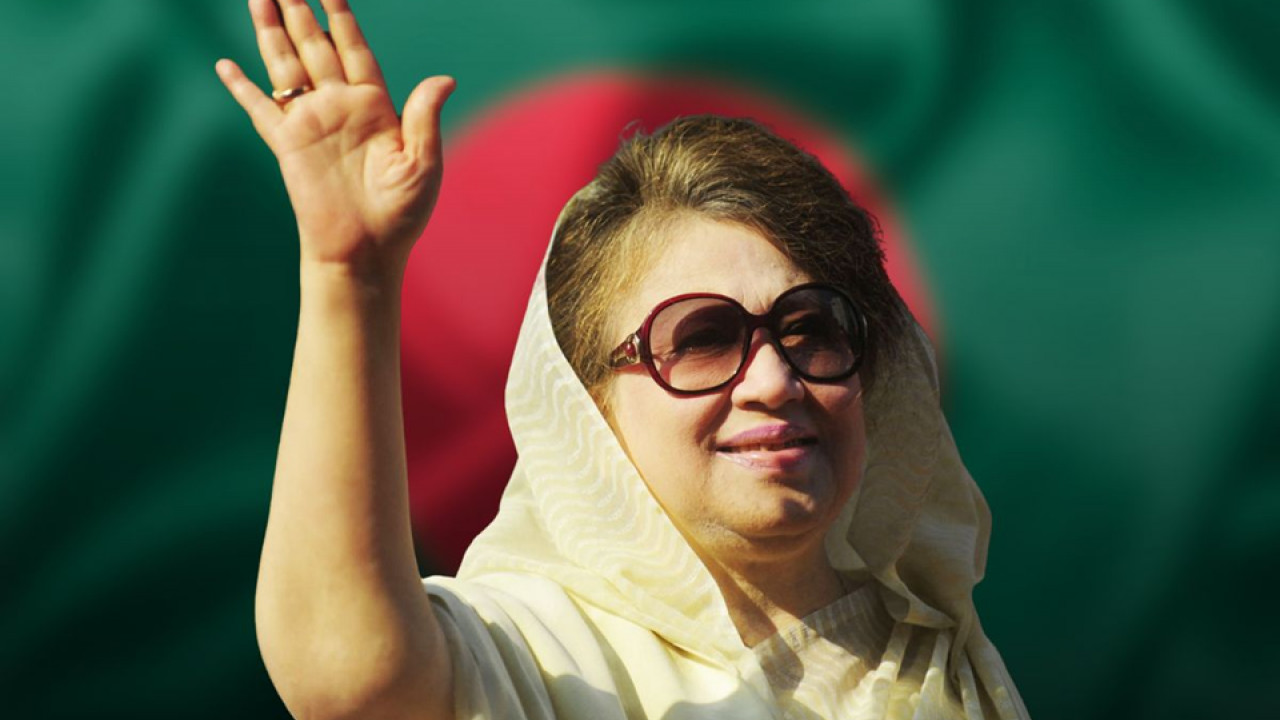
Dhaka: Khaleda Zia, former Prime Minister of Bangladesh and long-time voice of the opposition, died on Tuesday morning. She was undergoing treatment at Evercare Hospital in Dhaka. Doctors put her on a ventilator after several organs stopped functioning. She died at around 6 o'clock on Tuesday morning after Fajr prayers. Her age was 80 years.
The official statement of BNP (Bangladesh Nationalist Party) said that her death marks the end of an important period in the country's politics. The party appealed to supporters and common citizens to pray for her. Decisions regarding her funeral and government honors are still under discussion.
Her health has been continuously deteriorating for the last few months. Several complications occurred, including liver, kidney, and lung infections. Her personal physician had said last week that the situation “could turn critical at any time.” There was a ban on coming and going to the hospital, and the medical team was under 24-hour surveillance.
Her elder son and BNP working president Tariq Rahman recently visited Dhaka from London. Many hours were spent in the hospital under her care. This is the same Tariq Rehman who was accused in cases like corruption and conspiracy of violence and who lived abroad for 17 years.
Khaleda Zia's political journey was not the story of any ordinary leader. Became Prime Minister for the first time in 1991 and had the honor of being the first elected woman Prime Minister of the country. In 2001, she came to power for the second time. The political legacy came into her hands after the assassination of her husband and former president Zia-ur-Rehman.
She was born on 15 August 1945 in Jalpaiguri, West Bengal. Her public life was almost unknown before she settled in Chittagong after marriage. But by the end of the 1980s, she had become the pivot of national politics.
The contest between Khaleda Zia and Sheikh Hasina was not just a rivalry between two leaders. It was a battle between two ideologies, two political cultures, and two generations that shaped the politics of Bangladesh for decades. The heated exchanges between the two leaders, the conflict from Parliament to the streets, and strategies to overthrow power—all this became the hallmark of what people called the “War of Begums.”
In 2018, Zia was convicted in two cases—the Zia Orphanage Trust and the Zia Charitable Trust case. The BNP called it an abuse of power, while the court considered it evidence of corruption. Her punishment and deteriorating health drove her away from political activities.
Sheikh Hasina's government fell in August 2024 amid student protests, violence, and political confrontation. Khaleda Zia was released from house arrest following a presidential order. During the same time, BNP started becoming active in politics again. At this juncture his health started failing.
This time brought a vacuum and confusion in the politics of Bangladesh. Now after Zia's demise, BNP is eyeing the next path. Whether Tariq Rehman will be able to take over the party, or the leadership will pass into other hands—this will be decided in the coming months.
Khaleda Zia showed the country a period when the fight for democracy and power was going on side by side. For supporters she was a voice of hope and resistance. For critics, they are also a reason for political stubbornness and polarization.
History will look at both her contributions and controversies together—but it is clear that her place will not be filled.


Copyright © 2026 Top Indian News


