


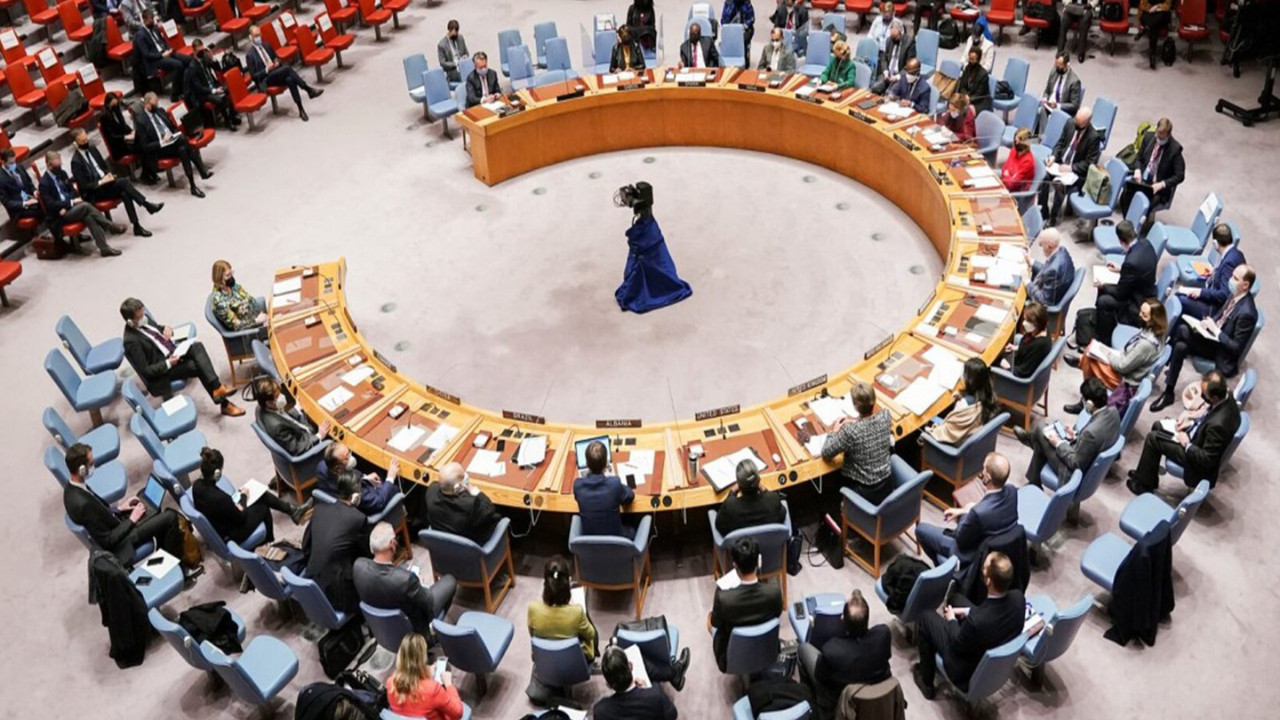
The UNHRC has reacted sharply to India's legislation concerning transgender persons. (Image X @ani_digital)
Geneva: The United Nations Human Rights Council (UNHRC) has reacted sharply to India's legislation concerning transgender persons. It has alleged that this law was passed in haste, without adequate consultation with stakeholders. The UNHRC has also stated that this Indian law will have far-reaching implications for the right to privacy and poses a risk of further marginalizing transgender individuals. However, this is not the first time the UNHRC has attempted to interfere in India's internal affairs; the Council has previously taken an aggressive stance against India regarding the issue of Kashmir.
Writing on X (formerly Twitter), the UNHRC stated: "We regret that the Transgender Persons (Protection of Rights) Amendment Bill, 2026, was passed so rapidly without adequate stakeholder consultation. These amendments threaten to erode the hard-won rights of transgender persons, as they replace 'self-identification' with mandatory medical examination procedures. India has historically been a leader in upholding the rights of transgender and gender-diverse individuals. This Bill will have far-reaching implications for the right to privacy and poses a risk of further marginalizing transgender persons."
In India, the Transgender Persons (Protection of Rights) Amendment Bill, 2026, recently received Presidential assent. This amendment primarily seeks to narrow the definition of a transgender person, making it more "medically-based." It mandates a certificate from a medical board as a prerequisite for obtaining an identity card. Under the new provisions, to obtain legal recognition as a transgender person, an individual must procure a certificate from a Medical Superintendent or a Chief Medical Officer (CMO), following which the District Magistrate (DM) will issue the identity card.
- The United Nations Human Rights Council is a principal inter-governmental body of the United Nations. Its primary objective is to promote and protect human rights worldwide, as well as to investigate human rights violations.
- The United Nations Human Rights Council was established in 2006. Its headquarters are located in Geneva, Switzerland.
- The United Nations Human Rights Council consists of 47 member states, elected by the General Assembly for a three-year term.
- The United Nations Human Rights Council works globally on issues such as freedom of expression, freedom of religion, women's rights, and the rights of racial and ethnic minorities.
Furthermore, the punishment for sexual, physical, or economic abuse committed against transgender individuals has been increased from two years to rigorous imprisonment of up to 14 years. There is a provision for imprisonment ranging from 5 to 10 years for coercing a transgender person into begging or bonded labor. The government states that the objective of this amendment is to ensure the safety and welfare of the transgender community.


Copyright © 2026 Top Indian News


