


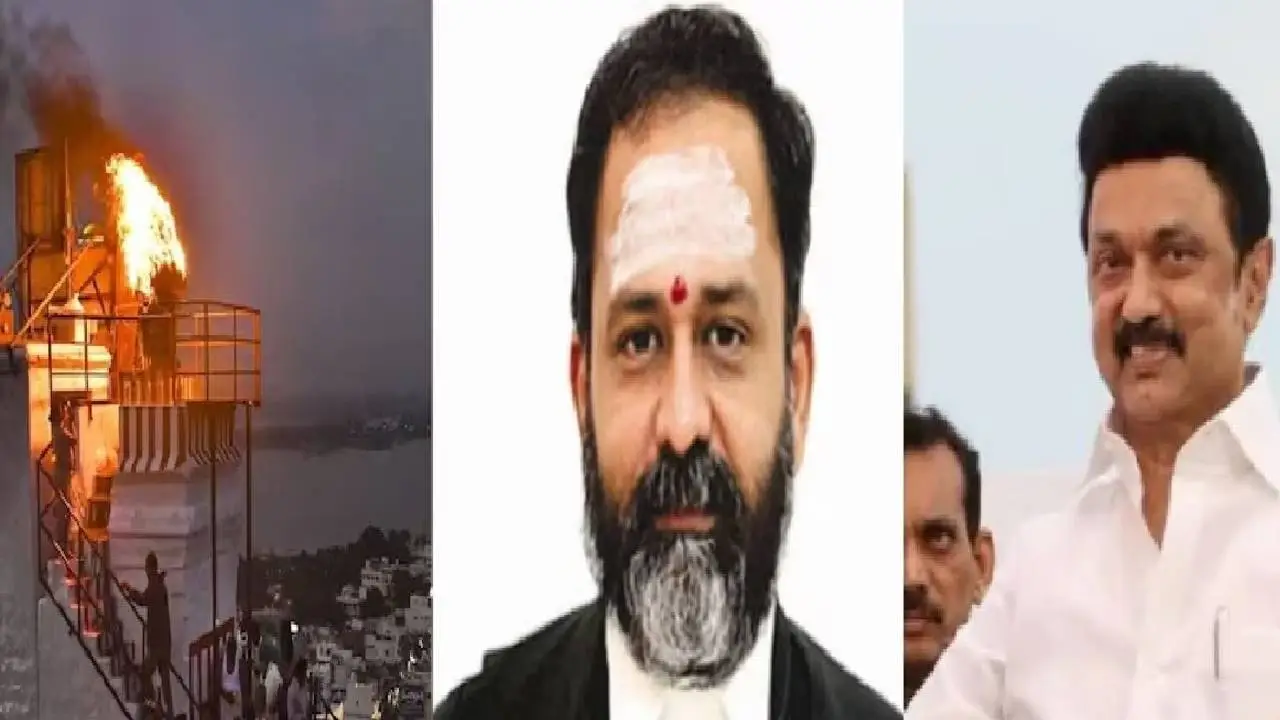
Justice Swaminathan (Credit: OpenAI )
Justice G. R. Swaminathan allowed a centuries-old ritual. The lamp was to be lit on a pillar owned by a Hindu temple. That pillar stands near a dargah on a hilltop. He said the ritual would not harm anyone’s rights. He allowed only ten devotees under full security. He told police to ensure peace. His focus was on tradition and law.
The Tamil Nadu government said this could create trouble. They claimed law and order might fail. So they stopped devotees from climbing the hill. People got angry and started protests. Hindu groups said their religious rights were denied. The government stood firm on its claim. The issue turned from legal to political very quickly.
A division bench supported Justice Swaminathan’s order. It said the state “wilfully” ignored the court. Strong words were used against officials. The bench repeated the same instructions. It showed that the order was lawful. Yet the government did not agree. This made the matter even bigger.
Some MPs from the ruling party want impeachment. They say the order may disturb communal harmony. They argue the judge crossed limits. They want Parliament to act. Opponents say this is political revenge. They claim the judge simply protected a ritual. The debate has reached national level.
He is 57 years old. He belongs to Tamil Nadu. He has worked as a lawyer for many years. He became a High Court judge in 2017. He handles constitutional and public issues. His rulings are widely discussed. He has also given important judgments earlier. His retirement is due in 2030.
If impeachment moves forward, it becomes very serious. Judges may fear decisions on sensitive issues. Politics may start influencing justice. People may lose trust in courts. Religious matters are always emotional. Any wrong step can hurt harmony. This case tests India’s handling of diversity.
The issue is now in Supreme Court. Parliament may take it up too. Ground situation is tense. Public opinions are divided. Judiciary insists its orders must be obeyed. Government insists security comes first. The final outcome will decide more than one case. It will decide how strong judicial independence remains.


Copyright © 2026 Top Indian News


