


x(Twitter)
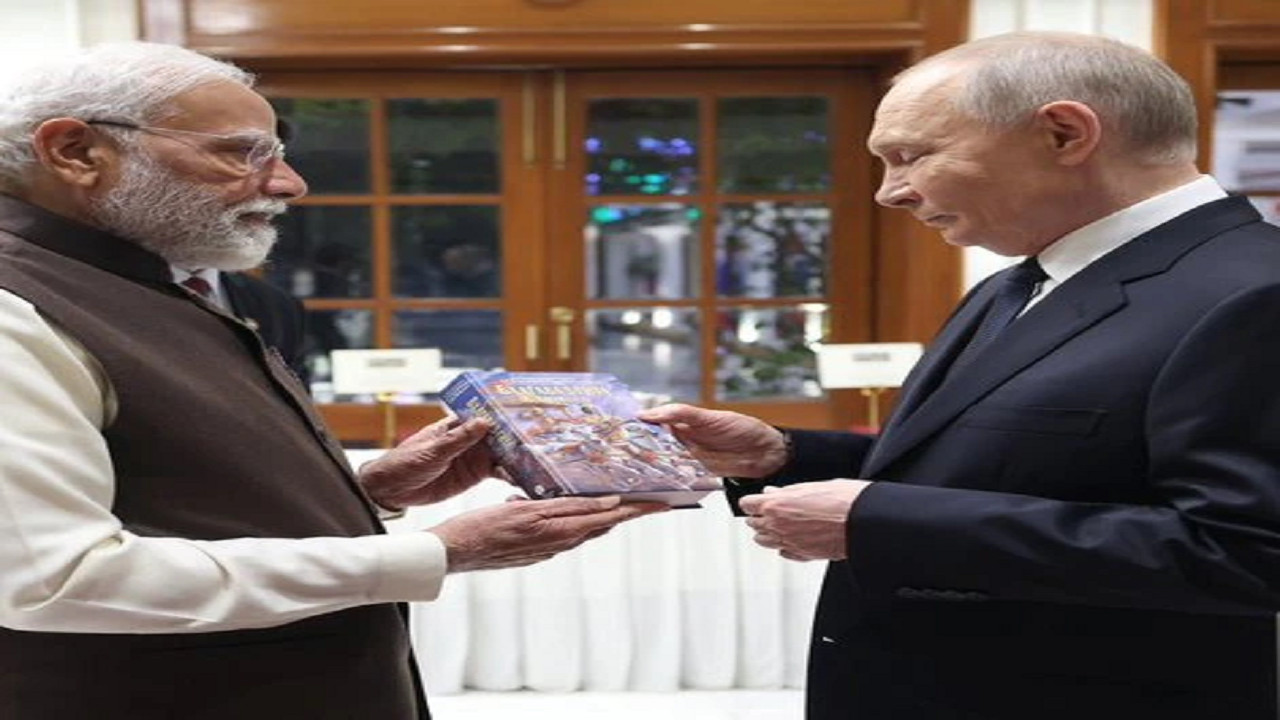
New Delhi: There was a moment during Russian President Vladimir Putin's visit to India that brought back a bit of nostalgia—and now the same old thing has come up again in a new meaning. Prime Minister Narendra Modi gifted a copy to Putin on the occasion of welcoming him—the translated Bhagavad Gita. But this is the same Gita, which, around 2011, there was a demand to ban in Russia by calling it 'extremist literature.'
In 2011, there was a controversy over a translated version of the Gita in the Siberian city of Tomsk, Russia. Local officials had demanded a ban on the sale of this book, calling it literature that would spread anarchy. Because of this, there was concern among the Indian community living there and the followers of the Hindu religion. At that time this news was in the headlines in India also.
But in 2025, when Modi and Putin met in Delhi, Geeta changed the whole story. In Delhi, on the way from the airport to the Prime Minister's residence—during a personal conversation—Modi presented Putin with a copy of the Gita translated into Russian. It was not just a book but a message: old disagreements are now behind us, and trust and respect have deepened again in India–Russia relations.
Modi also shared the moment on social media and noted the universality of the teachings of the Gita—which are not just religious but also rooted in moral and humanitarian values.
This meeting made it clear that not only strategic partnership but also deep cultural understanding has returned between India and Russia. That Gita, which was once considered controversial—today the same book has become a bridge of friendship between the two countries. Don't think of it as just a gift—it's a kind of fresh start, a new chapter of trust after old misunderstandings.
Today, the Gita has become a symbol, transcending the boundaries of language or religion: that real friendship consists of respect, understanding, and shared culture, not discrimination or prejudice.


Copyright © 2026 Top Indian News


