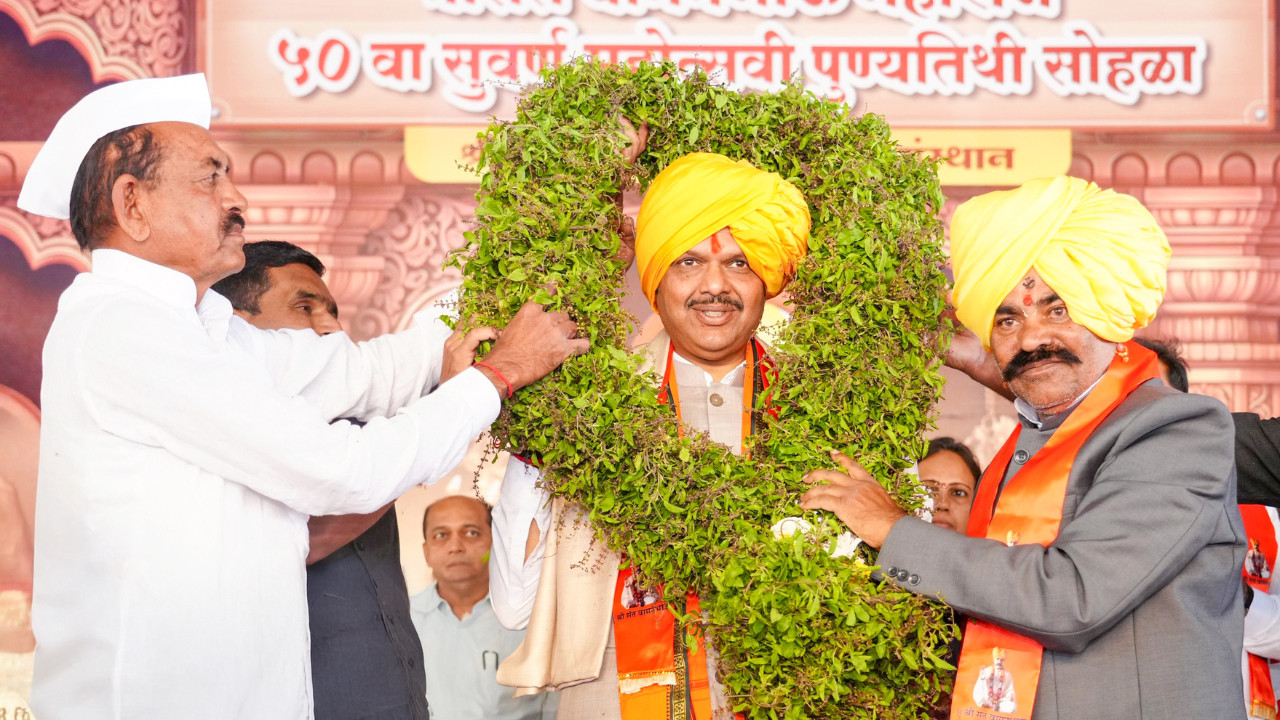
Over the past decade, Mumbai has witnessed a dramatic transformation thanks to massive investments in infrastructure, housing, and public services under the leadership of CM Devendra Fadnavis. (Image X @Dev_Fadnavis)
Mumbai: Over the past decade, Mumbai has witnessed a dramatic transformation thanks to massive investments in infrastructure, housing, and public services. Under the leadership of Chief Minister Devendra Fadnavis, the 'Mumbai Transformation' vision focused on easing daily commute challenges, reducing traffic congestion, and establishing Mumbai as a modern global city – while simultaneously maintaining its central role as India's financial capital.
The most significant changes have come from infrastructure projects that had been stalled for years and are now being completed at an accelerated pace. A coordinated master plan brought together roads, sea links, metro corridors, and airport expansion, addressing both Mumbai's immediate urban challenges and its long-term ambition to emerge as a leading financial and technology hub in Asia.
Transportation has been the backbone of Devendra Fadnavis's Mumbai master plan. The government prioritized an integrated transport network connecting roads, railways, metro lines, and waterways. Long-stalled projects were approved, funded, and monitored under strict timelines to ensure completion on the ground and tangible relief for commuters. The Mumbai Trans Harbour Link, popularly known as Atal Setu, is a landmark project. This 21.8-kilometer-long sea bridge connects Sewri in South Mumbai to Nhava Sheva near Navi Mumbai, providing faster access to the Pune and Goa highways. It has eased pressure on existing road networks and opened up new avenues for industrial, commercial, and logistics development.
On the western coastline, the Coastal Road project has transformed travel between Nariman Point and the northern suburbs. Designed to alleviate long-standing traffic congestion in South Mumbai, this road facilitates smoother vehicular movement, reduces travel time, and helps lower fuel consumption and pollution, while also incorporating measures to address environmental concerns. Metro Expansion and Urban Mobility
Metro expansion is another major pillar of Mumbai's transformation. After years of slow progress, new approvals and funding accelerated metro projects. Key corridors like Metro Line 3 (Colaba-Bandra-SEEPZ), along with Metro Lines 2A and 7 in the suburbs, have created high-capacity transit routes across the city. As these lines became operational, daily ridership increased rapidly, easing pressure on the suburban railway network in many areas. Improved last-mile connectivity around metro stations has also spurred residential and commercial development nearby, aligning with the principles of transit-oriented development in a densely populated city.
Beyond transport infrastructure, the Fadnavis government linked urban development to a broader economic strategy. This aimed to strengthen Mumbai's position as a global financial and fintech hub. Policy measures focused on aviation expansion, digital infrastructure, and supporting startups and multinational corporations.
Under this vision, the Navi Mumbai International Airport emerged as a crucial project. With air traffic steadily increasing, a second airport became essential to meet future demand. This project has spurred development in Navi Mumbai and Raigad, where new townships, offices, and logistics hubs are creating employment opportunities. Digital infrastructure also received policy attention. Incentives for data centers and technology parks attracted major global companies, further solidifying Mumbai's growing reputation as a fintech and digital services hub.
How will CM Fadnavis ensure inclusive development?
A key objective of the Mumbai Master Plan was inclusive development. The government aimed to ensure that the benefits of development reached all sections of society, not just affluent areas. To provide safe homes and improved living conditions, large-scale slum rehabilitation, upgrading of public housing, and redevelopment of old chawls (tenements) were initiated. The Dharavi Redevelopment Project stands out as one of the most ambitious urban renewal efforts. Dharavi, one of the world's largest informal settlements, is being redesigned to provide legal housing, improved infrastructure, and better workspaces for local industries. Similarly, the redevelopment of the BDD chawls focuses on equitable rehabilitation for middle-income residents. Water transport, long underutilized despite Mumbai's extensive coastline, was also revived. Water taxis and roll-on/roll-off ferry services now connect Mumbai to Navi Mumbai and Alibaug, providing alternative travel options, boosting tourism, and reducing pressure on roads and suburban trains.
To ensure the timely completion of mega-projects, the Fadnavis government established the Chief Minister's War Room, which facilitated coordination between departments to overcome land, environmental, and administrative hurdles. This governance model helped minimize delays and cost overruns. Environmental sustainability was an integral part of the planning process.
It was a crucial component. The city expanded its electric bus fleet, invested in sewage treatment plants, and incorporated coastal protection measures into infrastructure design. Vertical development and transit-oriented planning were promoted to manage population growth and land scarcity.
For many residents, the impact is visible in faster commutes, improved public transport, and new urban spaces. Supporters argue that this phase of development reflects a long-term vision aimed at improving the quality of life and keeping Mumbai globally competitive. Today, Mumbai is considered more connected, efficient, and inclusive than it was a decade ago. Projects like the Atal Setu, the expanding metro network, the Coastal Road, and large-scale redevelopment have reshaped the city's urban landscape. The Mumbai development model under Devendra Fadnavis is now being closely studied by other Indian states.


Copyright © 2026 Top Indian News