


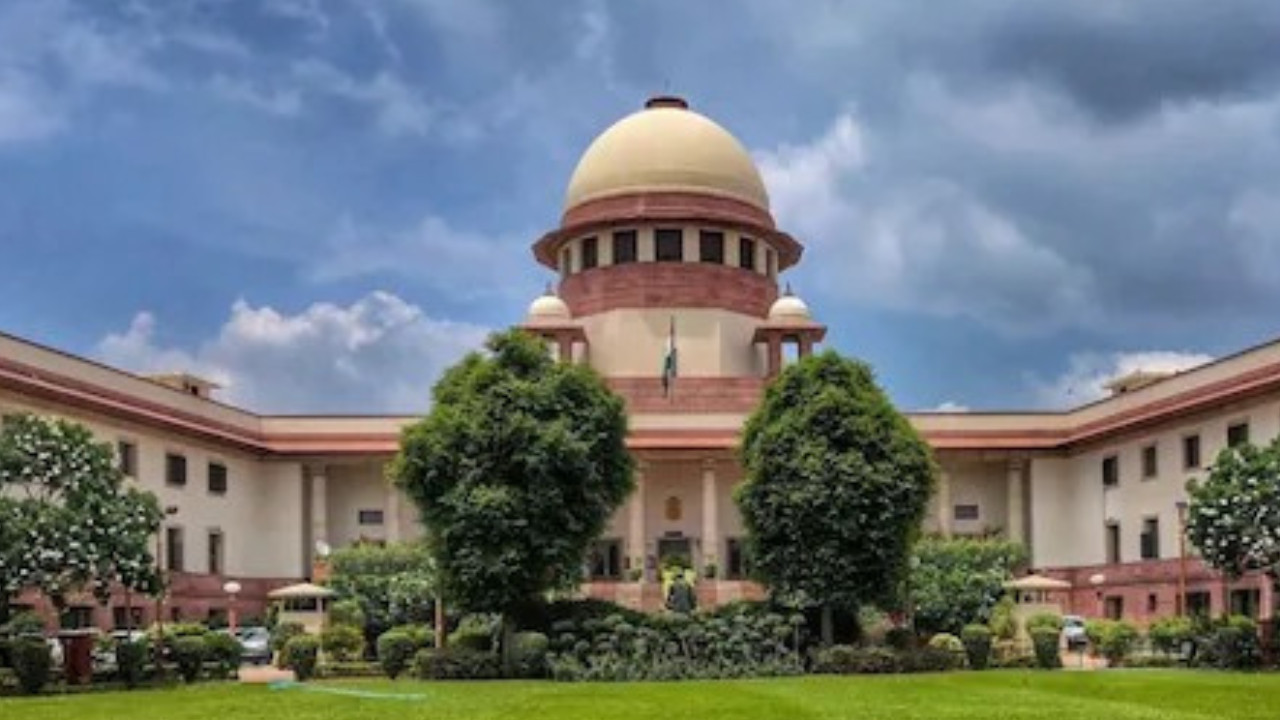
The Supreme Court delivered a historic and far-reaching verdict on Friday. (Image X @Shubham_fd)
New Delhi: The Supreme Court delivered a historic and far-reaching verdict on Friday (January 30), directing all states and union territories to provide free sanitary pads to girl students in both private and government schools. The apex court also stated that the right to menstrual health is part of the fundamental right to life enshrined in the Constitution.
A bench of Justices J.B. Pardiwala and R. Mahadevan also directed states and union territories to ensure separate toilets for girls and boys in all schools. The court also stated that all schools, whether government-run or government-controlled, must provide disabled-friendly toilets.
The SC stated, "The right to menstrual health is a part of the right to life under Article 21 of the Constitution." The court added that if any private school fails to provide these facilities, its recognition will be revoked. The court also said that if governments fail to provide toilets and free sanitary pads to girls, they will be held accountable.
The bench said, "The right to life is not limited to mere survival, but also includes the right to dignity, health, equality, and education. Menstrual health is an important part of these rights." The court acknowledged that the lack of menstrual hygiene facilities violates the dignity of girls, as dignity means living a life without humiliation, discrimination, and unnecessary suffering.
This case concerned the nationwide implementation of the Central Government's 'Menstrual Hygiene Policy for School-Going Girls'. The court was asked whether the lack of separate toilets, sanitary pads, or other facilities in schools violates the right to education and a dignified life. The court clearly stated that the lack of these facilities forces girls to drop out of school or remain absent, which is a direct violation of the right to education.
The Supreme Court stated that privacy is linked to dignity, and it is the state's responsibility not only to not violate privacy but also to take concrete steps to protect it. According to Bar & Bench, the court stated, "Equal opportunities are possible only when everyone has access to the necessary resources and information."
In its decision, the court delivered a profound message to society, stating, "This decision is for the girl who hesitates to seek help, for the teacher who wants to help but is limited by lack of resources, and for the parents who don't understand the impact of silence." The court clearly stated that if a girl is unable to attend school due to menstruation, it is not her fault, but the fault of the system and the mindset.
The Supreme Court had reserved its decision on December 10, 2024, on a public interest litigation filed by Jaya Thakur. It sought the implementation of the Central Government's policy on menstrual hygiene for school-going girls on an all-India basis in government and government-aided schools for girls from classes 6 to 12.





Copyright © 2026 Top Indian News


