


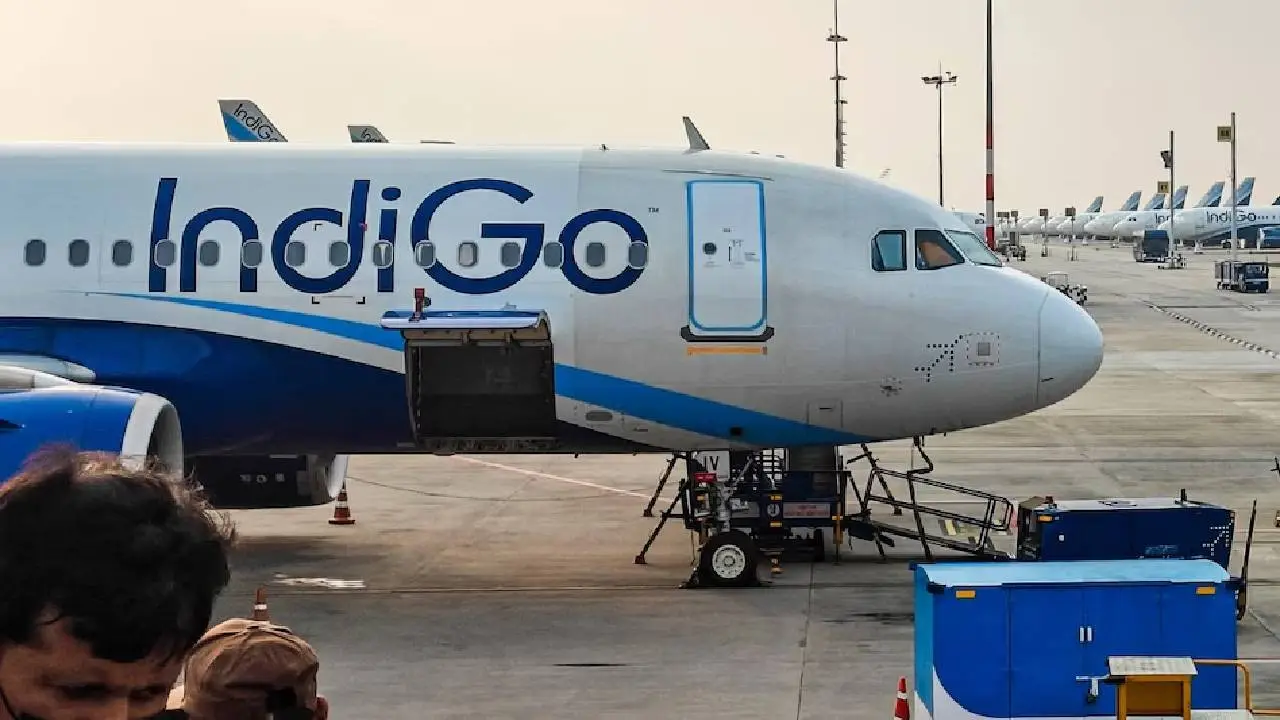
Credit: OpenAI
New Delhi: The country's largest airline Indigo has been going through a crisis for the last one week, which no one had even imagined. More than 2,000 flights have been canceled in five days and thousands of passengers across the country have suffered the impact. At some places people remained stranded at the airport, while at other places important journeys were postponed. The question is, how did a company with a strong and large network get into such big trouble?
IndiGo was facing minor technical problems and delays for some time. The company kept citing bad weather as the reason, but the real problem increased when the government implemented new rules of Flight Duty Time Limitation (FDTL). The purpose of these rules is to protect pilots from excessive fatigue, but IndiGo was already facing staff shortage. After the new rules, the airline had to give more rest to its pilots and from here the cancellation of flights started increasing rapidly.
The company has less pilots and crew members than required. When FDTL came into effect, many pilots could not report for duty. Due to this, many flights had to be canceled and gradually its effect spread across the entire network. The schedule disruption caused by the cancellation of one flight affected other routes as well.
IndiGo holds 60 percent share in domestic flights. More than 2,000 flights operate daily and thousands of crew members are associated with it. Even the slightest disturbance in such a large network shakes the entire operation. This is what happened — a small change affected the entire system like a chain reaction.
The company received security alerts for its Airbus A320 aircraft, following which it had to ground many flights after 12 midnight. This decision was taken for safe operations, but it suddenly affected the entire schedule and a large number of flights had to be cancelled.
In view of the increasing chaos and problems of passengers, DGCA withdrew an important rule—the rule in which there was a ban on changing the 'rest leave' of pilots. After this change, the airline may get some relief in increasing the availability of pilots and gradually the operations may stabilize.
Operations have started to partially stabilise, but the situation cannot be called normal yet. The crowd at the airport has reduced, but it will take time to bring back the confidence of passengers. Fares are still high on many routes and passengers remain unhappy.


Copyright © 2026 Top Indian News


