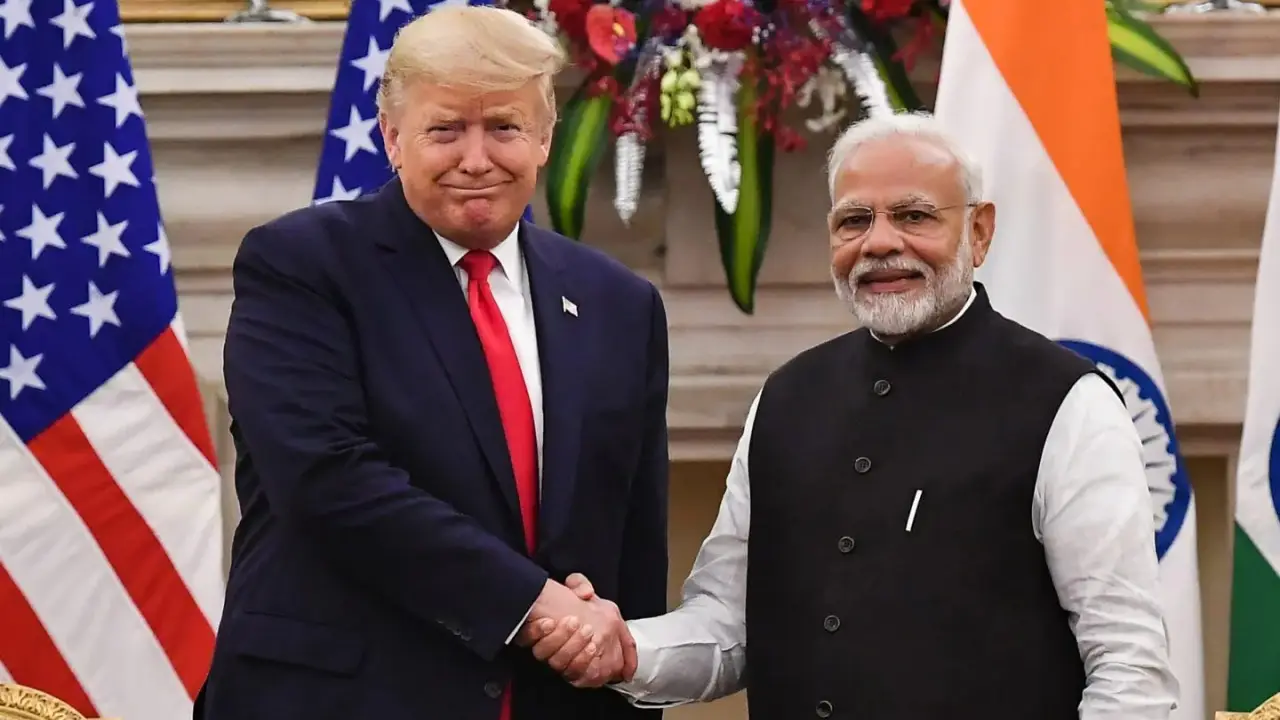
The Ministry of External Affairs (MEA) has clarified the Indian position regarding the trade deal between India and the United States. (Image X @thefernandocz)
New Delhi: The Ministry of External Affairs (MEA) clarified its position on Friday regarding the controversy surrounding the trade deal between India and the United States. MEA spokesperson Randhir Jaiswal said that Prime Minister Modi and President Trump share a friendly relationship and have always addressed each other with mutual respect, in accordance with diplomatic norms.
India refuted the claim made by US Commerce Secretary Howard Lutnick that the deal stalled because PM Modi did not speak directly to President Trump, calling it "inaccurate."
"It is incorrect to suggest that the negotiations stalled due to a lack of personal communication. Both sides have held several rounds of talks since February last year, and we are very close to a balanced agreement," Randhir Jaiswal said.
Lutnick's statement fueled speculation that the hefty 50% tariffs imposed by the US on India were driven by Trump's personal resentment rather than trade interests. According to the claims, Trump perceived PM Modi's lack of personal intervention as an "insult," leading to the imposition of harsh economic sanctions on India.
India's response came hours after US Commerce Secretary Howard Lutnick's statement claiming that the India-US bilateral trade agreement (BTA) stalled because Prime Minister Narendra Modi did not personally call President Donald Trump to finalize the deal.
In an interview with the All-In podcast, Lutnick said, "Everything was ready; all that was needed was for Prime Minister Modi to call the President. But he was uncomfortable doing so. So Modi didn't make the call." Lutnick's comments came as Trump increased pressure on New Delhi this week, warning that tariffs could be further increased if India did not reduce its oil imports from Russia.
It is worth noting that last August, Trump increased tariffs on Indian imports to 50%. This included a 25% additional tariff imposed in response to India's continued purchase of oil from Russia, and a 25% reciprocal tariff. Despite months of negotiations on a US-India trade agreement, little progress has been made. New information suggests the impasse stems more from personal diplomacy than policy differences.
While earlier speculation focused on India's reluctance to open its agricultural sector, US Commerce Secretary Howard Lutnick indicated that Prime Minister Modi's failure to engage in personal discussions with President Donald Trump had become the biggest obstacle. Tensions further escalated when Modi rejected Trump's claims of mediating the India-Pakistan ceasefire and declined to support his bid for the Nobel Peace Prize.


Copyright © 2026 Top Indian News