


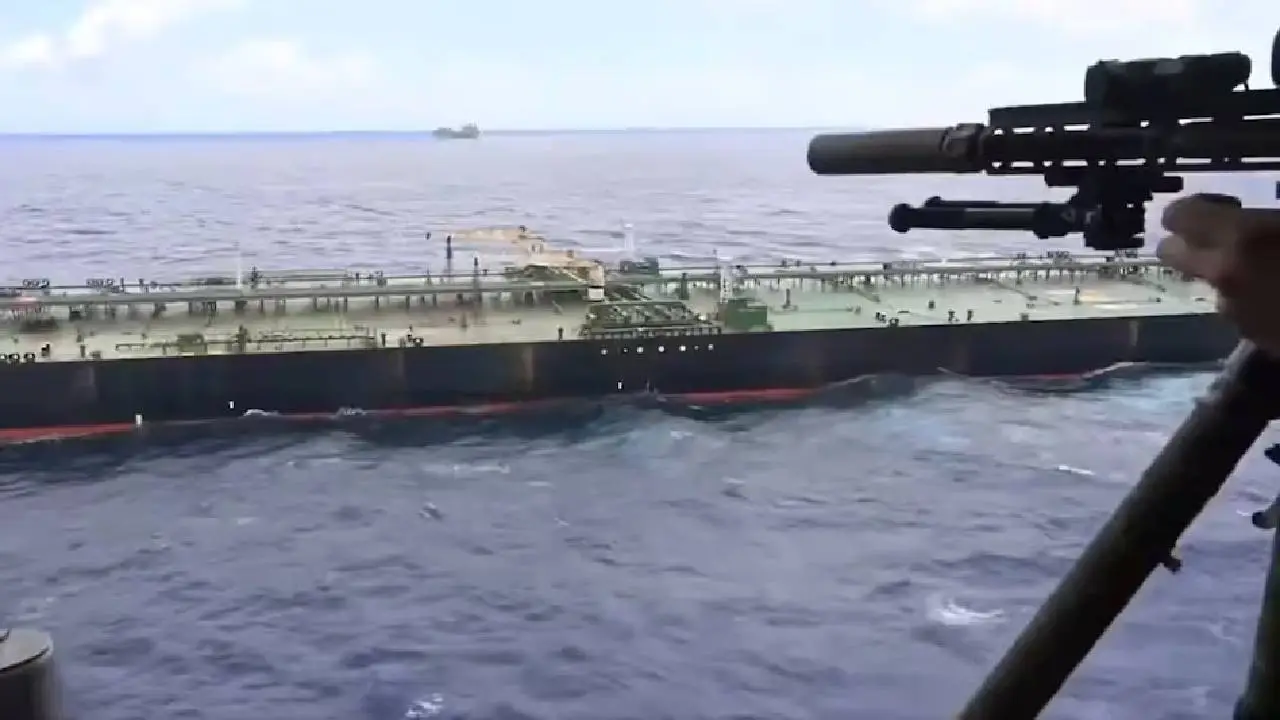
US military operation
US military forces launched a major maritime operation targeting a tanker linked to Venezuelan oil exports. The vessel was reportedly attempting to evade sanctions enforcement. Authorities said surveillance began in the Caribbean region. Intelligence indicated the tanker was part of a broader sanctions violation network. The operation reflected intensified pressure on Venezuelan energy trade. Officials emphasised maritime interdiction as a strategic enforcement tool. The action has drawn global attention to energy sanctions monitoring.
According to US Southern Command, the vessel was monitored over a vast maritime distance. Tracking extended from the Caribbean Sea to the Indian Ocean region. Satellite surveillance and maritime monitoring played a key role. Authorities reported following the tanker for approximately 10,000–15,000 kilometres. The operation demonstrated advanced maritime tracking capabilities. Monitoring agencies also confirmed sustained observation of vessel movements. The interception marked the culmination of long-range tracking efforts.
US forces conducted a right-of-visit maritime boarding operation on the tanker named Bertha. Military personnel reportedly secured the vessel without incident. Helicopter support was used during the interdiction phase. Command of the tanker was temporarily assumed by US forces. Officials described the operation as a routine enforcement action. The boarding occurred within the INDOPACOM operational area. Authorities did not confirm formal seizure status.
The tanker was allegedly operating in violation of US sanctions regulations. Authorities claimed it was transporting Venezuelan crude oil under restricted conditions. The vessel was reportedly attempting to bypass quarantine rules for sanctioned ships. Intelligence agencies suspected involvement in crude oil smuggling networks. The tanker carried approximately 1.9 million barrels of oil. Analysts noted its significance within global sanctions enforcement efforts. The operation highlighted scrutiny on shadow energy trade routes.
Venezuela has faced US sanctions targeting its oil exports for several years. Washington alleges the country uses foreign-flagged vessels to continue crude shipments. Sanctions enforcement aims to restrict revenue flows linked to political pressure strategies. Analysts say tanker interceptions form part of broader economic containment measures. The operation reflects evolving maritime enforcement tactics. Venezuela’s oil trade remains a sensitive geopolitical issue. Global energy markets closely monitor such developments.
Maritime monitoring organisations reported that multiple tankers fled Venezuelan waters following political developments. Satellite imagery and surface-level photography were used to track movements. Analysts identified Bertha as the last remaining vessel under active pursuit. Monitoring agencies provided intelligence inputs to authorities. Experts highlighted the importance of private tracking data in enforcement actions. Collaboration between agencies strengthened surveillance capabilities. The case demonstrates the growing role of maritime analytics.
The interception underscores heightened maritime security enforcement across global energy routes. Analysts view the action as part of intensified sanctions compliance operations. The operation may influence shipping behaviour in sanctioned regions. Experts warn of rising risks associated with shadow tanker networks. Maritime interdictions could reshape energy logistics strategies. Authorities continue monitoring similar vessels globally. The incident highlights the intersection of geopolitics, sanctions and maritime security.



Copyright © 2026 Top Indian News


