


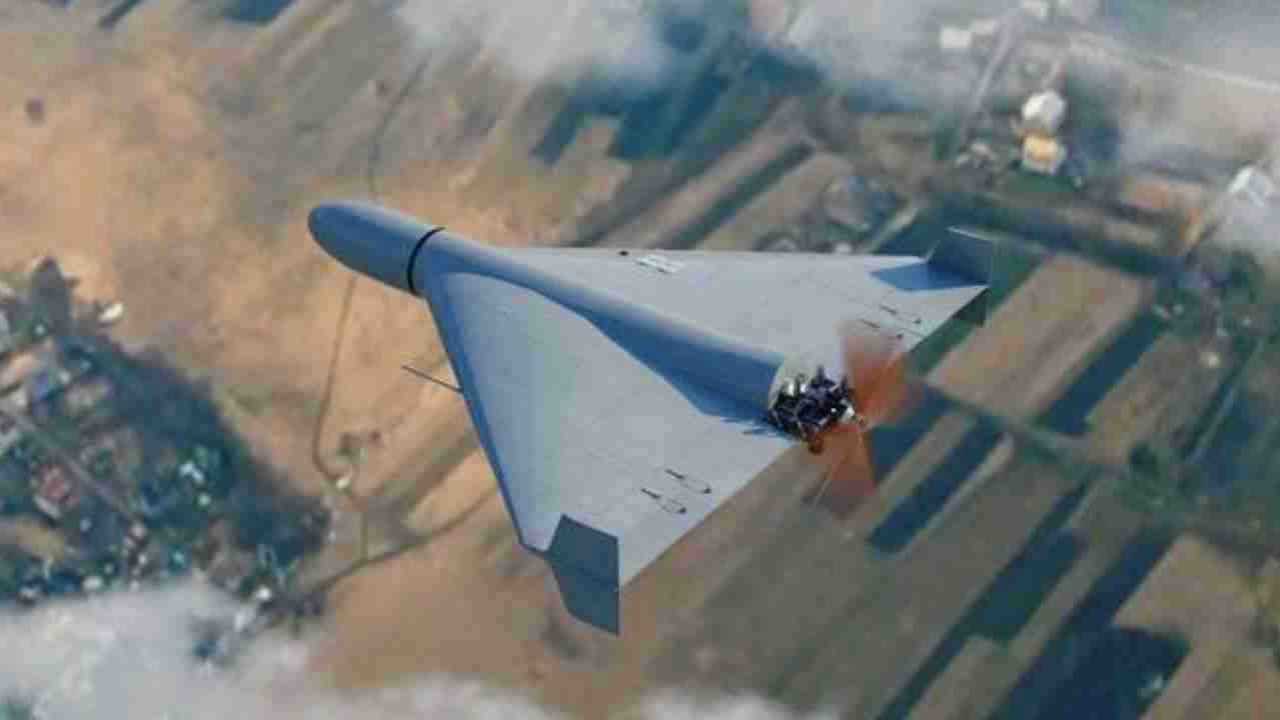
Iran's Shahed drones have caused massive destruction in Middle East. (Image X @ManeliMirkhan)
New Delhi: When they launched the recent attack on Iran, the US and Israel likely did not expect the war to drag on for so long. Since the US and Israeli attacks started, Iran has been firing missiles at neighboring Gulf countries, including Israel. Iran has targeted US military bases and major oil installations in these countries, causing widespread outrage across West Asia.
Iran is being supported in these attacks by its most affordable and reliable ally, the Shahed drone. With the help of these drones, Iran has put the US and Israel in a difficult position. Consequently, this suicide drone has attacted widespread attention.
Iran's drone and missile attacks have posed a serious military challenge to the US and its Gulf allies. Analysts say that if the attacks continue for a long time, Western air defense systems could be rapidly depleted, while Iran still possesses a large number of drones and missiles. Reports indicate that Israel and the US hoped that Iran would quickly succumb to the attacks, but this assessment appears to be proven wrong.
In the current conflict, low-cost drones have given Tehran a significant strategic advantage. Iran's Shahed-136 drone has been the most discussed in this regard. Due to their capabilities, drones are proving to be extremely effective in warfare. Their most significant advantage is their low cost. While their price is very low, the missiles and air defense systems used to intercept them are extremely expensive. For example, a Shahed-136 drone costs between $20,000 and $50,000, while the US and Israel spend millions of dollars to intercept them. A single Patriot missile costs around $4 million, and some interceptors can cost up to $12 million. This is why low-cost drones and interceptors have become crucial in modern warfare.
These drones are simple in design, have a range of approximately 2,500 kilometers, and can carry a warhead of 40 to 50 kilograms. For this reason, they are considered a game-changer in warfare. Furthermore, when released in swarms, they confuse the enemy, making them more difficult to intercept. It is estimated that Iran may possess approximately 80,000 such drones.
Many countries are developing their own indigenous drones inspired by the Shahed design. America's LUCAS drone is similar to the Shahed design. Russia also used a similar drone, called the Geran-2, during the Russia-Ukraine war and targeted Ukrainian military bases. India is also rapidly working on a long-range indigenous strike drone to enhance its strike capabilities.
According to an India Today report, two such low-cost, long-range strike drone projects are underway in India. The first is the Sheshnag-150, which is being developed by Bengaluru-based startup company New Space Research and Technology (NRT). The Sheshnag-150 is a long-range swarming attack drone. It weighs approximately 150 kilograms and has a range of 1,000 to 1,200 kilometers. It can carry a payload of 25 to 40 kilograms and can fly for over five hours. The Sheshnag-150's unique feature is its AI-based swarm technology. Multiple drones can work together to attack targets autonomously while evading enemy air defense systems. The Sheshnag-150's first flight took place in February 2025, and the project was accelerated following Operation Sindoor last year.
The second project is KAL, which is being developed by Noida-based company IG Defence. Both projects could provide the Indian Army with the capability to launch precision strikes at a low cost. It is being designed to strike deep into enemy territory. Its range can be approximately 1,000 kilometers and it can fly for three to five hours. It can search for targets deep inside enemy territory, change its course, and then attack with a high-explosive payload.
The Indian Army has already inducted several indigenous drones. Larger drones, such as the Medium Altitude Long Endurance (MALE) and High Altitude Long Endurance (HALE), are currently in testing or development. In addition, Indian private companies and the DRDO have developed several smaller tactical, surveillance, swarm, and combat drones. These have been used in both exercises and actual operations.


Copyright © 2026 Top Indian News


