


Image Courtesy: Instagram
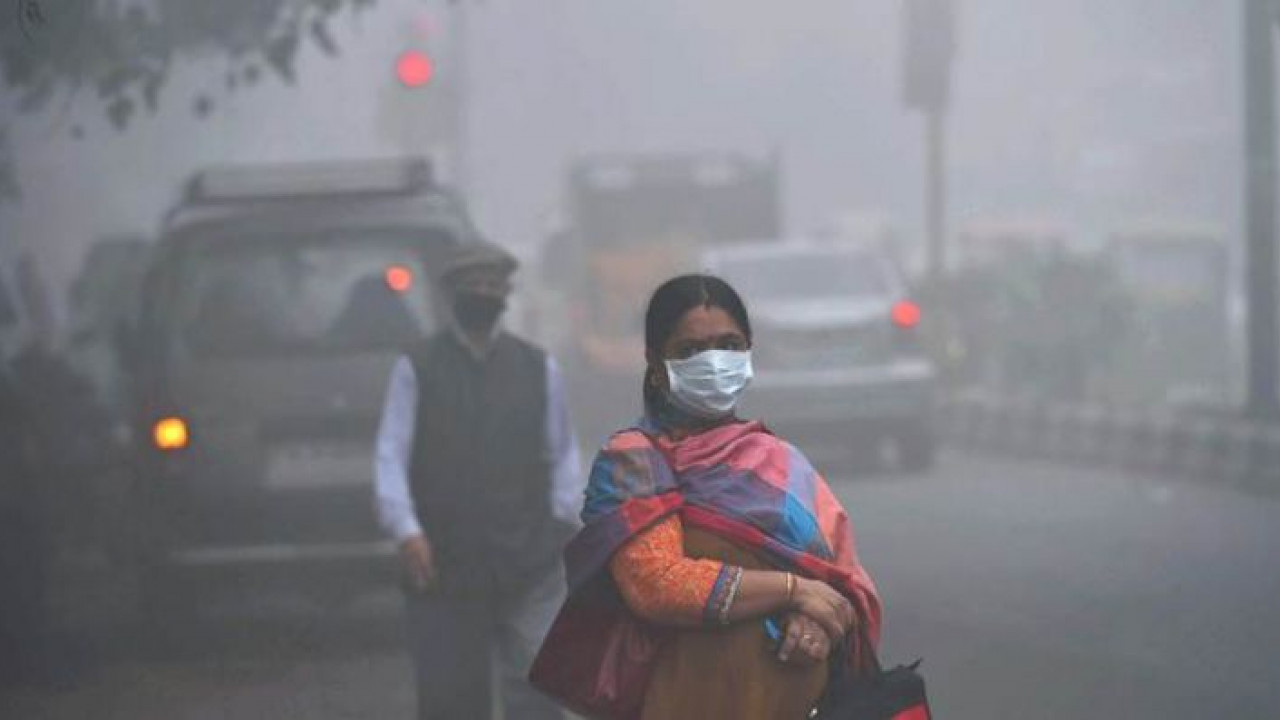
New Delhi: The air quality suddenly deteriorated in Delhi-NCR on Saturday, following which the administration had to implement the most stringent pollution control measures. As the air quality reached the “severe” category, the Commission implemented Stage-IV of the Graded Response Action Plan, or GRAP. This decision was taken within hours of GRAP-III coming into force.
The situation worsened as the night wore on. Delhi's air reached the "severe plus" category late Saturday night. According to Central Pollution Control Board (CPCB) data, Delhi's AQI was recorded at 460 around Sunday midnight, which is considered the most dangerous level.
Based on real-time data, the Commission for Air Quality Management (CAQM) said that the situation had started worsening rapidly since Saturday evening. While AQI was 431 at 4 pm, it reached 441 by 6 pm. Due to adverse weather conditions, the pollutants remained trapped near the ground, and the air could not be cleaned.
According to CAQM, slow winds, stagnation in the atmosphere, and bad weather further increased the pollution. In these conditions, pollutant particles started accumulating instead of spreading, due to which the air became more poisonous.
By evening, the Anand Vihar area was covered with dense and poisonous smog. The AQI here reached 488, which falls in the “severe plus” category. At the same time, there was a thick blanket of smog around India Gate and Duty Path, where AQI was recorded at 407.
In view of the worsening situation, all restrictions of GRAP-IV have been implemented with immediate effect in the entire NCR. Under this, all construction and demolition activities have been completely banned in Delhi. Also, orders have been given to stop stone crushing, mining, and all related work.
The administration has instructed to run schools up to class 5 in hybrid mode so that small children can be protected from poisonous air. Apart from this, a strict ban has been imposed on BS-III petrol and BS-IV diesel four-wheelers. This restriction will be applicable not only in Delhi but also in Gurugram, Faridabad, Ghaziabad, and Gautam Buddha Nagar.
Government and private offices have been asked to work with 50 percent capacity, while the remaining employees have been allowed to work from home.
Experts have advised people to avoid non-essential going out. Severe pollution can cause respiratory diseases, eye irritation, heart problems, and effects on the lungs. Children, the elderly, and those with pre-existing medical conditions are at greatest risk.
Meanwhile, the Delhi government said that not a single case of stubble burning has been recorded in the capital this year, even though paddy was cultivated in about 7,000 acres.
Giving credit for this to strict monitoring and strong cooperation of farmers, Chief Minister Rekha Gupta said that this is an important step towards clean air. She said the achievement is a major environmental milestone for the national capital, as Delhi often grapples with severe air pollution during the crop residue burning season in neighboring states.


Copyright © 2026 Top Indian News


