


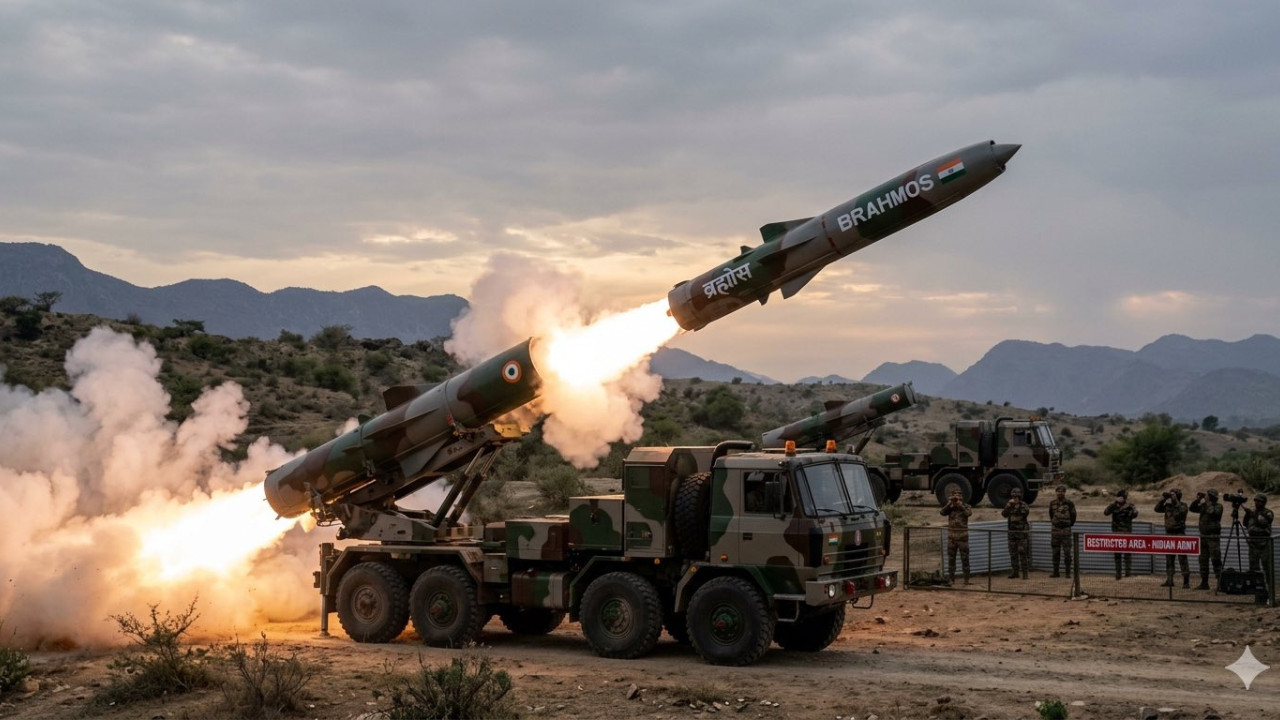
Indian Army Chief General Upendra Dwivedi has shared several details of 'Operation Sindoor' that highlighted not only the bravery of the Indian Army but also its humanity. (Image X @Sagat23__)
New Delhi: Following the attack by Pakistani terrorists on innocent tourists in Pahalgam, India launched 'Operation Sindoor,' successfully destroying the hideouts of terrorists being harbored across the border. In an interview regarding 'Operation Sindoor' Indian Army Chief General Upendra Dwivedi shared several details that highlighted not only the bravery of the Indian Army but also its humanity.
General Dwivedi stated, "Whenever we launched an attack on our targets, the timing could vary; however, we always ensured that it did not coincide with the time for 'Namaz' (prayers). Even if individuals within a terrorist camp were offering prayers, we refrained from attacking—for there is but one Master of all."
The Army Chief further added that if the Indian Army became aware that prayers were underway, the timing of the attack would be rescheduled. He emphasized that even amidst a combat situation, the Indian Army exercised restraint and respected the religious worship of its adversaries.
Earlier, while addressing the 'Ran Samvad' (War Dialogue) forum, the Indian Army Chief remarked, "Operation Sindoor served as India's most potent instrument for advancing coordinated action across various domains. However, we must now achieve the objective of integrating and synchronizing these diverse domains." The Army Chief also provided details regarding the War Information Organization and the Psychological Defence Division, both of which were established in the aftermath of 'Operation Sindoor.' He noted, "Approximately 15 percent of our efforts were focused on countering disinformation campaigns."
However, he cautioned that significant challenges persist—particularly in establishing operational coordination across strategic, operational, and tactical levels, and in effectively countering the growing prevalence of 'hybrid' or 'grey-zone' warfare.
He explained, "These activities typically fall below the threshold of conventional military conflict, aiming to exploit the vulnerabilities of the adversary."
The Indian Army Chief stated that his vision of MDO (Multi-Domain Operations) is not one in which the Army's six distinct domains function in isolation or in parallel; rather, it envisions a scenario where all domains remain in constant mutual coordination, adapting to changing circumstances—a dynamic environment where priorities and leadership shift according to the prevailing situation.
He observed that modern warfare is no longer confined merely to geographical boundaries or the primacy of a single service; instead, it is defined by continuous mutual coordination across various domains, stakeholders, and distinct levels of conflict. Addressing the evolving dynamics of the battlefield, General Dwivedi noted that MDO has transformed the nature of warfare into a multi-dimensional phenomenon, wherein operations unfold simultaneously across multiple levels and directions.
He emphasized that commanders must cultivate a comprehensive situational awareness spanning various domains—from the tactical to the strategic level. Underscoring the operational significance of integration, General Dwivedi cited 'Operation Sindoor' as a pivotal case study.
General Dwivedi remarked, "It was the fusion of intelligence derived from ground networks, cyber capabilities, and Electronic Warfare (EW) assets that enabled the joint operations of the Indian Army and the Indian Air Force (IAF) to effectively identify and designate targets, while concurrent adjustments in naval deployments shaped the strategic calculus. No single domain alone determined the outcome of this campaign."
General Dwivedi also highlighted several structural reforms undertaken by the Indian Army, including the operationalization of Integrated Battle Groups (IBGs), 'Rudra' Brigades, drone units, Electronic Warfare formations, and Cyber Operations Nodes.


Copyright © 2026 Top Indian News


