


AI
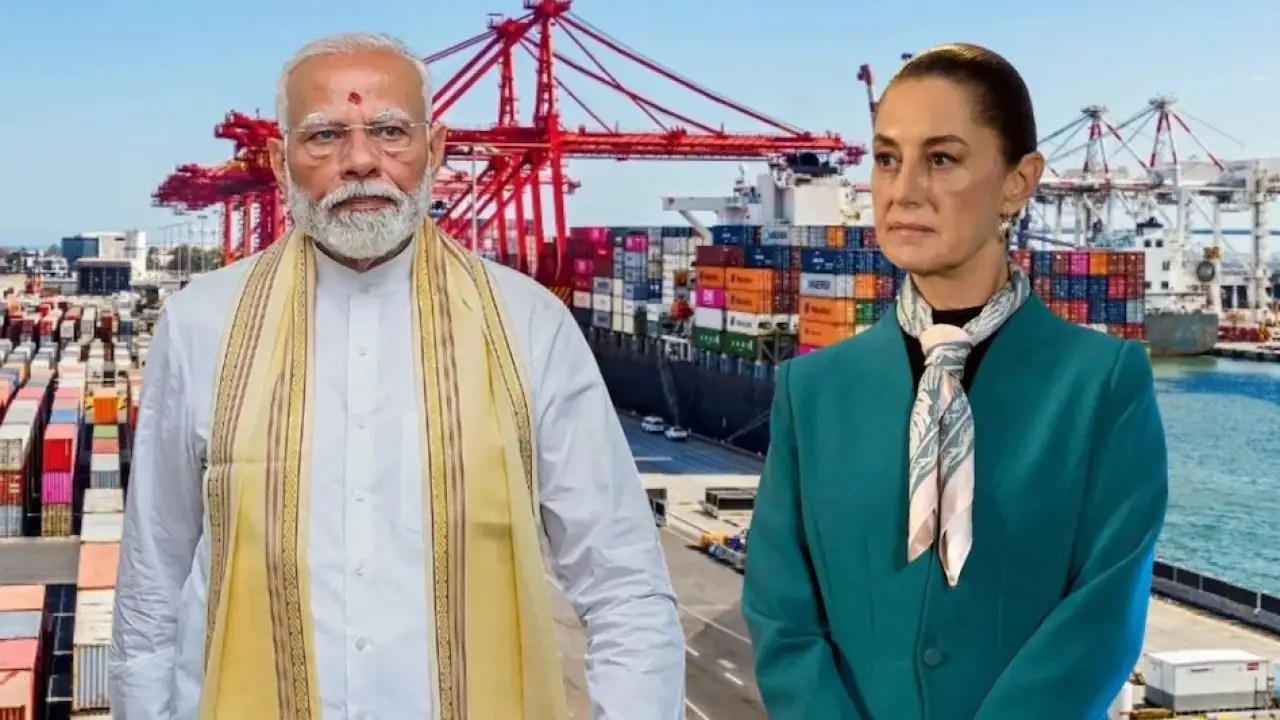
New Delhi: In a major move ahead of the start of 2026, Mexico has raised import duties on goods coming from countries with which it has no free trade agreements. This tax on exports from major Asian economies like India, China, South Korea, Thailand and Indonesia may now increase from 5 to 35 percent and in some cases up to 50 percent. India is also included among the countries affected by this, which has objected to this policy decision.
The Government of India has strongly objected to this sudden decision of Mexico and said that it is not appropriate to implement such a unilateral tariff without any comprehensive consultation beforehand. India has clarified that trade decisions should be in line with mutual interests and global rules, and not without any prior notice.
Analysis suggests that about 75 percent of India's exports may be affected by this new tariff rule. India's exports to Mexico in 2024 were estimated to be around $5.75 billion, out of which a large number of products will now have to pay heavy duty. Exporters in categories like automobiles, auto parts, steel, machinery, electronics and smartphones are expected to face the biggest blow.
According to data from the Global Trade Research Initiative (GTRI), duties on passenger vehicles, auto parts, motorcycles and smartphones exported from India to Mexico could reach around 35 percent. Apart from this, there will be a heavy tax burden of up to 50 percent on steel, which may weaken the competitiveness of these products.
Trade relations between India and Mexico have strengthened in the last few years. Bilateral trade reached a high of about $11.7 billion in 2024, with India getting an export-surplus. In such a situation, this new tax decision may not only increase costs for Indian companies but may also affect the trade balance.
India has started high-level talks with Mexico and technical talks are expected between the trade departments of the two countries. Its objective is to create a balanced and stable trade environment for both sides. India is trying to find a solution to the problem through negotiations while protecting the interests of exporters.
Mexico's move is believed to be a part of protectionist trends emerging in the trade environment around the world, where many countries have tightened tariff policies to support their domestic industries. This makes it clear that global trade will now once again move forward on the basis of negotiations, strategies and agreements.


Copyright © 2026 Top Indian News


