


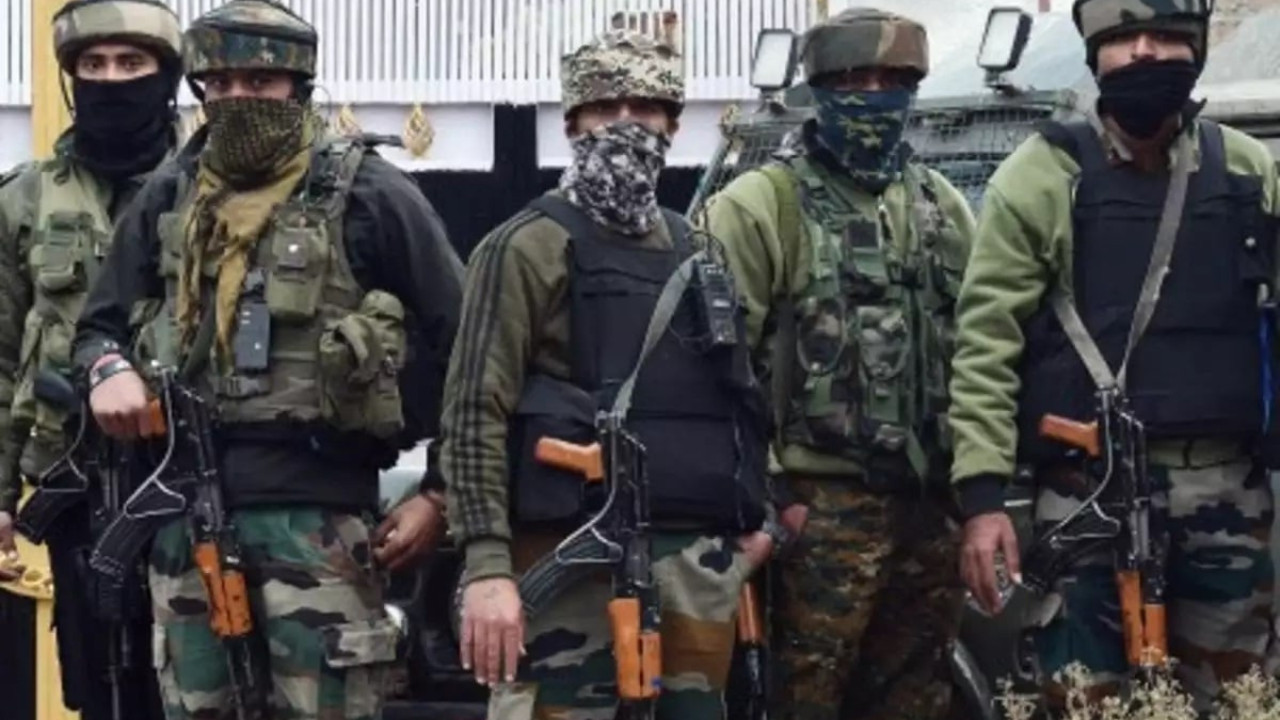
The security agencies in Jammu and Kashmir have uncovered a rapidly expanding "mule account" network. (Image X @Panther7112)
Srinagar: The security agencies in Jammu and Kashmir have uncovered a rapidly expanding "mule account" network, believed to be the financial backbone of international fraud gangs. Investigative agencies fear that money transferred through these accounts could be used to fund separatist or anti-national activities. According to a report by news agency PTI, over 8,000 such accounts have been identified and frozen across the region in the last three years, revealing a complex money laundering network.
According to investigators, mule accounts are the weakest, yet crucial, component of a cybercrime chain. Without them, it becomes difficult for criminals to convert stolen money into digital assets like cryptocurrency. Given the growing threat, central security agencies have directed the Jammu and Kashmir Police and other enforcement agencies to work with banks to freeze such accounts.
Agencies are also searching for intermediaries known as "Muellers." These individuals play a crucial role in this chain of financial fraud. According to officials, when the NIA began cracking down on illicit funding in the region in 2017, the anti-national network changed its tactics. Traditional methods have now reportedly been replaced by the "digital hawala" system.
In this new model, commissions received by mule account holders and mules can be used for activities detrimental to national security. Mules do not directly contact victims or send fraudulent links, but instead arrange accounts through which fraudsters deposit and transfer stolen money.
Many of these accounts are in the names of ordinary people who are lured with the promise of easy money and assured of minimal risk. They are then asked to provide complete account information, including online banking information, and are told that their accounts will be temporarily used as "parking accounts." However, these accounts are actually used to funnel cyber fraud money.
Investigations have revealed that a fraudster can use 10 to 30 mule accounts at a time. In many cases, accounts are opened in the names of shell companies, transacting up to ₹40 lakh a day to avoid suspicion. Money is rapidly transferred between multiple accounts and sent in small installments to avoid surveillance.
Security officials say that even if mule account holders do not directly commit fraud, they will be considered involved in money laundering. Handing over their accounts for commissions strengthens the international crime network. A senior official said, "The entire fraud system relies on these accounts. Without a means of transferring funds, the fraud will fail at the very beginning."
A detailed investigation by central agencies has also revealed that people from countries like China, Malaysia, Myanmar, and Cambodia are instructing young people in Jammu and Kashmir to create private cryptocurrency wallets. These wallets are often created using VPNs to conceal digital identities and do not require KYC.
According to officials, the regional police have already banned the use of VPNs in the Valley, as they are used by terrorists and separatist elements to conceal their identities.


Copyright © 2026 Top Indian News


