


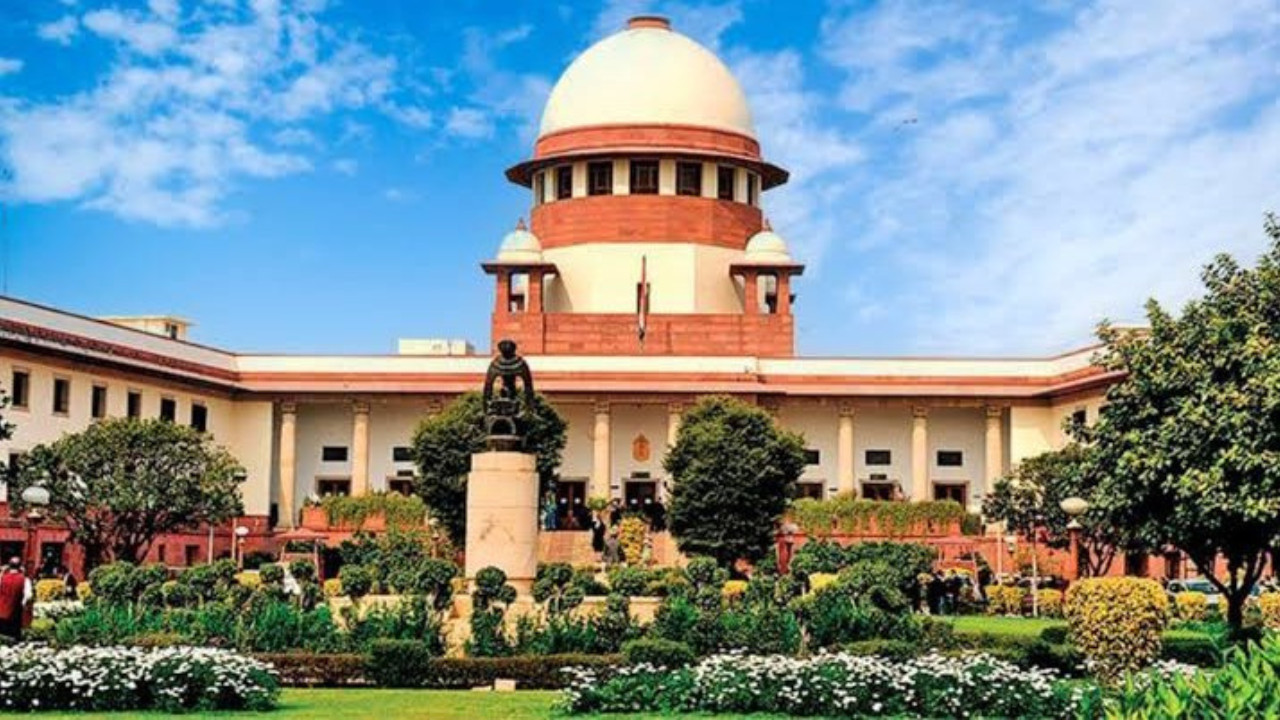
A major case of religious conversion has surfaced in Nashik, sending shockwaves across the entire country. (Image X @MeghUpdates)
New Delhi: A major case of religious conversion has surfaced in Nashik, sending shockwaves across the entire country. This matter has now reached the nation's highest judicial body—the Supreme Court. A petition has been filed asserting that religious conversion carried out through coercion or deception is not merely a religious issue, but constitutes a threat to national security.
The Supreme Court is already seized of a 'suo motu' (on its own motion) case concerning religious conversions. A 'suo motu' proceeding implies that the Court took cognizance of the issue on its own initiative. Now, a fresh application regarding the Nashik TCS case has been filed within the ambit of that very proceeding. The counsel filing the petition submitted to the Court that this instance of organized religious conversion in Nashik is deeply disturbing and has shaken the conscience of the entire nation.
The petition puts forth several significant claims and demands. Firstly, it asserts that religious conversion effected through coercion or deception poses a grave threat to the country. Secondly, it argues that when such acts are perpetrated as part of a large-scale, organized, and coercive campaign, they ought to be classified as "terrorist acts."
A third major contention raised in the petition is that such forced or deceptive conversions are not isolated religious incidents, but rather constitute a "premeditated conspiracy." The petition alleges that this conspiracy is frequently funded by foreign entities. Its objective is to alter the country's demographic religious balance, thereby endangering India's unity, integrity, and national security.
The petition further notes that while the right to freedom of religion is a fundamental right, it remains subject to the constraints of public order and morality. In other words, one cannot resort to forced or deceptive conversions under the guise of this constitutional freedom.
The petition places two primary demands before the Supreme Court. The first demand is that the Central Government and all State Governments be directed to take stringent measures to curb religious conversions carried out through deception or coercion. The second demand is that the Central and State governments be directed to establish separate special courts to hear cases involving religious conversions.





Copyright © 2026 Top Indian News


