


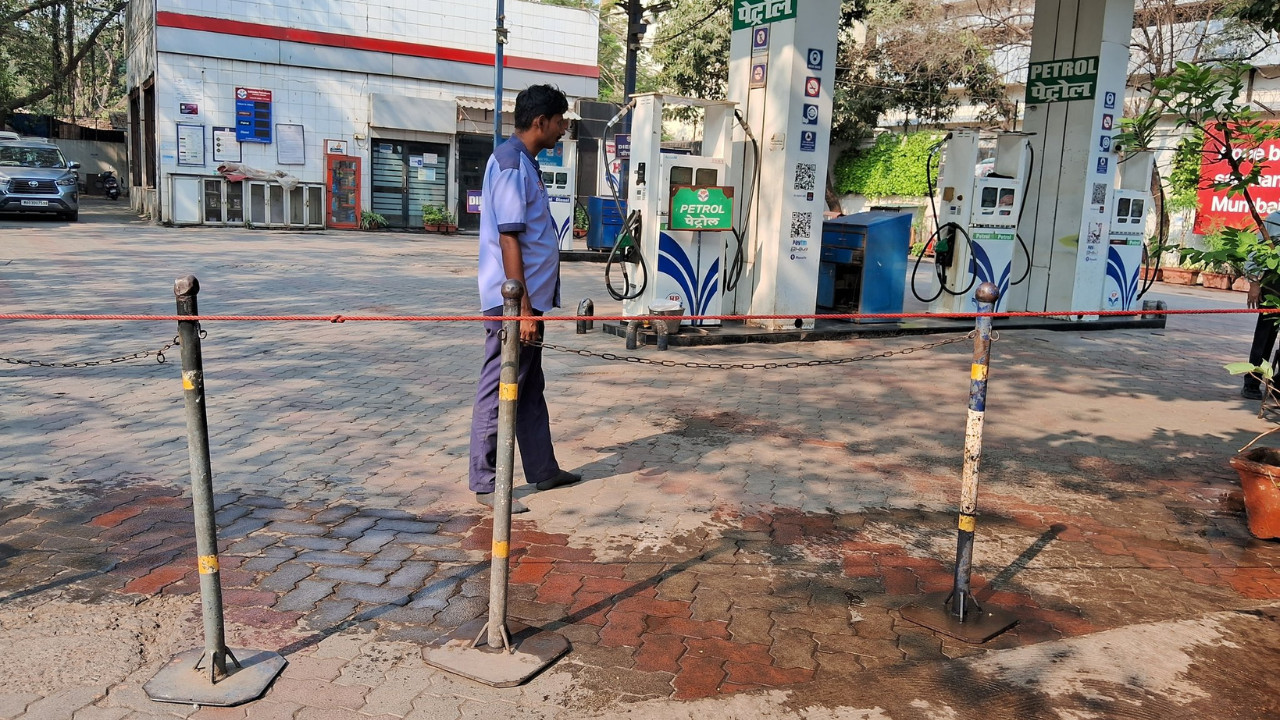
The prices of petrol and diesel will be reviewed every fortnight. (Image X @AnnuInfo)
New Delhi: The prices of petrol and diesel will be reviewed every fortnight. This review is part of a measured and closely monitored response to the ongoing conflict in West Asia, which has triggered a massive surge in global crude oil prices. Vivek Chaturvedi, Chairman of the Central Board of Indirect Taxes and Customs (CBIC), shared this information on Friday.
During an inter-ministerial briefing, Chaturvedi stated that international crude oil prices have risen significantly due to the conflict in the Middle East. The government's response has been highly measured and deliberate.
Vivek Chaturvedi pointed to disruptions in global shipping routes and supply chains. He remarked, "The situation is dynamic. It is not business as usual, where one can make prior predictions. We are navigating through challenging times."
The CBIC Chairman further explained, "The reduction in duties on petrol and diesel has resulted in a total revenue loss of ₹7,000 crore."
Chaturvedi noted that the government would assess the evolving situation—including trends in imports and domestic consumption—every fortnight before making any further decisions. He stated, "Even within the limited timeframe of a fortnight, the department must take into account the volume of imported goods."
As part of domestic measures, the revised excise duty on petrol has been reduced from ₹21.90 per liter to ₹11.90 per liter.
Based on rough estimates, the revenue impact of these recent proposals is projected to be approximately ₹1,500 crore over a two-week period.
This statement comes just hours after the government announced a reduction of ₹10 per liter in the excise duty on petrol and diesel. The objective of this measure is to shield public sector oil marketing companies from mounting losses (under-recoveries) amidst rising global crude oil prices.
These companies include Indian Oil Corporation, Bharat Petroleum Corporation, and Hindustan Petroleum Corporation.
However, the benefit of this reduction will not be passed on to consumers. Consequently, retail pump prices will remain unchanged. Officials also highlighted the impact of this conflict on the energy supply chain. Chaturvedi stated, "Due to the war, stocks of crude oil, LPG, and LNG are being affected."
Furthermore, the government sought to reassure the public regarding the prioritization of domestic availability and supply. Sujata Sharma, Joint Secretary at the Ministry of Petroleum and Natural Gas, stated that India possesses adequate reserves of crude oil. Meanwhile, domestic LPG production has witnessed an increase of approximately 40%.
She also outlined the manner in which the government made supply-related decisions to prioritize domestic consumers. She remarked, "The Government of India decided to prioritize domestic consumers; therefore, commercial supplies were halted. Subsequently, taking carefully considered decisions, we resumed 20% of the supply. Following that—based on the principle of 'Ease of Doing Business'—we increased it to 10%, then to 50%, and today, we have further raised it to 70%."


Copyright © 2026 Top Indian News


