


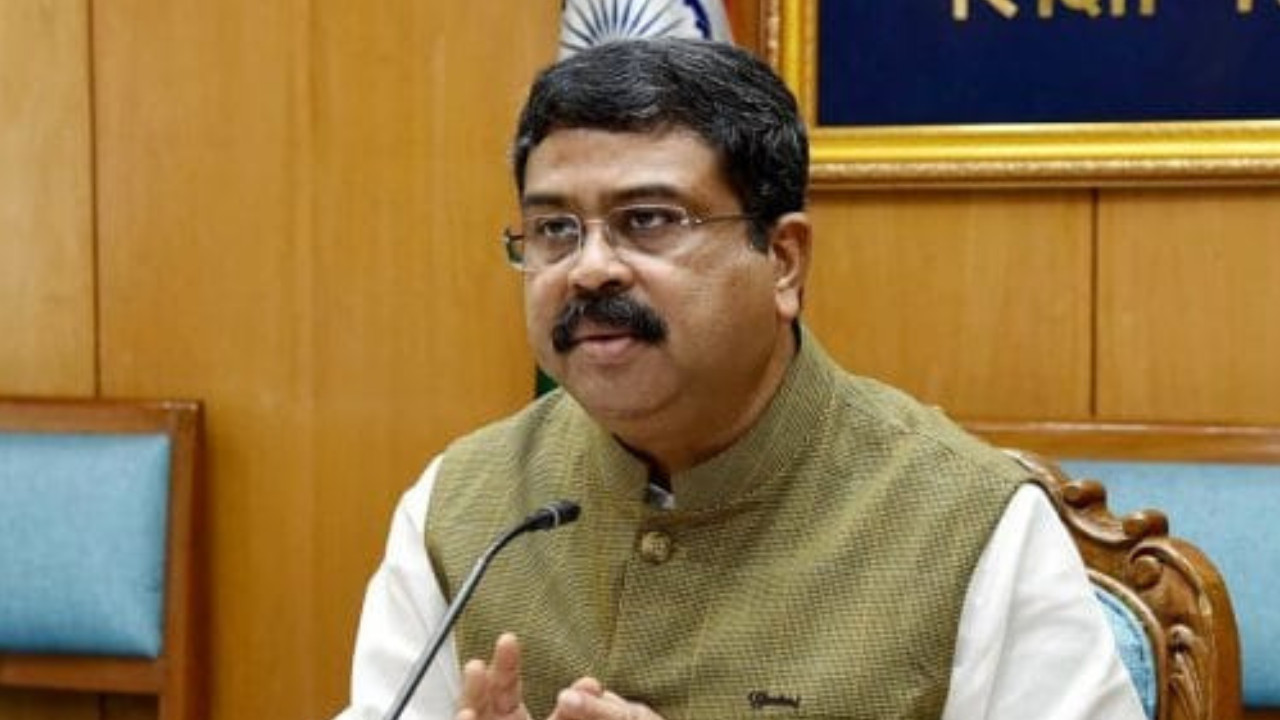
Education Minister Dharmendra Pradhan has been at the eye of a stormover new UGC rules proposed by UGC Bill 2026. (Image X @SatyajeetM72938)
New Delhi: Amidst the controversy over the new UGC Act, the central government appears to be on the defensive. Union Education Minister Dharmendra Pradhan has issued a clarification regarding the issue.With controversy raging over the new University Grants Commission (UGC) rules, Dharmendra Pradhan said, "there will be no discrimination, no one can misuse the law."
On Tuesday, Education Minister Dharmendra Pradhan attempted to allay people's concerns regarding the law. He also tried to address the apprehension of discrimination under the law. He assured that the new law would not be misused.
Regarding the new UGC regulations, Union Education Minister Dharmendra Pradhan said that he humbly wants to assure everyone that there will be no harassment or discrimination, and no one will be able to misuse the law. He said that no one will have the right to misuse the law in the name of discrimination. Whether it is the UGC, the central government, or the state government, it will be their responsibility. Whatever system is put in place will be within the framework of the Constitution. He said that this matter has come up under the supervision of the Supreme Court.
#WATCH | On new regulation of UGC, Union Education Minister Dharmendra Pradhan says," I assure everyone there will be no discrimination and no one can misuse the law." pic.twitter.com/0ZRgWaU76H
— ANI (@ANI) January 27, 2026
The new UGC regulations aim to completely eliminate discrimination on the basis of caste, religion, gender, place of birth, disability, etc., on campuses. These regulations mandate the formation of an Equity Committee in all higher education institutions (universities and colleges) to investigate complaints and take strict action against offenders (such as withholding degrees, revoking institutional accreditation, etc.).
According to UGC data, complaints of caste-based discrimination in universities have increased by 118 percent in the last five years. These regulations were drafted on the directions of the Supreme Court, where an old petition had demanded a robust mechanism to prevent discrimination on campuses. The UGC notified these regulations on January 13.
Following this, under the new regulations introduced to prevent caste-based discrimination in colleges and universities, the UGC has asked institutions to set up special committees, helplines, and monitoring teams to address grievances, particularly those of students belonging to Scheduled Castes (SC), Scheduled Tribes (ST), and Other Backward Classes (OBC).
Why the controversy over new UGC rules?
Those opposing the new rules argue that the new guidelines limit the right to file complaints to only certain categories, where only Scheduled Castes and Other Backward Classes can file complaints, which is inherently discriminatory. Students from the general category have widely criticized the ‘Regulations on Promoting Equality in Higher Education Institutions, 2026,’ notified on January 13.
The protesters argue that Rule 3(c) of the new Act, which defines and outlines the procedure for addressing caste-based discrimination, is biased against general category students/teachers. It lacks provisions for penalties for false complaints, raising concerns about potential misuse. They argue that this framework could lead to discrimination against them.


Copyright © 2026 Top Indian News


