


Punjab Horticulture Growth
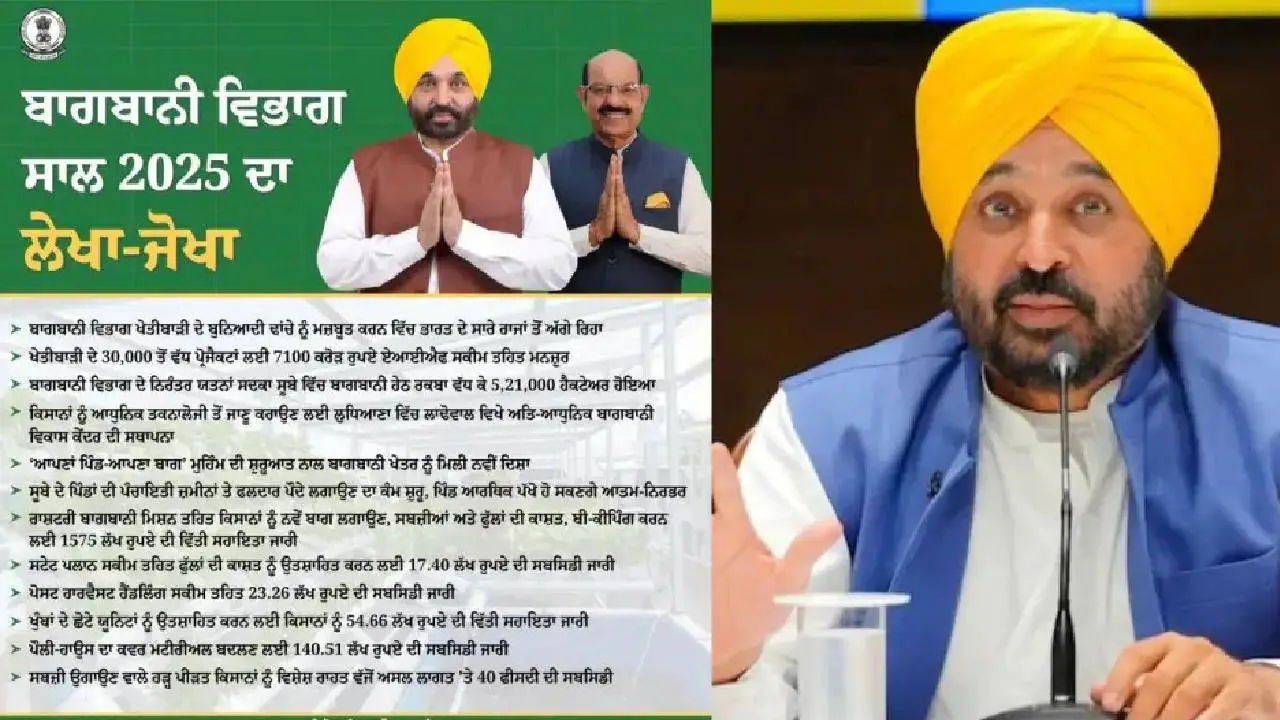
Under the leadership of Chief Minister Bhagwant Singh Mann, Punjab has focused strongly on horticulture expansion. The state government is encouraging farmers to move beyond wheat and paddy. Policy support and financial assistance are being provided. Modern farming techniques are being promoted. The aim is to raise farm incomes sustainably. In 2025, these efforts showed strong results. Punjab emerged as a national frontrunner in horticulture development.
Horticulture Minister Mohinder Bhagat said Punjab ranked first in implementing the Agriculture Infrastructure Fund. The Horticulture Department acts as the nodal agency. More than 30,000 agriculture projects received loans. The total sanctioned amount crossed Rs 7,100 crore. This investment strengthened rural infrastructure. It also improved storage and processing capacity. Farmers gained better market access.
The Mann Government is treating horticulture as a key income driver. Focused diversification policies showed visible impact. The area under horticulture increased significantly. It expanded from 4.81 lakh hectares to 5.21 lakh hectares. Farmers are adopting fruits, vegetables, and flowers. This shift is reducing dependence on traditional crops. It is also helping manage water use. Income stability is improving across districts.
A modern Horticulture Development Centre is being set up at Ladhowal. The centre will serve as a knowledge hub. Farmers will learn advanced horticulture practices. Training and demonstrations will be provided. It will motivate farmers to exit the wheat–paddy cycle. High-value crops will be promoted. This centre is expected to guide future diversification.
The government launched the ‘Apna Pind–Apna Bagh’ campaign. Fruit trees are being planted on panchayat land. Orchards will generate long-term income. The earnings will fund village development works. This links horticulture with rural economy. Communities benefit directly. It also improves green cover. Villages become active stakeholders in growth.
Under the National Horticulture Mission, Rs 1,575 lakh was released. Farmers received support for orchards, vegetables, flowers, mushrooms, and beekeeping. Floriculture farmers get Rs 14,000 per acre. Subsidies worth Rs 17.40 lakh were released. Post-harvest handling subsidies reached Rs 23.26 lakh. Drip irrigation incentives crossed Rs 47.56 lakh. Polyhouse upgrades also received support.
Punjab is developing a Centre of Excellence for onions at Kheri under Indo-Dutch cooperation. Special fruit estates were set up. These include a Pear Estate in Amritsar, a Litchi Estate in Pathankot, and a Guava Estate in Patiala. Flood-affected vegetable growers get 40 percent cost relief. These steps aim to boost exports and farmer prosperity.


Copyright © 2026 Top Indian News


