


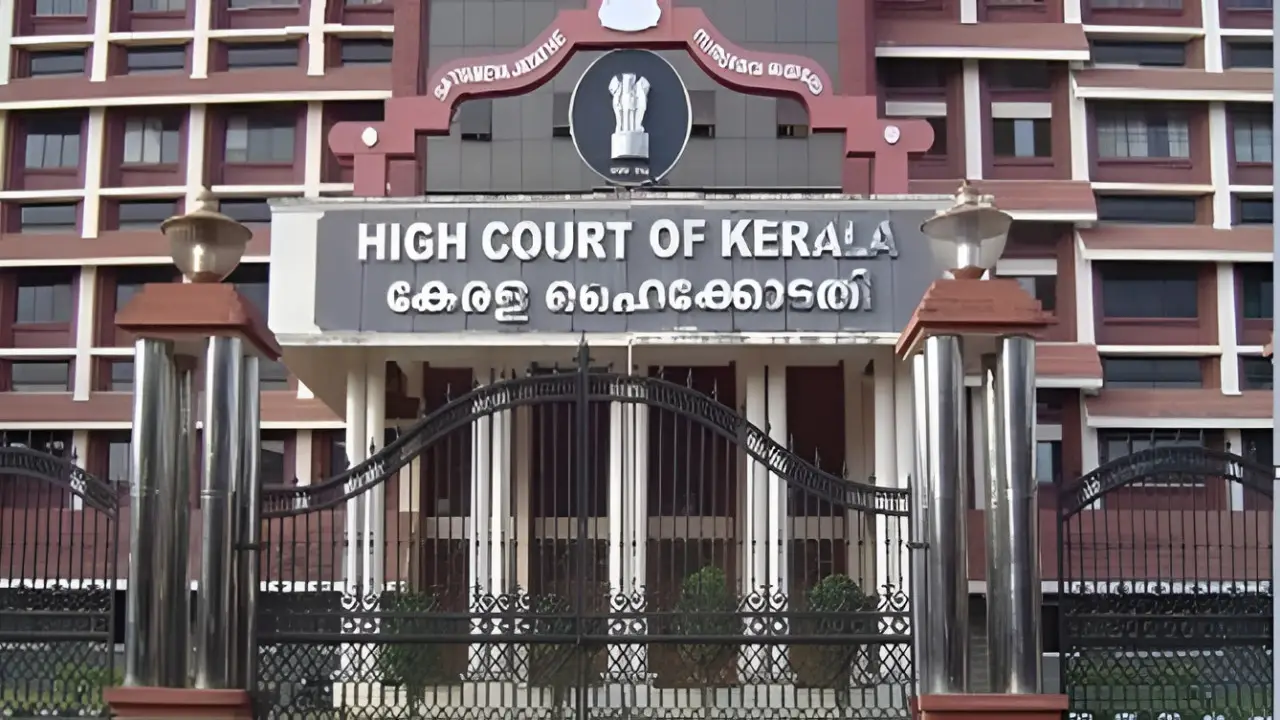
Why did Kerala High Court Flag Temple Entry Rule for Review? (x)
Kochi: While raising questions about a long-standing rule that bans non-Hindus from entering Hindu temples in the state, the Kerala High Court said that the law should promote harmony, not division between communities.
The court dismissed a petition challenging the entry of two Christian priests to a temple and also urged the government to consider whether the rule prohibiting non-Hindus from entering temples should be retained or amended in tune with the changing times.
The observation was made while dismissing a plea seeking a declaration that entry of two Christian priests into the Adoor Sree Parthasarathy Temple in Pathanamthitta district in 2023 was violative of the Kerala Hindu Places of Public Worship (Authorisation of Entry) Act, 1965.
Dr Zacharias Mar Aprem and another priest were invited as guests during Sreekrishna Jayanthi celebrations September 7, 2023, and later permitted inside the temple by the chief priest, or thantri.
According to the petition filed by Sanil Narayanan Nampoothiri of Kulanada, allowing the Christian priests into the Adoor Sree Parthasarathy Temple in 2023 violated Rule 3(a) of the Kerala Hindu Places of Public Worship Rules, 1965.
The rule prohibits non-Hindus from entering temple premises.
The bench comprising of Justices Raja Vijayaraghavan V and K.V. Jayakumar, while reviewing the petition referred to the Sanskrit Mantra from the 'Taittiriya Upanishad' which says 'Matru Devo Bhava Pitru Devo Bhava, Acharya Devo Bhava, Atithi Devo Bhava'. The court said that it signifies that mother, father, teacher, and guest are equivalent to God and are to be treated with respect and honour.
"The thantri occupies a pivotal and sacrosanct position in the temple hierarchy and is traditionally regarded as the spiritual custodian and ritual authority, often described as the father of the deity. An entry permitted by the thantri, in the capacity of a guest or a special invitee, is fundamentally distinct from an entry claimed as a matter of right,” the court said.
"Such a permissive and ceremonial entry, in our considered view, cannot be construed as a violation of the provisions of the Act, the rules framed thereunder, or the established rites, usages and customs governing the temple," it said.
The bench said that the main purpose of law is to secure social harmony and promote the welfare of citizens.
The court also said there is an apparent inconsistency between the provisions of the parent Act and Rule 3(a) of the Kerala Hindu Places of Public Worship (Authorisation of Entry) Rules and the government should examine whether the rule requires "reconsideration, amendment or modification to bring it in consonance with the legislative intent and constitutional principles."
“It is for the government to consider whether Rule 3(a) should be retained in its present form or suitably amended, after due consultation with the devaswom board, thantris, religious scholars and other relevant stakeholders,” the court said.
The court further observed, “Law is not static; it is dynamic and evolves with the changing needs and realities of society. As society advances and becomes more inclusive, statutory provisions and subordinate legislation must be interpreted in a manner that advances constitutional values and social cohesion. Statutes, rules and regulations ought not to be permitted to become instruments for fomenting discord or disharmony between different religions, castes, sub-castes or communities.”


Copyright © 2026 Top Indian News


