


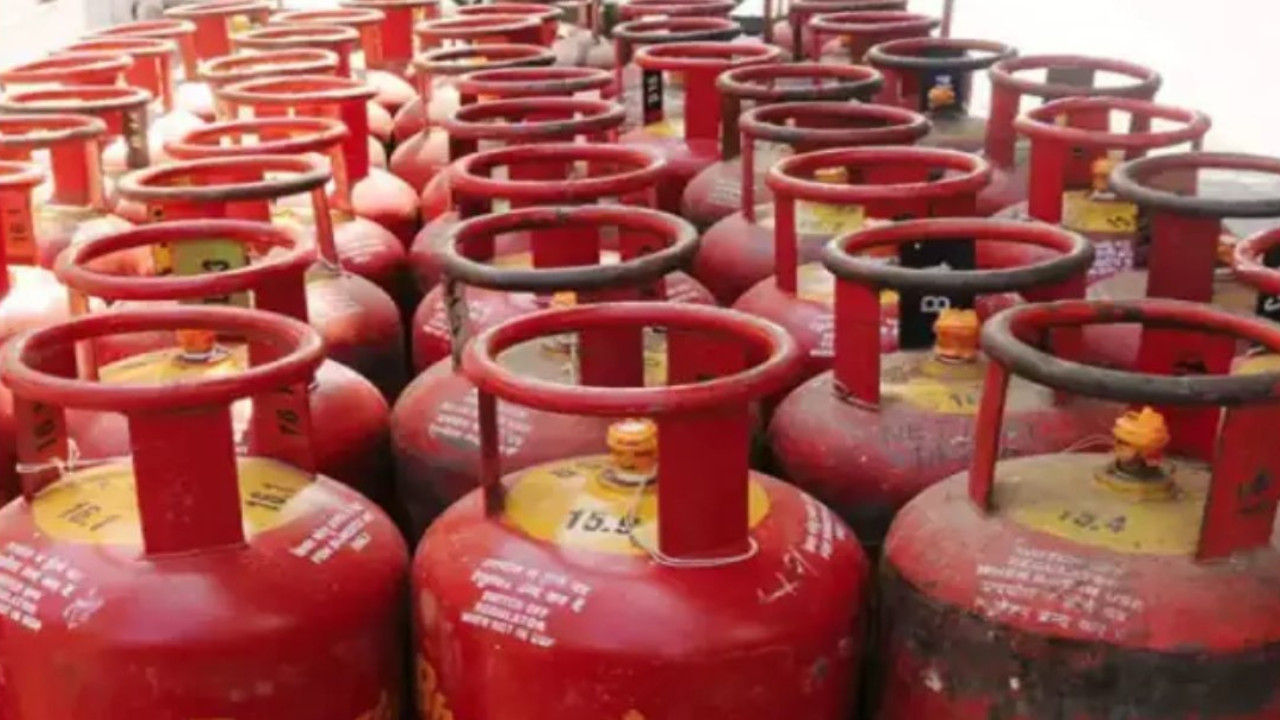
Due to the geopolitical tensions and Middle East conflict involving Iran, Israel, and the United States, countries like India witnessed a shortage of LPG. (Image X @VoiceOfAxom)
New Delhi: Due to the geopolitical tensions and Middle East conflict involving Iran, Israel, and the United States, countries like India witnessed a shortage of LPG. During this period, various alternatives to LPG garnered significant media attention. While induction and infrared cooktops were readily embraced by the public, technologies such as plasma cooktops and hydrogen stoves were also widely discussed.
However, plasma and hydrogen stoves proved to be impractical, making their large-scale adoption unfeasible. Amidst this scenario, a new fuel based on cutting-edge technology has emerged as a beacon of hope—one that is not only practical but also seamlessly integrates into the existing infrastructure of gas-cylinder-based kitchens.
We are, in fact, referring to DME—or Dimethyl Ether—which scientists are hailing as the fuel of the future. According to various reports, DME has the potential to completely transform our reliance on conventional cooking gas in the years to come. While plasma and hydrogen technologies currently appear to be beyond the reach—both in terms of accessibility and affordability—of the common man, DME could prove to be a futuristic technology that fits effortlessly into the standard kitchen setup involving stoves and cylinders.
In this regard, the CSIR-National Institute of Science Communication and Policy Research (CSIR-NISCPR) recently shared a post on 'X' (formerly Twitter), explaining that this fuel—developed by their researchers—behaves much like LPG. Furthermore, it can be synthesized from atmospheric pollutants (such as smoke) and organic waste, specifically biomass. This fuel holds immense potential to integrate smoothly into the typical Indian kitchen environment and could simultaneously mark a significant leap forward in India's journey toward self-reliance in the energy sector.
DME—or Dimethyl Ether—is a technology that scientists regard as the fuel of the future. Simply put, it is a synthetic gas that functions in a manner largely analogous to LPG. However, it is significantly more environmentally friendly than LPG. Indeed, the most distinctive feature of DME is its source. We are all aware that LPG is extracted from subterranean reserves and is classified as a fossil fuel. In contrast, DME can be synthesized in a laboratory setting using readily available waste materials—such as municipal refuse, agricultural residues (like crop stubble), and industrial smoke emissions. (REF.)
DME is being considered a viable alternative to LPG because, in terms of both technology and application, it closely mirrors LPG. The most significant feature of DME is that, unlike other cooking fuels, it does not require you to replace your existing gas stove, piping, or cylinder. It integrates seamlessly into the existing infrastructure.
While we remain dependent on foreign nations for LPG, DME can be produced domestically using coal, waste, and agricultural stubble. This also leads to a substantial reduction in costs. Unlike LPG, DME produces absolutely no soot or toxic fumes. It is such a clean fuel that it does not even blacken cooking utensils.
Another distinct advantage of DME is that it, too, can be stored in cylinders in a liquefied state. Consequently, this requires no alteration to the existing kitchen setups in households.
DME technology has the potential to make India self-reliant in the energy sector. Amidst global geopolitical tensions and conflicts, DME technology could emerge as a primary instrument for eliminating foreign dependency. This would result in savings of billions of dollars in foreign exchange.
According to CSIR-NIScPR, the implementation of this technology could commence through a blending process. Specifically, up to 20% DME can be blended into existing LPG cylinders without requiring any technical modifications. Under this scenario, neither the stove nor the cylinder would need to be replaced; yet, the nation's reliance on imported gas would instantly decrease by 20%.
Waste plays a pivotal role in the production of DME. Consequently, urban waste and rural agricultural stubble—which typically contribute to environmental pollution—can be transformed into valuable fuel through this technology. Furthermore, since it is produced domestically, it eliminates the logistical and import costs associated with foreign fuels. This could also make it possible to provide relief to the common citizen regarding gas prices.


Copyright © 2026 Top Indian News


