


AI
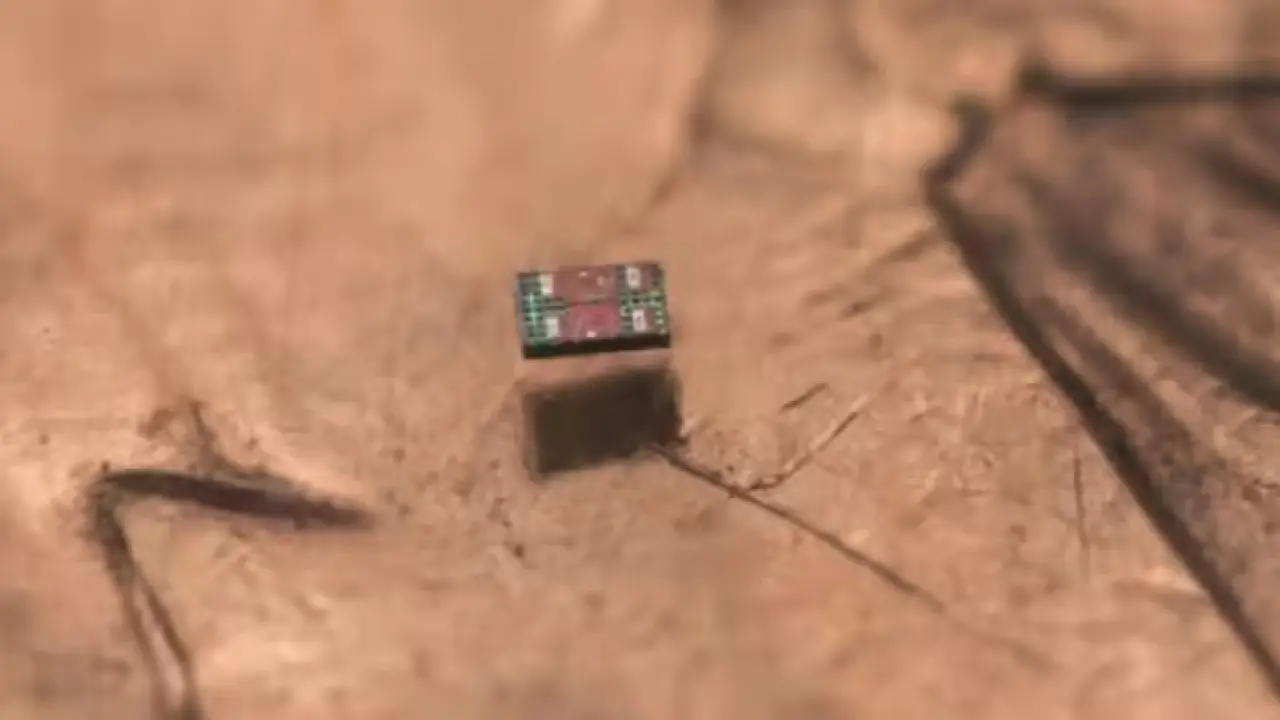
New Delhi: Researchers from the University of Michigan and the University of Pennsylvania have achieved something once considered impossible. They built a fully functional robot that is less than one millimeter in size. Despite its tiny scale, the robot can sense its surroundings, process information, and make decisions. Scientists say this solves a challenge that has existed for over forty years. Earlier, fitting a computer, sensors, and motor into such a small space was unimaginable. This development changes that belief completely and marks a turning point in robotics.
The robot is smaller than a single grain of salt. It is nearly one hundred times smaller than conventional robots. Yet researchers describe it as far more powerful relative to its size. It contains a microscopic computer built with fifty five nanometer technology. This allows it to work using very little energy. The robot is protected by a thin glass like outer layer. Scientists say its compact design makes it one of the most advanced miniature machines ever created.
Unlike older micro machines, this robot can make decisions on its own. Lead researcher Mark Miskin explained that this is the first robot of its size that can independently analyze and respond. It runs on solar power through built in solar cells. The robot also has temperature sensors that can detect changes as small as zero point three degrees. These abilities allow it to interact intelligently with its environment rather than follow fixed commands.
Scientists believe this robot could completely reshape healthcare. In the future, such robots could enter the human body through blood vessels. They may deliver medicine directly to affected areas. They could clear blocked arteries and monitor cells from inside. This would reduce the need for major surgery. Many procedures could become less invasive and safer. Researchers say multiple robots working together could handle complex medical tasks that currently require large surgical teams.
At present, the robot only works in laboratory conditions. It can move in fresh water but not in salty water or on solid surfaces. Making it safe for the human body remains a major challenge. Scientists are working to improve its mobility and durability. They are testing ways to make it function inside real biological environments. Despite limitations, researchers say progress is rapid and promising.
One surprising aspect is its accessibility. The robot does not require expensive equipment to operate. Even high school students can control it using a basic microscope costing around ten dollars. This simplicity makes the technology more open and scalable. Researchers believe this could encourage wider experimentation and faster development. It lowers the barrier for future innovation in robotics.
Experts believe the long term impact could be revolutionary. In the next ten years, early medical applications may begin. Over a longer timeline, robotic systems could work together and communicate during procedures. A Johns Hopkins University expert quoted in reports suggested that within one hundred years, robots could replace surgeons entirely. What once belonged to science fiction is now entering reality. Tiny robots may soon play a major role in saving human lives.


Copyright © 2026 Top Indian News


