


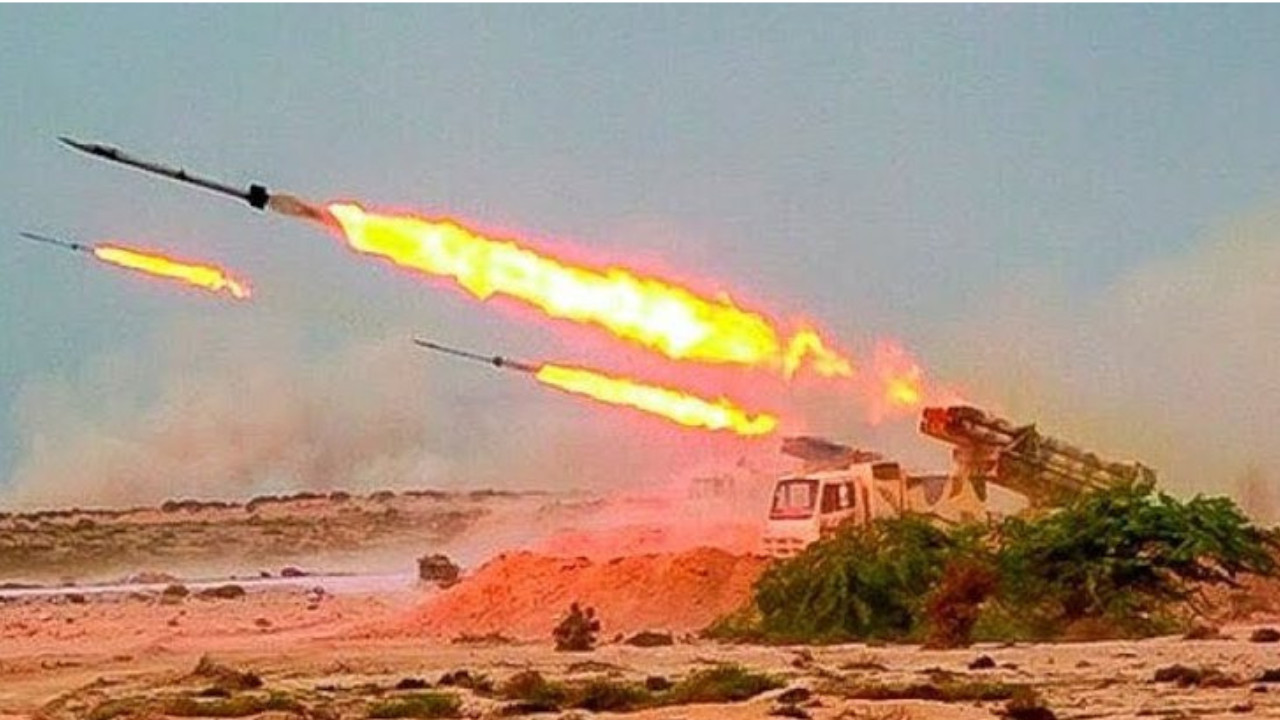
Iran has categorically stated that the conflict currently unfolding in West Asia will only come to an end once its own conditions are met. (Image X @mrlvw64)
Tehran: Amidst the ongoing tensions in the Middle East, Iran has categorically stated that the conflict currently unfolding in West Asia will only come to an end once its own conditions are met. Tehran has firmly rejected any attempts by U.S. President Donald Trump to set a deadline for a ceasefire or to put forward any proposals. Iranian officials have described the American proposal as "excessive" and unacceptable. On Wednesday, Iran's state broadcaster, Press TV, citing a senior official, reported that Tehran has reviewed the U.S. 15-point ceasefire proposal, but finds its terms completely unacceptable.
According to the news agency AP, two senior Pakistani officials, speaking on the condition of anonymity, revealed that the proposal includes provisions for easing sanctions, curbing Iran's nuclear program, imposing limits on ballistic missiles, and reopening the Strait of Hormuz. Meanwhile, an Egyptian mediating official stated that the plan also includes provisions for curbing armed groups backed by Iran. However, Iranian officials did not confirm receipt of the plan, reiterating instead that they would not engage in any form of negotiations with the United States or Israel.
Lieutenant Colonel Ebrahim Zolfaghari, spokesperson for Iran's Khatam al-Anbiya Central Headquarters, stated in a broadcast on state television: "From day one, our message has been—and will remain—singular: people like us will never compromise with people like you. Neither now, nor ever."
On the other hand, from a security perspective, Iran views its ballistic missile program and its support for proxy militias as critical assets. Its control over the Strait of Hormuz constitutes one of its most significant strategic weapons. Due to Iranian attacks and the "restrictions" imposed on the Strait of Hormuz, global oil prices are skyrocketing, and fears of an energy crisis have intensified. Meanwhile, the United States is bolstering its military presence in the region. Sources told the Associated Press that at least 1,000 paratroopers from the 82nd Airborne Division are set to be deployed to the Middle East in the coming days. Additionally, the Pentagon is preparing to deploy approximately 5,000 additional Marines and thousands of sailors to the region.
According to Egyptian and Pakistani officials, intermediary nations are attempting to facilitate direct talks between Iran and the United States—a meeting that could potentially take place in Pakistan on Friday. U.S. President Donald Trump has stated that Washington is currently engaged in negotiations. The U.S. team includes Special Envoy Steve Witkoff, his son-in-law Jared Kushner, Senator Marco Rubio, and Vice President J.D. Vance. Trump claimed that the other side is seeking a deal, although Iran has denied this. Meanwhile, the Israeli military announced on Wednesday that it had completed several rounds of airstrikes in Tehran. The military reported that, a day earlier, the Iranian submarine development center located in Isfahan had been targeted.


Copyright © 2026 Top Indian News


