


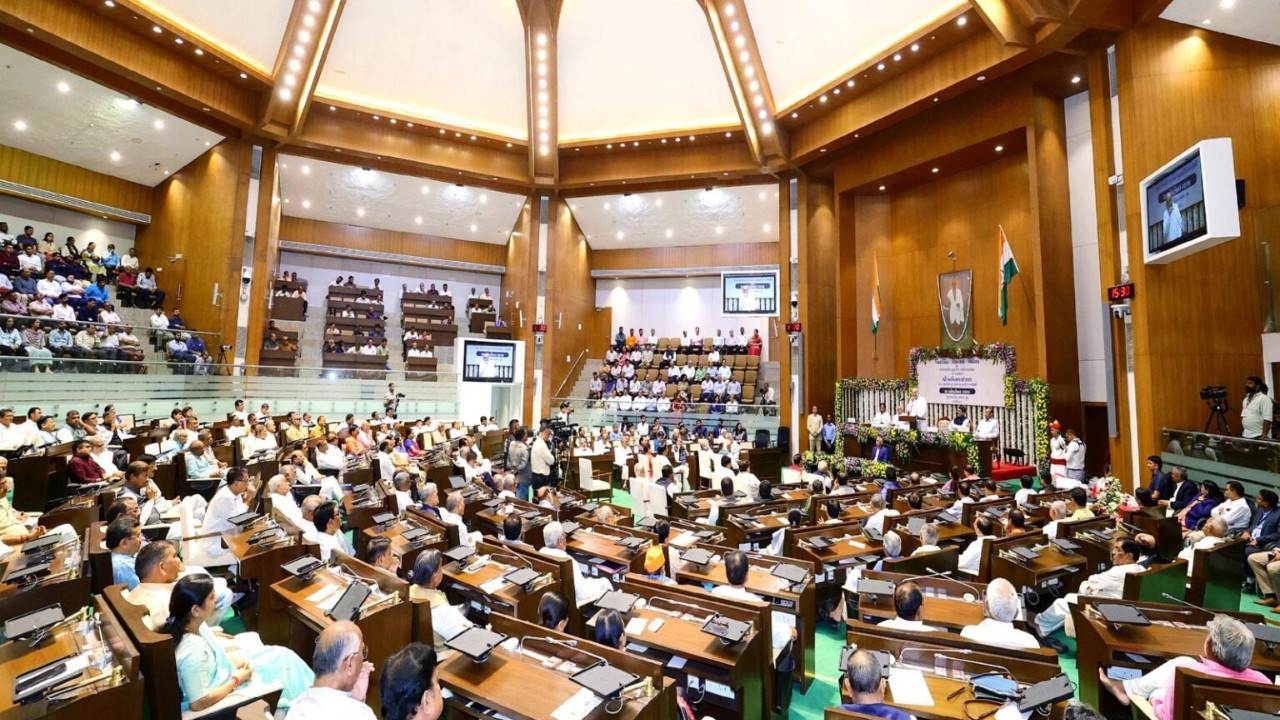
Following the hill state of Uttarakhand, Gujarat has become the second state in the country to successfully pass the Uniform Civil Code (UCC) through its Legislative Assembly. (Image X @Muslim_ITCell)
Ahmedabad: Following the hill state of Uttarakhand, Gujarat has become the second state in the country to successfully pass the Uniform Civil Code (UCC) through its Legislative Assembly. Once signed by the Governor, the bill passed by the Assembly will officially become law. On Tuesday, Chief Minister Bhupendra Patel himself tabled the bill in the House; following opposition from the Congress party, the Assembly passed the legislation after a seven-hour-long debate. The Gujarat Uniform Civil Code Bill—and its provisions—will not apply to members of Scheduled Tribes (STs), even after it becomes law. The tribal community has been explicitly exempted from the scope of this bill.
The UCC Bill mandates the compulsory registration of marriages and divorces. Non-compliance with these regulations will attract a fine of up to ₹10,000. Once the UCC Bill is enacted into law, the 'Gujarat Registration of Marriages Act, 2006' will stand repealed. The registration of live-in relationships—as well as their termination—has also been made mandatory. Any child born out of a live-in relationship will be deemed legitimate, and a woman abandoned within such a relationship will be entitled to claim maintenance.
Speaking in the House, Chief Minister Bhupendra Patel stated that the Uniform Civil Code is one of the key reforms that Prime Minister Narendra Modi is firmly committed to implementing. Chief Minister Patel further added that the primary objective behind introducing this bill is to foster social harmony and ensure national unity. The Supreme Court, too, has previously observed that the Uniform Civil Code would serve to safeguard women's rights.
Live-in Relationships: All live-in relationships must be compulsorily registered. The termination of such relationships must also be duly reported. Any child born out of a live-in relationship shall be recognized as the legitimate child of the couple involved. A woman abandoned within such a relationship shall have the right to claim maintenance.
Marriage: Polygamy will be strictly prohibited. Marriages solemnized through coercion, fraud, or undue pressure may attract a prison sentence of up to seven years. The registration of both marriages and divorces has been made mandatory. Failure to comply with this requirement will result in a fine of ₹10,000.
Divorce: Abandoning a spouse or granting a divorce without a court order will be punishable by imprisonment of up to three years. According to the draft bill, any couple may remarry unconditionally following a divorce. The bill proposes the mandatory registration of divorces and includes a provision for a fine of up to ₹10,000 for non-compliance with the rules.


Copyright © 2026 Top Indian News


