


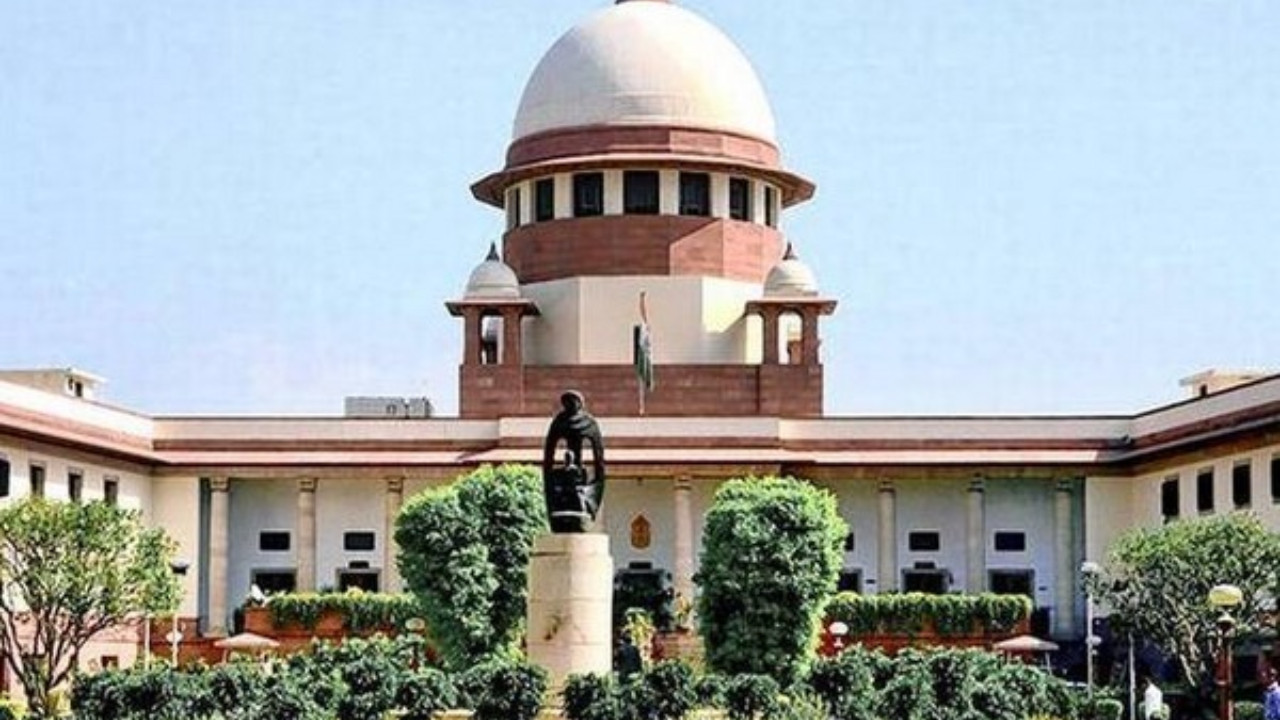
The Supreme Court questioned why children whose parents are already IAS officers should require reservation benefits. (Image X @ANI)
New Delhi: Making significant observations on the issue of reservation and social mobility on Friday, the Supreme Court questioned why children whose parents are already IAS officers should require reservation benefits. The Court raised doubts regarding the continued demand for quota benefits by affluent families who have already achieved educational and economic advancement. While hearing a case concerning reservation benefits for the "creamy layer" within backward classes, the Supreme Court of India questioned the necessity of reservation for children whose parents are both IAS officers.
The Court remarked, "If both parents are IAS officers, why demand reservation?" While making these observations, the Court emphasized that social mobility stems from educational and economic progress. Social mobility accompanies educational and economic empowerment. Therefore, demanding reservation for the children of such families cannot be justified. This is an issue that requires our careful consideration. The Court further noted that several government orders already contain provisions to exclude the "advanced sections" from reservation benefits; however, these exclusions are now being challenged.
The Supreme Court stated, "Social mobility does exist. Under current government orders, all these individuals have been excluded from reservation benefits, yet they are now challenging this exclusion. This aspect, too, must be taken into account." During the hearing, the Court questioned the persistent demand for reservation benefits by families who have already achieved social and economic advancement through the quota system. Justice Nagaratna observed, "The students' parents hold well-paying jobs and earn substantial incomes, yet the children continue to seek reservation benefits. Look—they ought to be excluded from the scope of reservation."
The Bench further observed that once a family attains a certain level of educational and economic empowerment through reservation benefits, the eligibility criteria for the subsequent generation should be re-evaluated. During the hearing, the judge remarked, “There must be some balance. Socially and educationally backward—yes; but once parents attain a certain status by availing the benefits of reservation…” The court also noted the distinction between reservation for Economically Weaker Sections (EWS) and that for socially backward communities.


Copyright © 2026 Top Indian News


