


Why Bhojshala Case Differs From Ayodhya-Kashi: The Untold Story of Maa Saraswati's Idol in London (OpenAi)
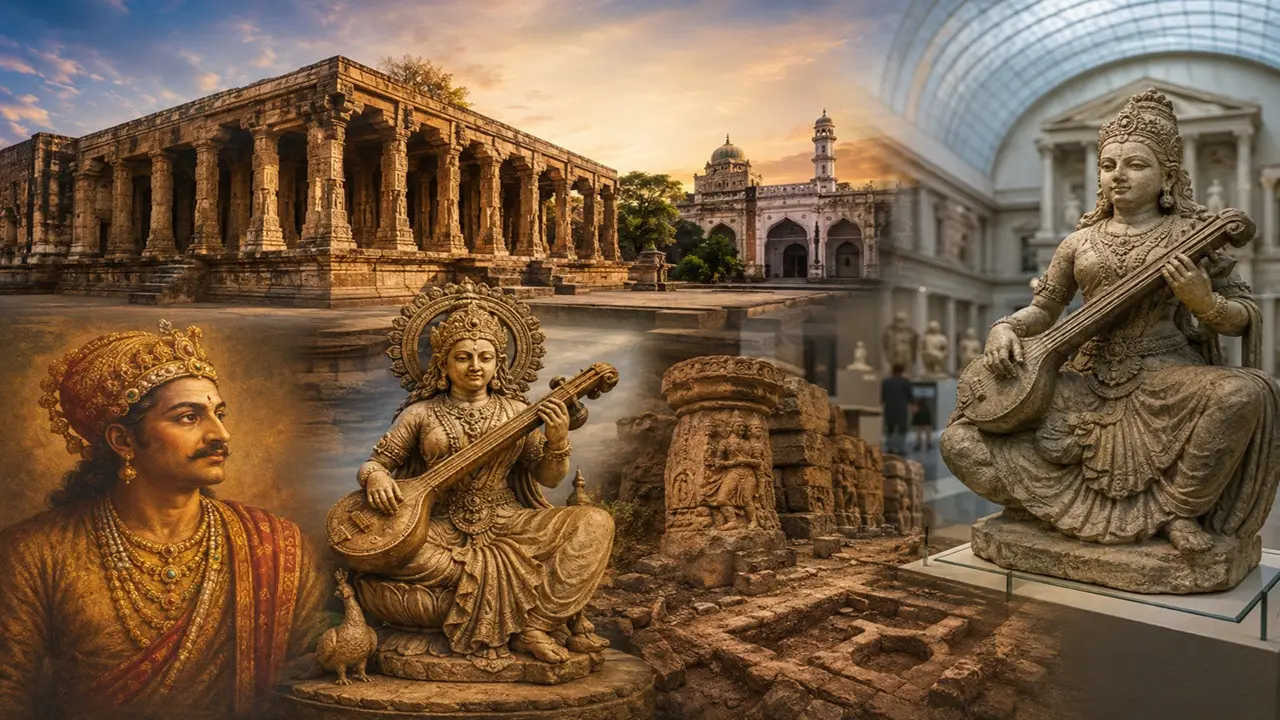
Dhar: After the MP High Court's decision on the Bhojshala controversy, its discussion has intensified in the entire country. The court has considered Bhojshala as the temple of Maa Vagdevi i.e. Maa Saraswati. But after this decision, now the most talked about thing is that mysterious statue, which is said to be the statue of Maa Saraswati installed by Raja Bhoj. It is claimed that today this statue is not kept in India but in the British Museum in London.
According to historians, in the 11th century, King Bhoj of the Parmar dynasty made Dhar his capital. It is said that he had built a huge Sanskrit teaching center and a temple of Maa Saraswati here. For this reason this place came to be called 'Bhojshala'. It is believed that students from far and wide used to come here to study and worship Goddess Saraswati before starting their education.
It is said that Raja Bhoj had installed a special statue of Maa Vagdevi here. This statue later disappeared during invasions and political changes. Many years later, archaeologists received information that a statue found from the ruins of the old palace of Dhar had been sent to Britain.
According to reports, in the 19th century, British officer Major Kinkaid had found many ancient objects from the old ruins of Dhar. These were later sent to England. Later, famous archaeologist Dr. Vishnu Shridhar Wakankar went to London and studied that statue in the British Museum. He claimed that this is the same Vagdevi statue, which was installed by Raja Bhoj in Bhojshala.
Dr. Wakankar matched the book ‘Samarangan Sutradhar’ written by Raja Bhoj and the style, inscription and artwork of the statue. He said that the structure, ornaments and inscriptions of the idol match the Parmar period of the 11th century. There is also mention of Raja Bhoj and Vagdevi on the statue.
In a scientific survey conducted by ASI in 2024, it was revealed that figures of Hindu deities, Sanskrit inscriptions, havan kund and temple style remains were found in the complex. The report also said that many of the pillars appear to be connected to the old temple structure.
Madhya Pradesh High Court in its decision considered Bhojshala the temple of Maa Vagdevi and said that the Hindu worship tradition never completely ended here. The court has directed the central government and ASI to take appropriate steps regarding the management of the complex.
There is a possibility of the Muslim side going to the Supreme Court. Hindu organizations say that after declaring Bhojshala as a temple, the biggest demand now is to bring the idol of Maa Vagdevi back to India. He believes that the day the statue is installed again in Bhojshala, it will be the most historic moment of this entire controversy.


Copyright © 2026 Top Indian News


