


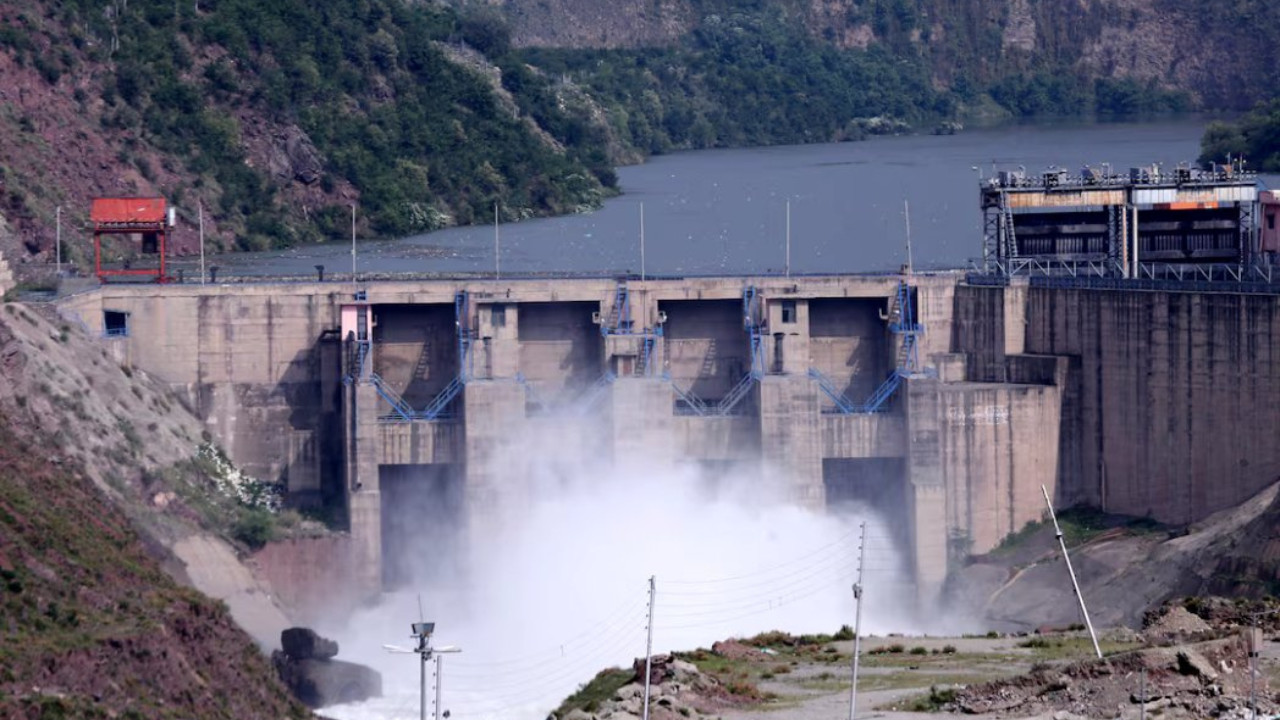
It has been over a year since these gates were shut, following the suspension of the Indus Waters Treaty. (Image X @RohitInExile)
Islamabad: The flow of water towards Pakistan from the Baglihar Dam, located in Ramban, Jammu and Kashmir, has been halted. This measure was implemented last year following a terrorist attack in Pahalgam. Constructed across the Chenab River, the Baglihar Dam plays a pivotal role in both hydroelectric power generation and water management.
It has been over a year since these gates were shut, following the suspension of the Indus Waters Treaty. Pakistan is completely rattled by this development. Pakistan has repeatedly voiced its objections regarding the Indus Treaty and the projects on the Chenab River. However, India's stance on this issue remains firm, and it has shown no intention of granting any concessions at this time.
The Indus Waters Treaty governs the sharing of river waters between India and Pakistan. India suspended this treaty in the aftermath of the terrorist attack in Pahalgam. Since suspending the treaty, India has kept the gates of the Baglihar Dam continuously closed. This has heightened Pakistan's concerns, as the country relies heavily on rivers flowing from India to meet its substantial requirements for irrigation and other purposes.
J&K | All Gates Of Baglihar Dam On Chenab Remain Closed Even A Year After Indus Waters Treaty Suspension
— Aryavarta (@aryavarta009) May 3, 2026
Pakistan Admits of having a shortage in their water capacity !!! pic.twitter.com/P5ekQ4Ikfe
The Indus River System comprises the Indus, Jhelum, Chenab, Ravi, Beas, and Sutlej rivers. The majority of this river basin is shared between India and Pakistan. Under the Indus Waters Treaty, signed between India and Pakistan in 1960, the waters of the three 'Eastern Rivers'—the Ravi, Sutlej, and Beas—(averaging 33 Million Acre-Feet, or MAF) were allocated to India for its exclusive use.
The 'Western Rivers'—the Indus, Jhelum, and Chenab—were allocated to Pakistan; these rivers carry an average flow of 135 MAF of water. As per the terms stipulated in the treaty, India retains the right to make limited use of the waters of these rivers for domestic, non-consumptive, and agricultural purposes. Furthermore, India is entitled to generate hydroelectricity on the Western Rivers through 'Run-of-the-River' (RoR) projects. However, specific conditions have been laid down for this purpose.
India has developed several major infrastructure projects to fully utilize the waters of the eastern rivers allocated to its share. These include the Bhakra Dam on the Sutlej River, the Pong Dam and Pandoh Dam on the Beas River, and the Ranjit Sagar Dam on the Ravi River. In addition to these, the Beas-Sutlej Link, the Madhopur-Beas Link, and the Indira Gandhi Canal Project have aided India in utilizing the waters of the eastern rivers.
Pakistan has repeatedly attempted to corner India over the issue of the Indus Waters Treaty. Pakistan asserts that India cannot unilaterally suspend the Indus Waters Treaty. Pakistan maintains that any stoppage of water flow would be deemed an act of war. The Government of Pakistan has also written letters to India expressing concern over fluctuations in the flow of the Chenab River.
- India took several measures against Pakistan following the terrorist attack in Pahalgam on April 22, 2025.
- Among the steps taken by India is the suspension of the Indus Waters Treaty, originally signed with Pakistan in 1960.
- Mediated by the World Bank, the Indus Waters Treaty governs the sharing of river waters between India and Pakistan.
- India's stance on the Indus Treaty has heightened Pakistan's concerns, as it places Pakistan's water security in jeopardy.
- Pakistan has termed the Indus Treaty essential for peace. It has issued veiled threats of war should the treaty collapse.
- India remains firm in its stance that the treaty will not be reinstated if Pakistan continues to harbor terrorism.


Copyright © 2026 Top Indian News


