


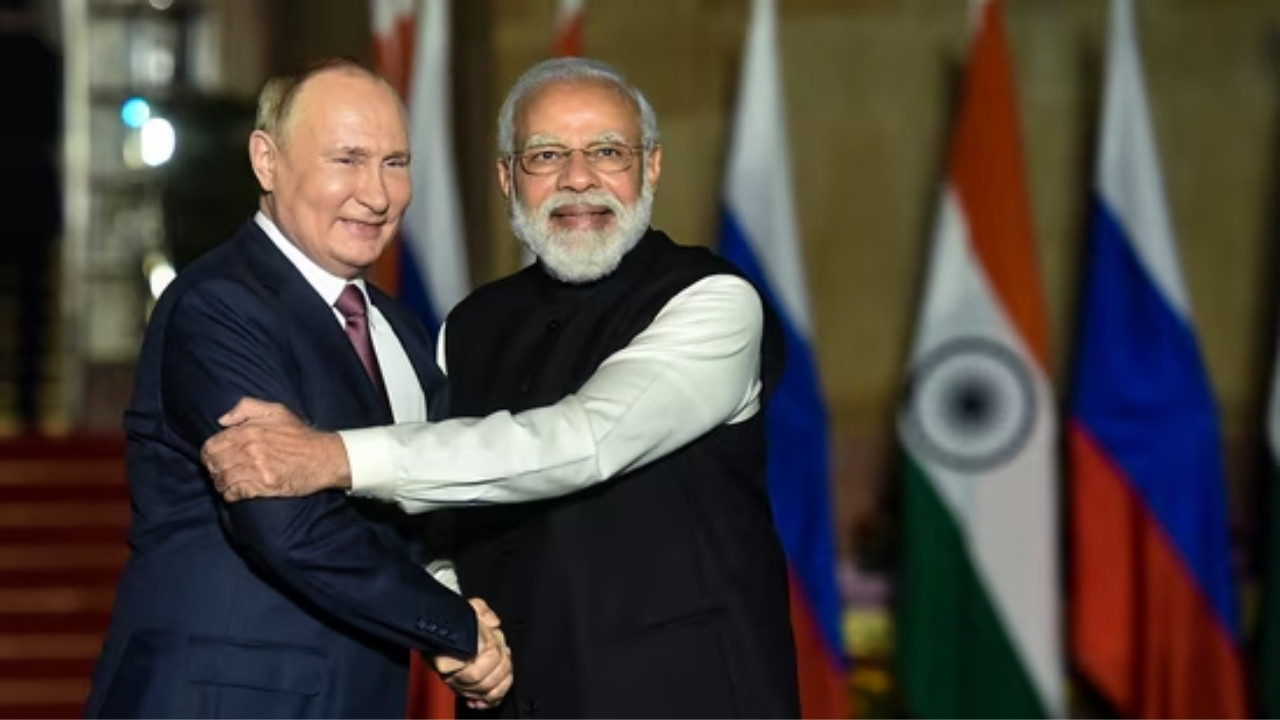
Due to the US-Israeli attacks on Iran, the movement of ships transporting oil and gas through the Strait of Hormuz has come to a halt. (Image X @VertigoWarrior)
Moscow: Due to the US-Israeli attacks on Iran, the movement of ships transporting oil and gas through the Strait of Hormuz has come to a halt. This has triggered an energy crisis in India. The few sporadic vessels that are managing to traverse this strait are unable to meet the massive demand for energy. Meanwhile, Russia has also dealt a major blow to India. Prioritizing domestic demand, Russia has suspended fertilizer exports for a period of one month. Russia is India's largest supplier of fertilizers. Between January and June 2025, Russia supplied 2.5 million tons of fertilizer to India.
According to a report, fertilizer supplies from Russia to India witnessed a 20% increase in 2025 compared to the previous year. Consequently, Russia's share of India's total fertilizer imports has reached a record high of 33%. On Tuesday, the Russian Ministry of Agriculture announced that it is imposing a one-month ban on the export of ammonium nitrate, ahead of the spring sowing season. The Ministry stated that this measure has been taken to ensure adequate domestic fertilizer supplies within Russia.
In a statement, the Russian Ministry of Agriculture said, "Amidst rising export demand, halting shipments of nitrogen fertilizers abroad will help us prioritize the domestic market during spring field operations and ensure that there are no disruptions to agricultural activities." Ammonium nitrate imported from Russia is used extensively in agriculture. It is also utilized as a key component in the manufacture of explosives.
Russia accounts for one-quarter of the total global production of ammonium nitrate. The primary ingredient used in the production of ammonium nitrate is ammonia. Approximately 24% of global ammonia shipments pass through the Strait of Hormuz; however, the closure of this vital waterway is now impacting production levels. The Russian Ministry of Agriculture has announced that it has ceased issuing new export licenses. Only supplies made under government contracts are exempt from this regulation.
Russia has discontinued the concessional rates previously extended to India; consequently, Indian refineries are now procuring oil at a premium of $4–5 per barrel relative to Brent crude. Amidst rising tensions in the Middle East (the Iran crisis), the United States had granted India a temporary 30-day waiver; under this arrangement, India has purchased 60 million barrels of Russian oil for April—though this supply does not come at a discounted price.
Just a few days ago in Islamabad, Russia's Ambassador Albert Khorev stated that if Pakistan were to make an official request, Moscow would be prepared to replenish its depleting oil reserves—and at discounted rates, no less. He further noted that, to date, no formal contact regarding this matter has been initiated by Pakistan. Khorev asserted that should the Pakistani government reach out, Russia would not hesitate to respond.


Copyright © 2026 Top Indian News


