


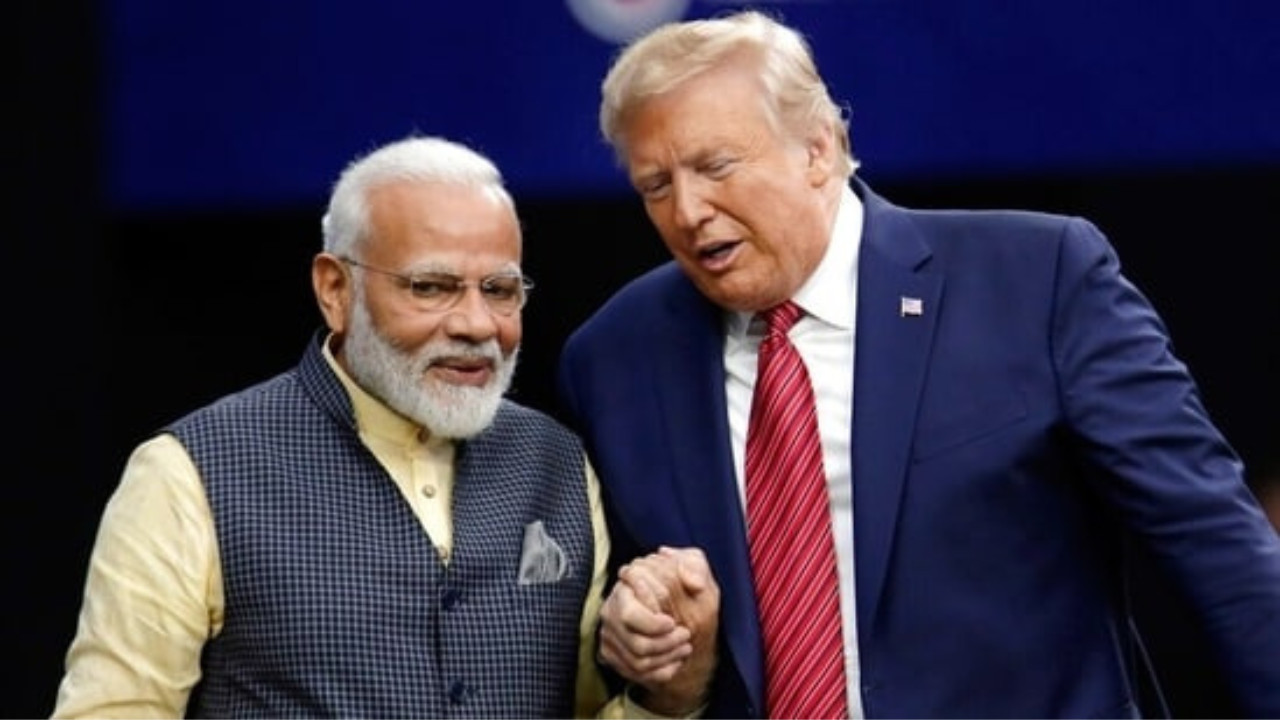
India-US Interim Trade Agreement Faces Delay as Tariff Policy Sparks Uncertainty (Image X @Notjustheadline)
New Delhi: A three-day meeting was to be held this week, where India's Chief Negotiator Darpan Jain and the team were going to Washington to finalize the legal text of the interim trade deal. But now it has been postponed from both sides. Sources say that after the court decision and Trump's new tariff moves, both need some time to understand their impact. The new date will be decided later.
On Friday, the US Supreme Court made a big decision that the huge tariffs imposed by Trump using emergency powers (IEEPA) are illegal. The court said with a majority of 6-3 that the President does not have the right to impose such tariffs, this power rests only with Congress. Trump had declared an emergency and imposed tariffs on the world on issues like drug smuggling and trade deficits, but the court rejected it.
A few hours after the court's decision, Trump came out with a new plan. Under Section 122 of the Trade Act of 1974, first 10% global tariff was imposed, then on Saturday it was increased to 15% (which is the maximum limit of this section). This tariff is for 150 days. Now there is talk of Section 338, which can allow imposition of a tariff of up to 50% under the Tariff Act of 1930. The Trump Administration is still working on its tariff strategy, but everything remains uncertain.
The two countries issued a joint statement in early February, calling for an interim deal to be signed in March, followed by a larger trade agreement. US Trade Representative Jameson Greer was to come to India in March to sign the deal. But now all the meetings are on hold. Tariffs are changing so rapidly that negotiation has become difficult. “There cannot be long agreements between two sovereign countries in such a fluid situation,” a source said.
Tariffs on Indian goods first reached 50%, then 25% in February, with a promise to reduce them to 18% in the framework. After the court, it fell to 10%, then to 15%. Now 15% is better for India than 18% and much lower than the earlier 26% Liberation Day rate. Some analysts are saying that this is positive for India. Now that America's tariff leverage has reduced, India can avoid the pressure of giving more concessions. There may now be less pressure on buying Russian crude oil. But there is uncertainty on both sides.
On Friday, the Commerce Ministry issued a statement: "We are studying the court's decision and the steps taken by the Trump administration and looking at its implications." Union Minister Prahlad Joshi also said that the government is studying everything.
Treasury Secretary Scott Besant said the tariff strategy would continue; only the legal route would change. But the court clearly said that the major tariff policy lies with Congress. Lawyer Neel Katyal (who won the case) said, "If the tariffs are so good, convince Congress, that's what the Constitution says."
Overall, the court has dealt a major blow to Trump's tariff policy, and the March plan for an India-US trade deal has now become blurred. It remains to be seen from both sides what happens in the next weeks—perhaps a deal on better terms, or a further delay.



Copyright © 2026 Top Indian News


