


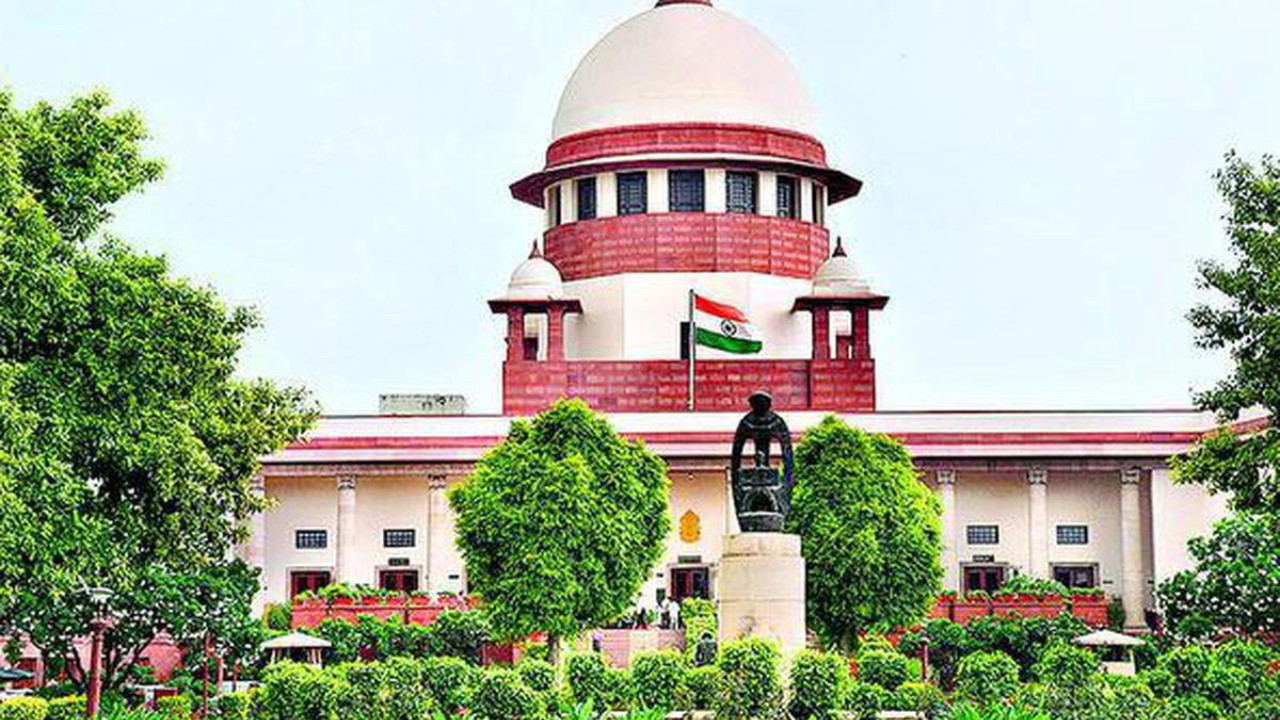
Supreme Court Declines New Directions on Hate Speech, Says Laws Are Adequate (X@ANI)
New Delhi: The Supreme Court on Wednesday refused to issue additional guidelines to curb hate speech across the country. The court clarified that the existing laws are adequate to deal with such cases and the problem is not the lack of law but its effective implementation. The court also said that creating new crimes or making laws is entirely the jurisdiction of the legislature.
The bench of Justice Vikram Nath and Justice Sandeep Mehta clearly said that constitutional courts can interpret the law, but they cannot make laws or compel Parliament to do so. The court also added that if needed, attention can be drawn towards reforms, but the final decision rests with the legislature.
The court acknowledged that a legal framework already exists to deal with hate speech. Under the BNSS, extensive mechanisms are available for initiating criminal proceedings and the magistrate is also given substantial supervisory powers. Therefore, there can be no talk of any kind of “legal vacuum”.
The bench said that the real concern is not about the absence of law but about its not being implemented properly. The court acknowledged that issues like hate speech and spreading rumors have a direct impact on social harmony and the constitutional system.
Although the court did not issue any new instructions, it left the option open to the central government to consider necessary amendments in the law in view of the changing social situation.
This decision has come on petitions that started in 2020. These included petitions filed regarding alleged campaigns like 'Corona Jihad' and cases related to the 'UPSC Jihad' program as well as alleged inflammatory speeches given in religious gatherings.
In 2023, the Supreme Court had directed the states and union territories that in cases of hate speech, the police should take suo motu cognizance and register FIR without waiting for the complaint. Later, contempt petitions were also filed regarding following these instructions.
The court indicated that it will continue to protect rights within the ambit of law, but the job of making laws will remain with Parliament and legislative assemblies. In such a situation, the focus will now be on how effectively the existing laws are implemented.


Copyright © 2026 Top Indian News


